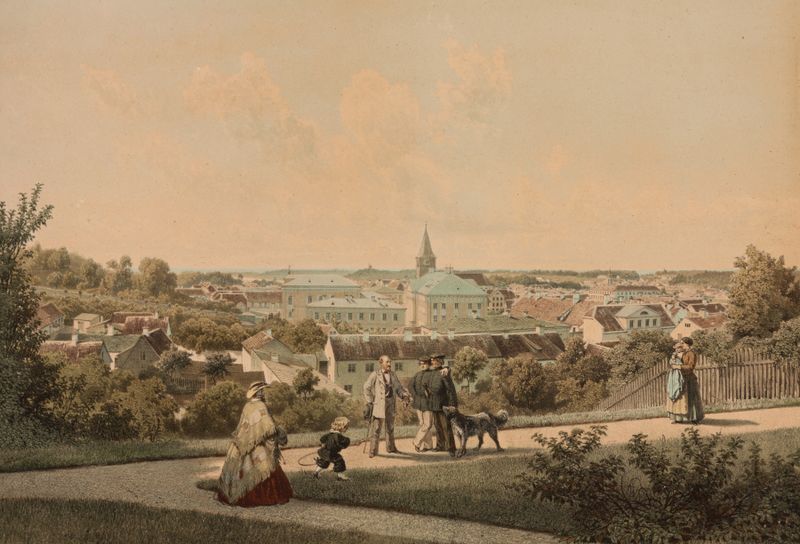
Tartu album. Vaade Gutmani koopast — History & Facts
Within the shadows of the cavern, light spills forth like whispers, illuminating secrets held by ancient stone. It is an intimate moment, where nature’s artistry meets the echo of human experience—a quiet dialogue between light and darkness. Focus on the interplay of light as it dances across the rugged surface of the cave. Notice how the artist captures the textures with a delicate precision, drawing your gaze along the gentle undulations of the rock formations.
The subtle gradations of color—from earthy browns to soft greys—create depth, inviting the viewer to explore the cavern’s recesses, while pockets of light reveal hidden corners and invite narratives long forgotten. Within this scene, the contrast between light and shadow speaks of revelation and concealment. The illuminated areas suggest clarity and understanding, while the shadows evoke a sense of mystery and contemplation. Each crevice and curve tells a story, reflecting the duality of human experience: what is revealed in our lives and what remains shrouded in darkness.
The tension between these elements offers a profound commentary on the nature of existence, fostering a deep connection with the viewer. In 1860, Louis Höflinger painted this work while residing in Tartu, Estonia, a period marked by burgeoning artistic exploration and national identity within the Baltic states. The region was experiencing a cultural renaissance, and Höflinger’s focus on natural landscapes and local phenomena was emblematic of a broader movement among artists seeking to capture the essence of their homeland. This work stands as a testament to that spirit of discovery and reflection.