Tartu äärelinna vaade — History & Facts
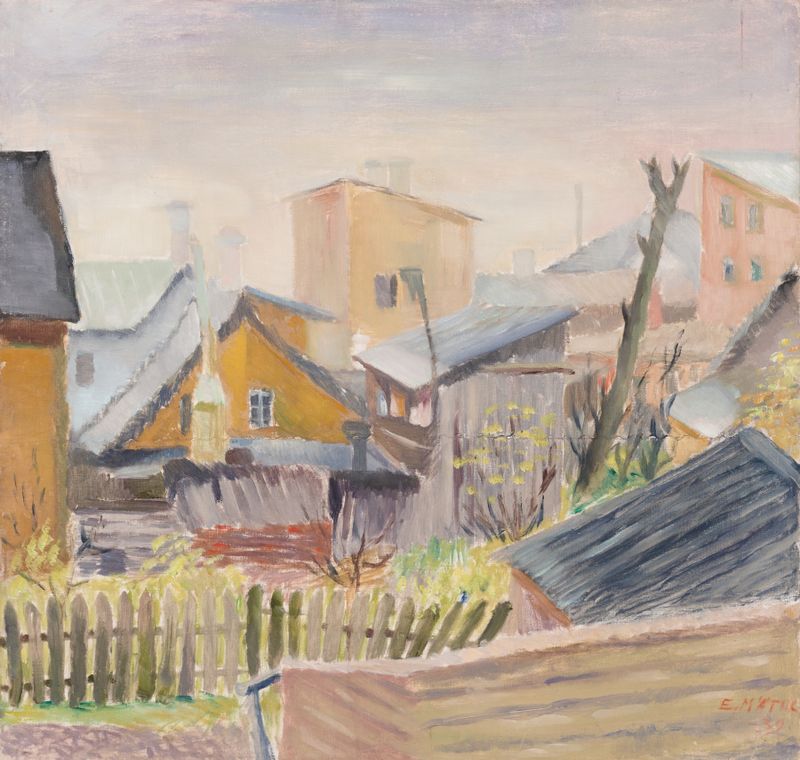
Is this a mirror — or a memory? In Tartu äärelinna vaade, the boundaries between reflection and recollection dissolve, inviting us to ponder the void that separates presence from absence. Focus on the muted tones that wash over the canvas, a gentle interplay of greens and grays. The viewer's eye is drawn to the horizon, where the sky softly merges with the land, creating an ethereal quality. Notice how the brushstrokes mimic the texture of clouds, evoking a sense of tranquility, yet hinting at an underlying melancholy.
The composition feels expansive, yet each corner holds a whisper of confinement, reflecting a landscape that is both familiar and distant. In this work, the delicate balance between stillness and unrest reveals emotional tensions. The trees stand like solemn sentinels, their shapes echoing the quietude of an untouched space, yet they also imply a yearning for connection. There’s a profound silence that envelops the scene, suggesting a moment paused in time, a void that speaks volumes about the human experience and our longing for belonging.
This duality enhances the feeling of nostalgia, reminding us of what once was and what remains out of reach. Ella Mätik painted Tartu äärelinna vaade in 1942, during a tumultuous period in her life, influenced by the backdrop of World War II. Living in Estonia, she faced the challenges of occupation and displacement. This painting reflects her response to the shifting socio-political landscape and the internal struggle between hope and despair, capturing both the essence of her homeland and the artist's introspective journey during a time of great uncertainty.