Maastik — History & Facts
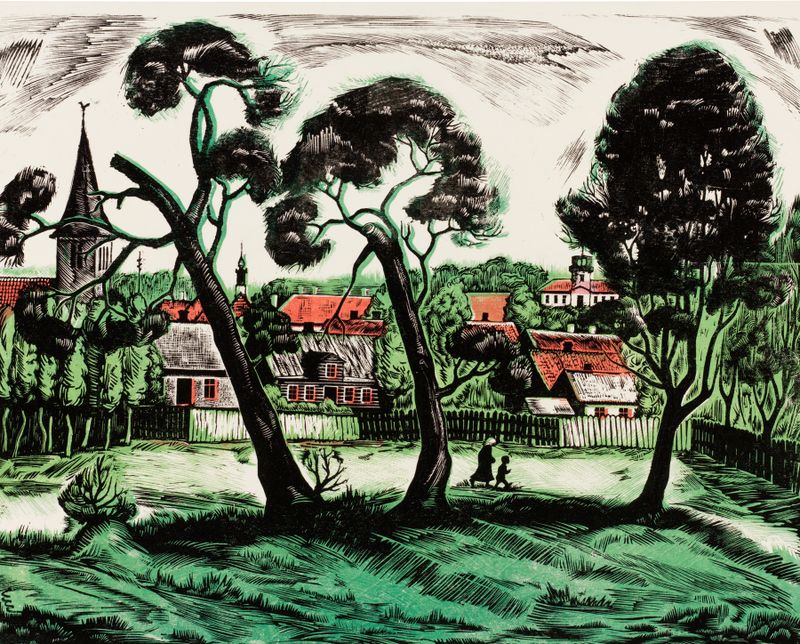
Could beauty survive in a century of chaos? As tumult loomed on the horizon in the late 1930s, this artwork stands as a testament to resilience and harmony. Look closely at the gentle interplay of warm earth tones and cool blues that grace the canvas. The foreground captures a serene landscape, where soft hills rise beneath a sprawling sky. Notice how the brushstrokes lend a tactile quality to the grass, inviting your gaze to wander across the undulating terrain.
The light, a delicate wash, bathes the scene in a golden glow, suggesting that within tumult, peace can still flourish. In the subtleties lies deeper meaning; the juxtaposition of vibrant flora against an expansive, tranquil sky speaks to a balance between chaos and serenity. Each element, from the meticulously rendered leaves to the ethereal clouds, hints at a larger narrative—the struggle to maintain beauty amid uncertainty. The composition invites contemplation, urging the viewer to reflect on the fleeting nature of peace and the strength found in stillness. Created in 1939, this piece emerged during a period of great upheaval in Europe, as political tensions escalated toward World War II.
Ella Mätik was deeply influenced by her Estonian heritage, and amidst the rising chaos, she sought to encapsulate the harmony of her homeland. Her work reflects a yearning for stability, a theme resonant in an era marked by instability and conflict.