Taunuslandschaft im Vorfrühling — History & Facts
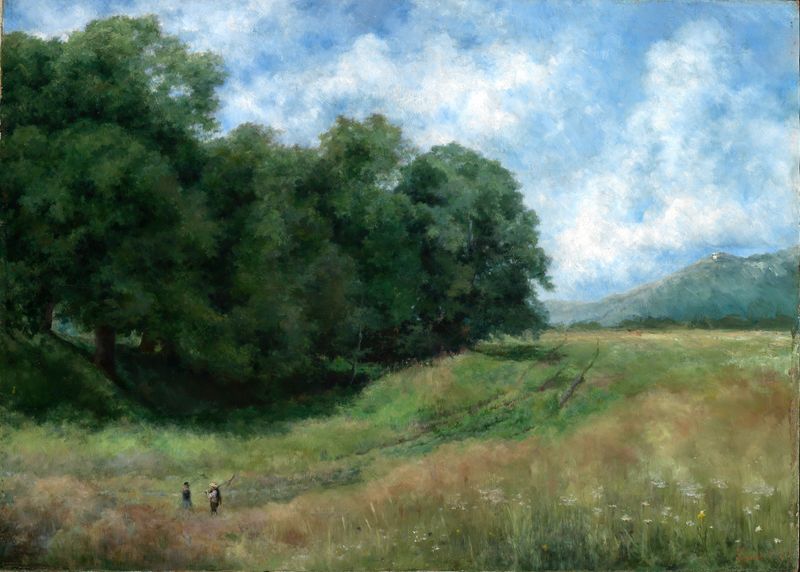
In the heart of early spring, tranquility envelops the Taunus landscape, inviting the viewer into a realm where nature whispers its secrets. Look to the left at the gentle rise of the hills, their soft contours painted in muted greens and browns that embody the calmness of the season. The sky, a canvas of delicate blues and whites, diffuses light across the scene, illuminating a few budding trees that stand as symbols of rebirth. Notice how the brushstrokes seamlessly blend, evoking a sense of harmony and stillness, where every element seems to have a purpose in the quiet tableau. Yet beneath this serenity lies a tension—a hint of anticipation for the vibrant life that will soon burst forth.
The contrast between the dormant earth and the burgeoning buds conveys a poignant reminder of cycles within nature. The untouched fields suggest both the peace of solitude and the urging pull of change, evoking emotions that resonate deeply within the heart. In 1875, Louis Eysen created this piece while living in Germany, a time when the art world was shifting toward Impressionism. Captivated by the beauty of the natural world, he sought to reflect the subtleties of light and color that defined the season, stepping away from more traditional styles.
This work encapsulates not just his artistic evolution, but also a cultural moment where nature became a profound subject for introspection and emotive expression.