View of the Ulten Valley — History & Facts
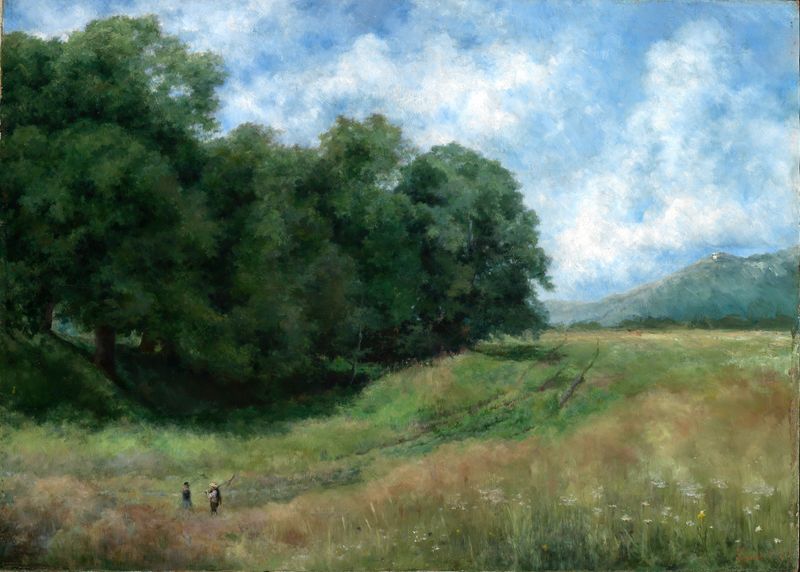
Did the painter know this moment would outlive them? In 1889, amidst a world on the brink of transformation, View of the Ulten Valley captures nature's enduring beauty against the backdrop of impending revolution. Look to the foreground, where the lush green of the valley beckons with vibrant energy. Eysen’s brushwork is both meticulous and fluid, guiding the eye to the sharp peaks that rise dramatically in the distance. The interplay of light and shadow creates a sense of depth, inviting the viewer to traverse the landscape as if each stroke breathes life into the scene.
The soft pastels in the sky contrast beautifully with the earthy tones below, evoking a serene yet dynamic harmony. Within the painting lies a subtle tension between stillness and change. The towering mountains, symbols of permanence, loom over the fragile valley below, where delicate flowers bloom, suggesting that beauty exists even amidst uncertainty. The palette reflects a moment suspended in time, yet whispers of the social upheaval and artistic revolutions shaping Eysen's world.
Each element serves to remind us of nature's resilience, even as humanity stands on the cusp of profound transformation. In 1889, Eysen was deeply entrenched in the art scene of his time, influenced by the transition from Romanticism to Impressionism. Based in Austria, he sought to bridge the gap between realism and the burgeoning new styles emerging across Europe. This period was marked by intense social change, and View of the Ulten Valley embodies both an appreciation of nature and a reflection of the artist's own journey amidst an ever-evolving landscape.