
Teich in der Mark mit Seerosen und Schilfhalmen — History & Facts
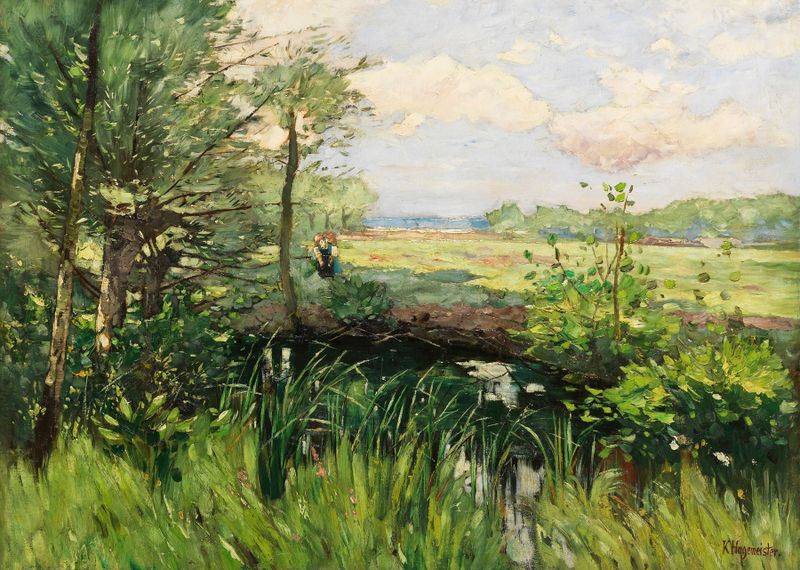
In the stillness of nature, grief etches itself into the gentle ripples and vibrant hues of life. Moments captured on canvas have the power to transcend time, resonating with the emotional weight we all carry. Look toward the center where the water's surface shimmers beneath a veil of delicate lily pads. The juxtaposition of serene greens and soft whites creates a tranquil composition, while the tall, whispering reeds stand sentinel along the edges.
Notice how the brushstrokes evoke both movement and stillness, allowing the viewer to feel the slight caress of a breeze — a quiet invitation to reflect. Yet, beneath the calm facade lies a deeper melancholy. The serene water may symbolize a sense of loss, with the blooms representing fleeting beauty amidst decay. Each lily, poised above the water, appears to float on the surface of unspoken sorrow, capturing the transience of life and the ache of longing.
The interplay between light and shadow further emphasizes this contrast, revealing nature's ability to harbor both joy and grief. In 1907, Karl Hagemeister was residing in the tranquil landscapes of Germany, focusing on capturing the delicate nuances of nature. This period was marked by a shift in the art world towards impressionism, allowing him to explore themes of emotional resonance through landscape. His commitment to both realism and the expressive quality of light reflects a profound understanding of the human experience — a testament to the unyielding connection between nature and our innermost emotions.
More Artworks by Karl Hagemeister
Browse all →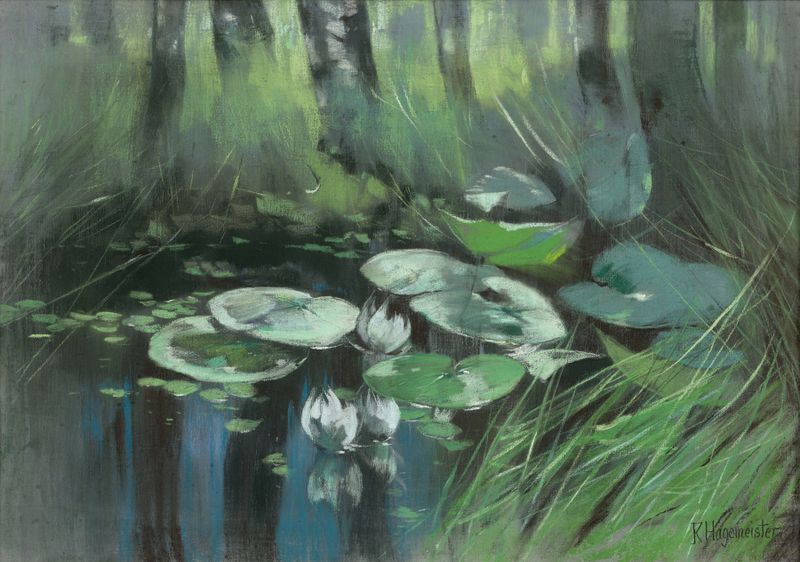
Teich in der Mark mit Seerosen
Karl Hagemeister
Roter Mohn am Seeufer
Karl Hagemeister

Bauernhaus bei Ferch
Karl Hagemeister
Märkische Seenlandschaft
Karl Hagemeister

Seeufer bei Ferch
Karl Hagemeister
Märkische Seenlandschaft mit Entenjäger im Kahn stehend
Karl Hagemeister
Der Schwielowsee bei Kaputh – Frühling
Karl Hagemeister

Waldweiher
Karl Hagemeister

Waldlandschaft mit Bachlauf (Golmer Luch)
Karl Hagemeister

Sanddornstrauch an der Meeresküste
Karl Hagemeister





