
Tempel bij de Villa Albani te Rome — History & Facts
What secret hides in the quiet of the canvas? In the stillness of Tempel bij de Villa Albani te Rome, destiny whispers softly across the serenity of the scene. Look to the center, where the ancient temple rises majestically against a backdrop of soft, rolling hills. The warm golden hues of the sunlight envelop the structure, highlighting its ornate details and the interplay of shadow and light. Notice how the gentle curves of the landscape draw the eye, allowing it to flow seamlessly towards the temple, creating a sense of reverence and tranquility.
The carefully chosen palette evokes a dreamlike atmosphere, inviting the viewer to step into this serene moment. Within this seemingly peaceful composition lies a tension between the permanence of the temple and the transience of the surrounding nature. The temple stands as a testament to human aspiration and artistry, yet the encroaching foliage hints at the inexorable power of time. This contrast suggests a dialogue between civilization and the forces of nature, as if the painting itself is contemplating the inevitable passage of time and the legacies we leave behind.
Each brushstroke feels imbued with an understanding of the fragility of human endeavor amidst the vastness of destiny. Created between 1860 and 1889, this piece reflects a period of significant transformation for Roberto Rive, who was deeply influenced by the Romantic movement. Living in a world increasingly fascinated by classical antiquity and the sublime, he sought to capture not just the physicality of structures but their emotional resonance. During this time, Italy was grappling with its national identity, and art was a powerful vehicle for expressing aspirations and cultural heritage.
Rive’s work merges these themes, offering a quiet yet poignant reflection on the intersection of history and beauty.
More Artworks by Roberto Rive
Browse all →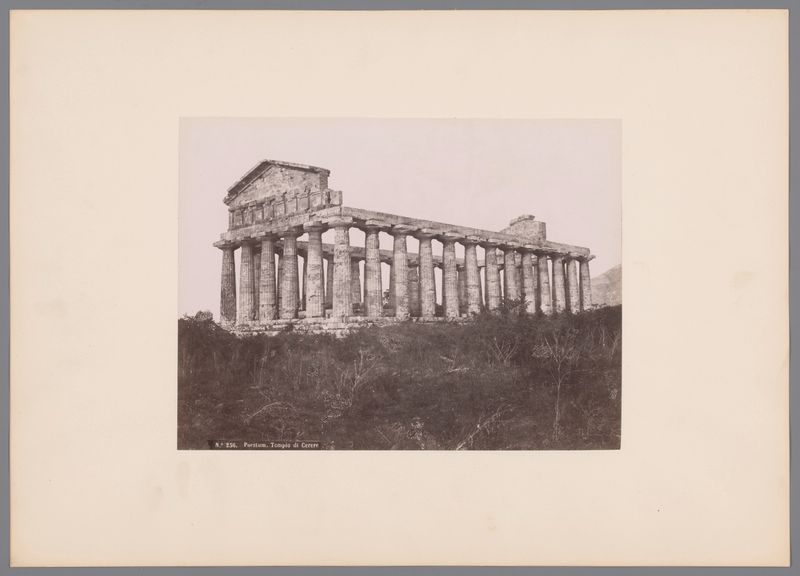
More Architecture Art
Browse all →
The statue of Liberty
Frédéric Auguste Bartholdi

View of Houses in Delft, Known as ‘The Little Street’
Johannes Vermeer

View of Houses in Delft, Known as ‘The Little Street’
Johannes Vermeer

The Cathedral in Rouen. The portal, Grey Weather
Claude Monet

The yellow house
Vincent van Gogh

The Church in Auvers-sur-Oise, View from the Chevet
Vincent van Gogh