Tempio del sole, ballo La morte di Rolla — History & Facts
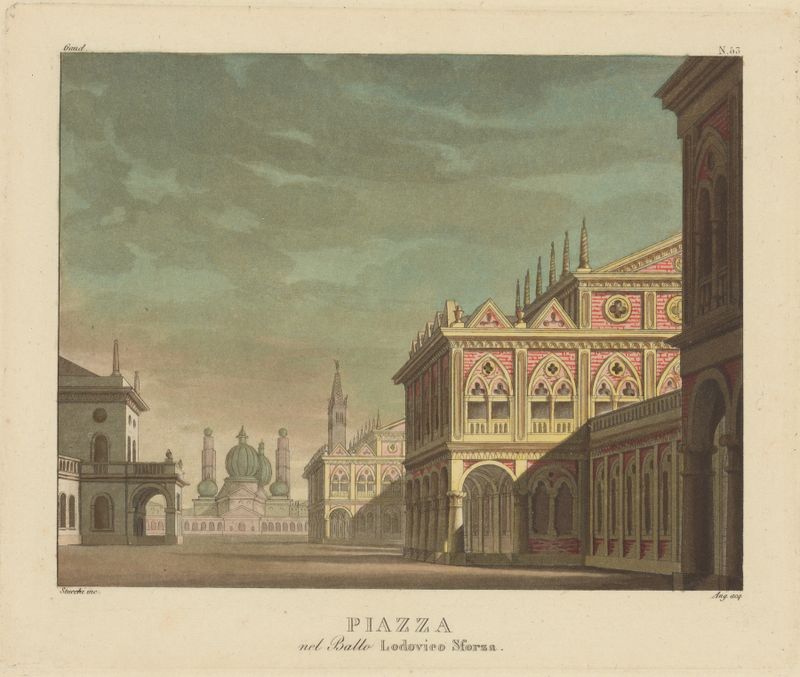
Who listens when art speaks of silence? In the gentle twilight of Tempio del sole, ballo La morte di Rolla, a profound stillness envelops the figures, inviting introspection and reflection. Look to the left, where the dancers are poised in elegant motion, their flowing garments capturing the very essence of movement. The warm golden hues spill from the sun, illuminating the delicate expressions on their faces, revealing a moment caught between joy and sorrow. Notice how the shadows lengthen behind them, suggesting both the fleeting nature of life and the inevitable embrace of death.
The composition draws the eye in a circular dance, echoing the rhythmic cadence of the music that seems to linger in the air. Delve deeper into the contrasts woven into this tableau; the vibrant colors of the dancers’ attire pulse with life, yet the solemn undertone of the setting looms large. The juxtaposition of movement and stillness speaks to our transient existence, where moments of joy are often tinged with the awareness of mortality. Each figure, while occupied with celebration, carries an invisible weight—an acknowledgment of what lies ahead, a dance performed on the precipice of fate. During the years 1820 to 1829, Stanislao Stucchi, a prominent figure of the Italian neoclassical movement, created this piece amidst the evolving landscape of art in Italy.
A period marked by a resurgence of interest in classical themes alongside burgeoning romanticism, it reflects both traditional values and the artist’s personal exploration of human experience. The work embodies the shifting currents of thought, as Stucchi grappled with the tension between history and contemporary existence.