The Admiral’s Palace, Algiers Harbor — History & Facts
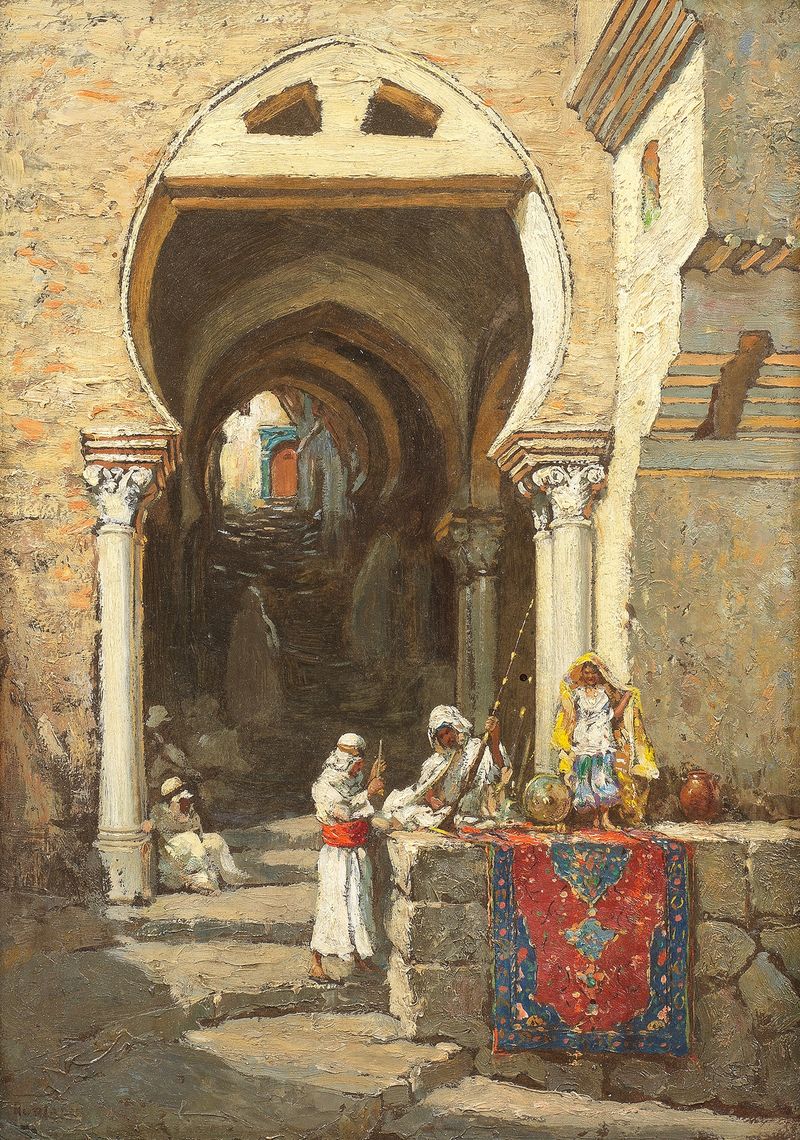
In The Admiral’s Palace, Algiers Harbor, vibrant colors dance across the canvas, evoking not just a place but an emotional landscape that invites the viewer to linger. The hues tell stories, offering a glimpse into the heart of a moment suspended between time and memory. Look to the foreground where deep blues of the water ripple softly against the warm oranges and yellows of the palace, creating a luminous contrast that captivates the eye. Notice how wisps of clouds curl gracefully above, painted in gentle pastels that echo the serenity of an evening sky.
The symmetry of architecture nestled against the harbor suggests stability, while the brush strokes convey a sense of movement, as if the scene is alive, breathing in the salty air of the Mediterranean. Yet, beneath this picturesque view, emotional tensions simmer. The juxtaposition of vibrant life against the stillness of the harbor hints at the transience of beauty and existence. Subtle shadows cast by the setting sun evoke a sense of nostalgia, while the lavish colors may resonate with the artist's yearning for connection, reminding us of both splendor and solitude.
Each stroke reveals a deeper narrative, where the calm facade belies the complexities of life in a bustling port city. In the time of creating this work, Millar was influenced by the vibrant colors of Impressionism, a movement that sought to capture the essence of light and its effect on landscapes. Though the exact date of this painting is unknown, it likely emerged during the early twentieth century when he found himself exploring North Africa, a region that would inspire many of his vibrant works as he sought to capture the transient beauty of the world around him.