The Aqua Claudia in the Roman Campagna — History & Facts
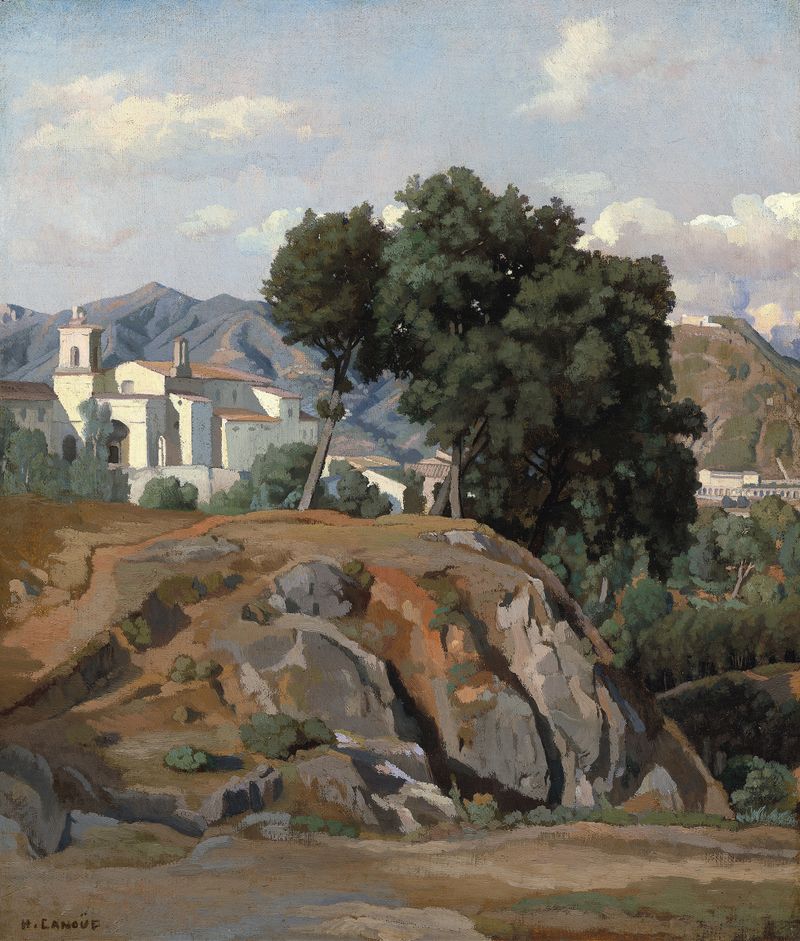
In the quiet embrace of a vast landscape, the weight of solitude lingers like a whisper, drawing us into a timeless moment of reflection and distance. Look to the left at the majestic remnants of the Aqua Claudia, its arches rising gracefully against the soft undulations of the Campagna. The muted earth tones intertwine with the lush greens, creating a harmonious rhythm that captures the essence of the land. Notice how the light filters through the clouds, casting a silvery glow on the aqueduct and highlighting the delicate interplay of shadow and form, inviting the viewer into an intimate conversation with the past. Beyond the surface beauty lies a profound sense of loneliness.
The grandeur of the aqueduct speaks not only of human achievement but also of the passage of time, reminding us that even the most magnificent structures eventually succumb to nature. The solitary figure walking along the path, dwarfed by the landscape, embodies the bittersweet solitude inherent in the journey of life. Here, the juxtaposition of man’s creations against the vastness of nature evokes a poignant tension between existence and oblivion. In the early 1840s, the artist found inspiration in the fleeting beauty of the Roman countryside, a period marked by a burgeoning interest in Romanticism and a deep appreciation for Italy’s classical heritage.
Lanoüe painted The Aqua Claudia in the Roman Campagna during his time in Rome, where he absorbed the echoes of history and the melancholic beauty of abandoned structures, capturing a moment that resonates with both nostalgia and a deep yearning for connection.