
The Arch of Constantine — History & Facts
Where does light end, and longing begin? In the presence of The Arch of Constantine, one feels the weight of history basking in the warm glow of golden illumination, hinting at something divine just beyond reach. Focus first on the arch itself, a monumental structure that dominates the composition. Its intricate carvings and reliefs teem with life, inviting viewers to explore the stories etched into stone. The soft play of light accentuates both the grandeur and the melancholy of the arch, highlighting shadows that cling to the crevices, suggesting a past that continues to echo in the present.
The sky above, painted in soft blues and gentle whites, seems to cradle the arch, creating a sense of elevation that speaks of both aspiration and nostalgia. The juxtaposition of light and shadow reveals deeper emotional tensions within the piece. While the arch stands tall and proud, signaling victory and permanence, the muted colors and delicate details evoke a sense of fragility and ephemerality. Each figure carved into the stone hints at the stories of triumph and loss, inviting viewers to contemplate the weight of legacy.
This interplay between the monumental and the fleeting speaks to the divine grip history holds on both the living and those long departed. Giacomo van Lint created this work during a time when the appreciation for classical architecture was being revived in the 17th century, alongside a growing interest in the interplay of light and environment. Influenced by the Baroque movement and the reverence for ancient Rome, he infused his artistic vision with a blend of nostalgia and respect for the past, capturing not just an arch but a portal to another era that resonates across time.
More Artworks by Giacomo van Lint
Browse all →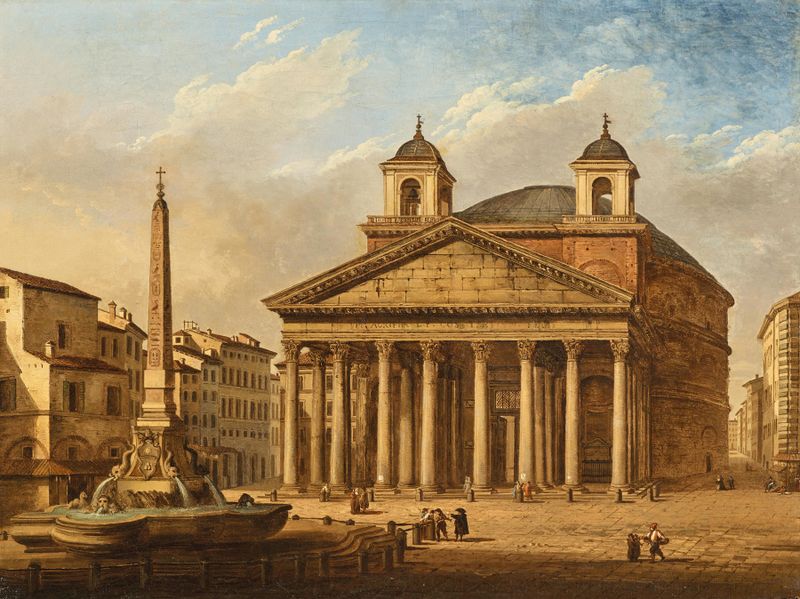
More Architecture Art
Browse all →
The statue of Liberty
Frédéric Auguste Bartholdi

View of Houses in Delft, Known as ‘The Little Street’
Johannes Vermeer

View of Houses in Delft, Known as ‘The Little Street’
Johannes Vermeer

The Cathedral in Rouen. The portal, Grey Weather
Claude Monet

The yellow house
Vincent van Gogh

The Church in Auvers-sur-Oise, View from the Chevet
Vincent van Gogh