The Arrival of the Royal Charles — History & Facts
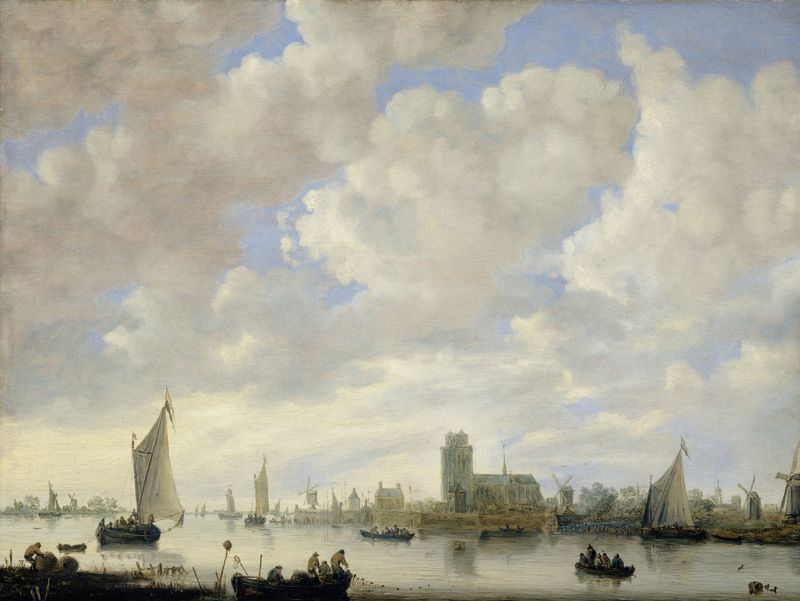
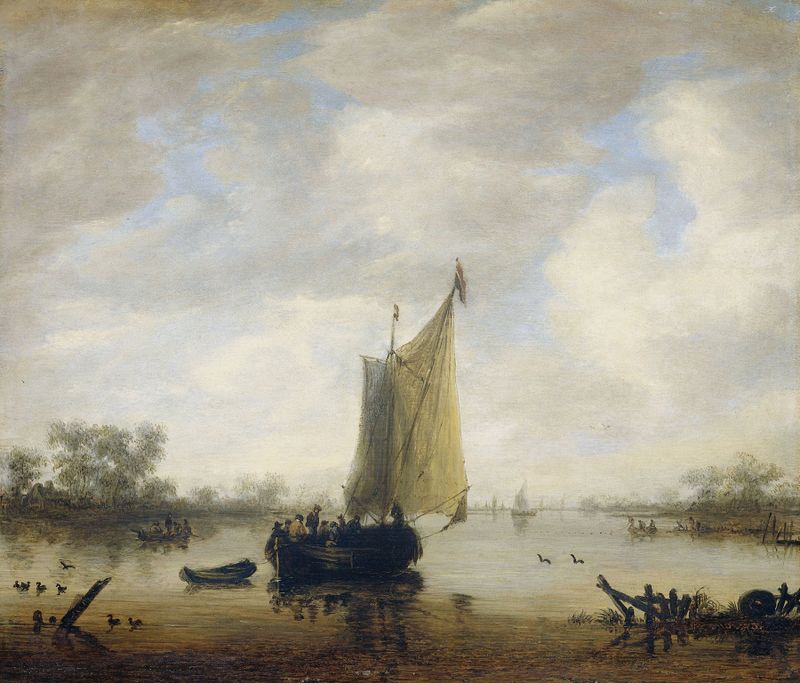
What if silence could speak through light? In the juxtaposition of the darkened waters and the brilliant sails, the painting beckons us to contemplate the quiet rebirth of hope amidst turbulent transitions. Look to the center of the canvas, where the grand vessel, the Royal Charles, rises majestically against the tumultuous skies. The taut sails, illuminated by a luminous touch of sunlight, capture the viewer's eye, drawing our gaze to the vessel's powerful stance. Surrounding this focal point, the artist employs a rich palette of blues and greys, contrasting the ship's brightness with the darker hues of the waves, evoking a sense of both peril and possibility. In the painting, the varied expressions of the onlookers speak volumes about anticipation and trepidation.
Their postures range from eager excitement to cautious apprehension, illustrating the emotional tensions of a moment poised between departure and arrival. This contrast mirrors the transition that the Royal Charles represents — a symbol of royal power and national pride that also hints at the fragile state of human endeavor against the might of nature. Jeronymus van Diest II painted this work in 1667, during a period marked by the political and maritime ambitions of the Dutch Republic. As Europe was grappling with a shifting balance of power, the artist was immersed in the coastal landscapes of Holland, capturing not only the physical beauty of the sea but also the profound sense of renewal that such moments of arrival could signify in a time of uncertainty.