
The Artist Painting a Cow in a Meadow — History & Facts
When did color learn to lie? The delicate hues of a pastoral scene transport us to a moment where truth is painted with every brushstroke, yet remains elusive. Look to the left at the verdant grass, a lush green that seems almost alive under the soft sunlight. The meadow stretches outward, dotted with wildflowers, each petal and leaf rendered in exquisite detail. Notice how the artist captures the gentle curve of the cow’s body, its coat reflecting the afternoon light, a warm interplay of browns and whites that contrasts with the cool greens of its surroundings.
The composition invites us into this tranquil world, where the calmness of nature is mirrored in the steady focus of the painter. As you absorb the scene, consider the emotional undertones at play. The peacefulness of the meadow juxtaposes the act of creation, suggesting an inner dialogue between the artist and his subject. The cow stands as a symbol of both nature’s bounty and the artist's dedication to depicting life with authenticity.
Here, the truth of the moment is captured not just in the forms and colors, but in the quiet reverence for the simple beauty before him. Created in 1850, this work emerged during a period of profound change in art, as realism began to take hold in the Netherlands. Hendrikus van de Sande Bakhuyzen, known for his detailed renderings of rural life, was deeply influenced by the evolving artistic landscape. At this time, he sought to provide a window into the natural world, capturing not just the physical presence of the cow and meadow but the essence of a life intertwined with nature.
More Artworks by Hendrikus van de Sande Bakhuyzen
Browse all →
Skaters On A Frozen Stream On The Outskirts Of A Village
Hendrikus van de Sande Bakhuyzen

A Herd With Cattle In A Mountainous Landscape
Hendrikus van de Sande Bakhuyzen

Gelder Landscape
Hendrikus van de Sande Bakhuyzen
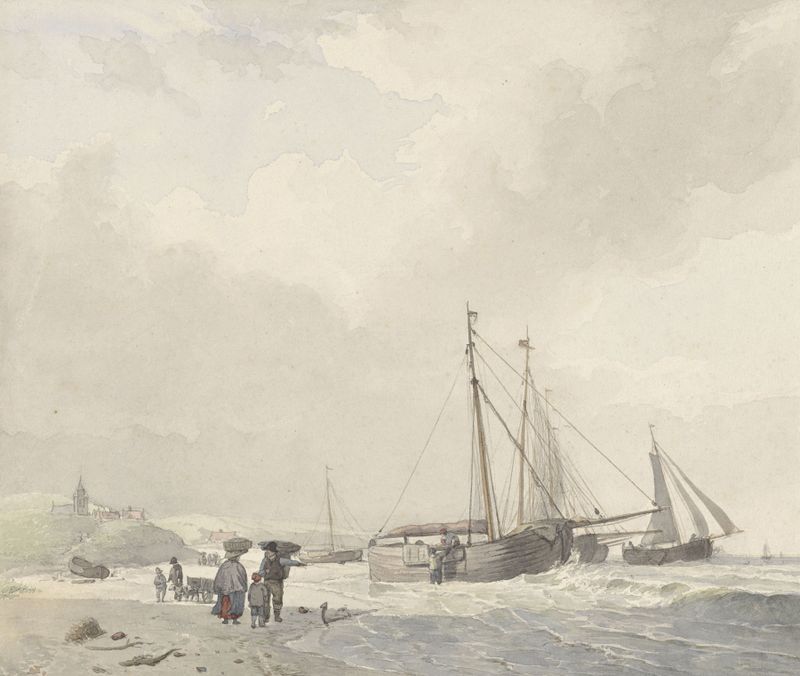
Gezicht op het strand bij Scheveningen
Hendrikus van de Sande Bakhuyzen

Schiffe und Kähne an waldigem Flussufer
Hendrikus van de Sande Bakhuyzen





