
The Baptism of Christ — History & Facts
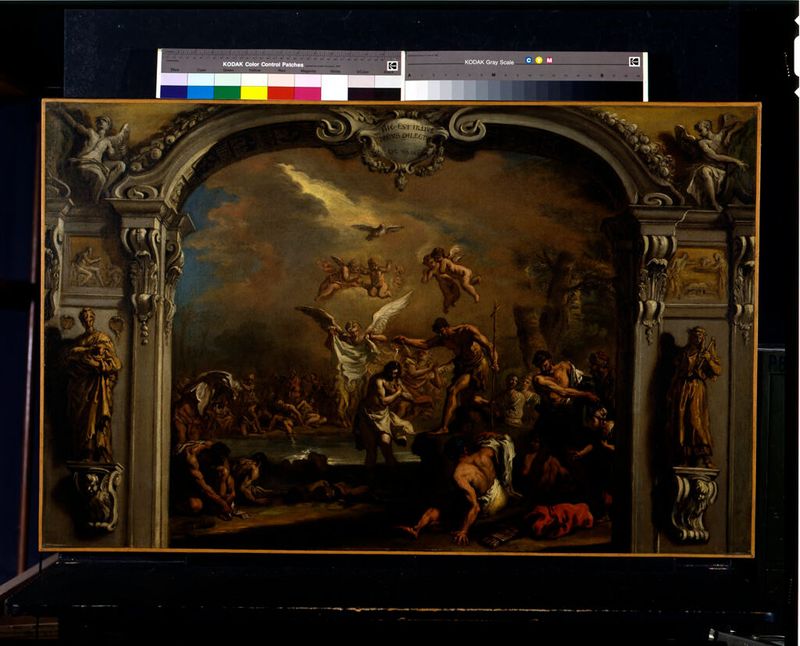
In the profound stillness of spiritual transformation, the act of creation reverberates through the water’s surface, capturing a moment where the divine touches the earthly realm. This intersection of humanity and divinity begs us to ponder the depths of belief and the weight of ritual. Focus first on the ethereal glow emanating from the figure of Christ, standing at the center, arms outstretched and enveloped in light. Notice how the soft blues and radiant whites contrast against the dark foliage, heightening the sense of sanctity that surrounds this pivotal moment.
The artist’s brushwork creates a fluidity, as if water itself is alive, swirling with the emotions of both the baptized and the onlookers. Each carefully placed stroke invites the viewer into a sacred space where time seems suspended, and grace flows freely. Delve deeper into the expressions of the bystanders—each face tells a story, revealing a spectrum of awe, reverence, and introspection. The figures, though painted in muted tones, project an unbreakable connection to the central event, embodying the collective spirit of devotion.
The contrast between the surrounding chaos of nature and the serene focus on the baptism draws attention to the inner conflict between the divine and mortal experiences, suggesting that in the act of creation, there is both beauty and sacrifice. Sebastiano Ricci painted this masterpiece in Venice between 1713 and 1714, during a period marked by a transition in the Venetian Baroque style. As Ricci grappled with the evolving tastes of his patrons and the influence of contemporaneous artists, he sought to fuse dramatic narratives with emotional depth, allowing The Baptism of Christ to emerge as an exemplar of his artistic vision and a reflection of the spiritual zeitgeist of his time.
More Artworks by Sebastiano Ricci
Browse all →

More Religious Art
Browse all →
The Return of the Prodigal Son
Rembrandt van Rijn

The Garden of Earthly Delights
El Bosco

Count Orgaz’ funeral
El Greco

The Hundred Guilder Print: the central piece with Christ preaching, the plate arched
Rembrandt van Rijn

The Descent from the Cross
Rogier van der Weyden

The return of the prodigal son
Rembrandt van Rijn