A Bacchanal — History & Facts
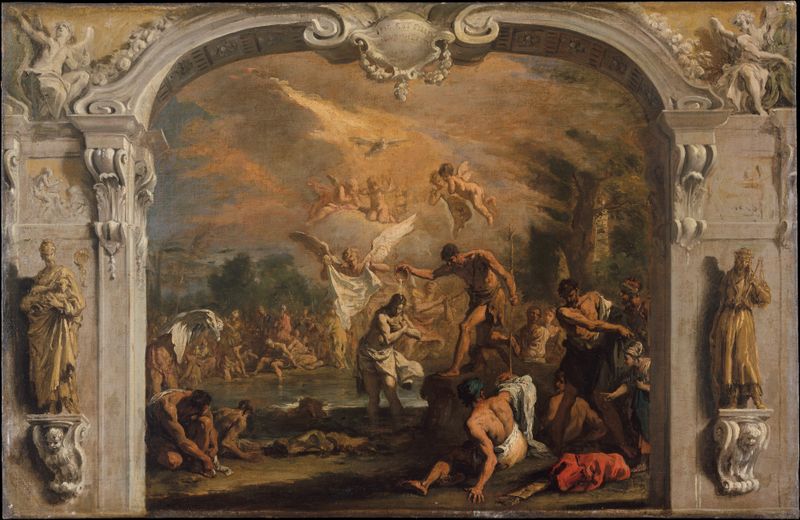
Can beauty exist without sorrow? In the realm of divine revelry, where joy dances closely with the shadows of melancholy, this question reverberates through every brushstroke. Look to the center of the canvas, where figures swirl in a frenzied celebration, their bodies entwined in a joyful chaos. The vibrant hues of gold and deep blue evoke a celestial atmosphere, while the ethereal light that bathes the scene enhances the almost dreamlike quality. Notice how some figures are positioned in ecstatic abandon, while others linger at the edges, their expressions hinting at a deeper complexity beyond the festivity. The contrasts within the painting speak volumes—joy and restraint, divinity and humanity, pleasure and pain.
Here, revelers are not merely lost in ecstasy; they carry the weight of existence in their vibrant gestures. The lush foliage framing the scene embodies nature's abundance, yet it also serves as a reminder of life's ephemeral beauty, suggesting that beneath the surface of pleasure lies an undercurrent of sorrow and transience. Sebastiano Ricci created this work during the late 17th century, a period marked by the Baroque movement's exploration of light and emotion. Living in Venice, he was deeply influenced by the city’s vibrant artistic environment.
This was a time of flourishing creativity, and Ricci embraced the exuberance of life and spirituality, encapsulating them in his dynamic compositions, which invite viewers to ponder the complex interplay of joy and melancholy.