The beach at Skagen — History & Facts
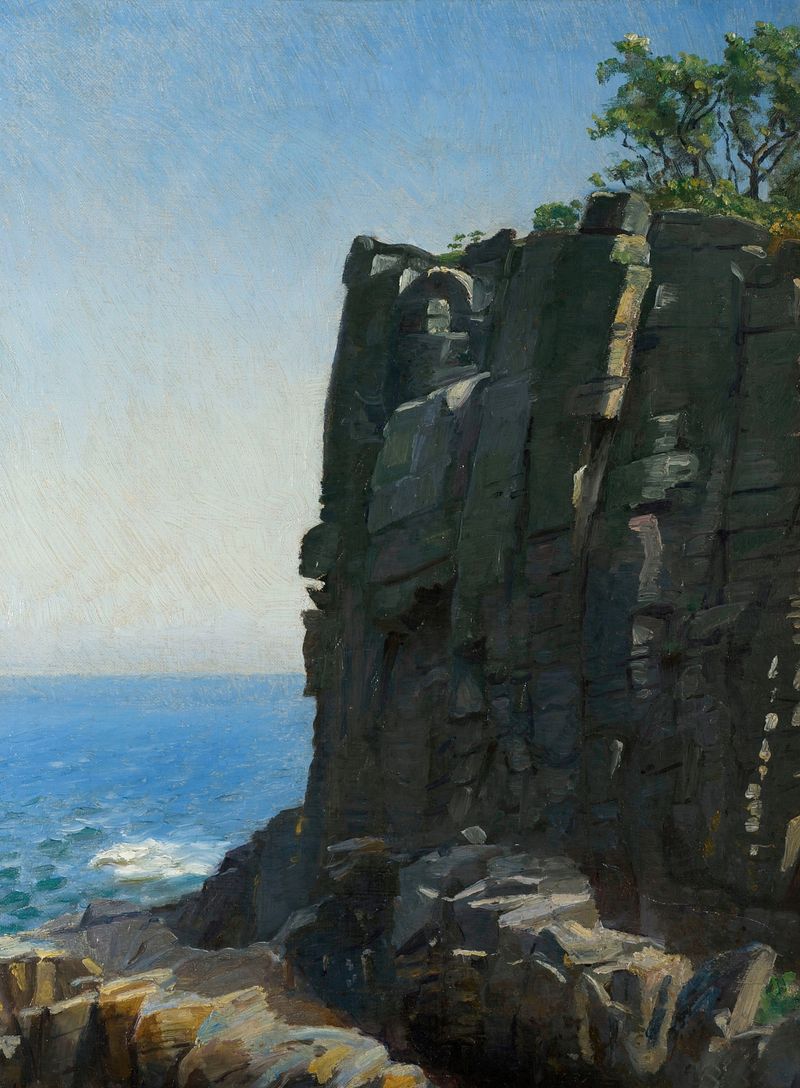
When did color learn to lie? In The Beach at Skagen, the vibrant hues weave a narrative that invites contemplation and introspection, blurring the boundaries between reality and illusion. Focus on the luminous interplay of light and shadow, which dances across the sandy shore and the figures scattered along the beach. Notice how the sunlight spills from a cloudless sky, casting a golden hue that envelops the scene, drawing your gaze to the delicate touches of color on the women's dresses. These brushstrokes create a rhythmic pulse, suggesting movement and life, encapsulating the fleeting nature of a beautiful moment. The painting speaks to a duality of existence: the joy of leisure against the underlying currents of transience.
The figures, seemingly lost in their own worlds, are connected through their shared experience of the landscape. Pay attention to the contrast between the stillness of the sea and the gentle bustle of the beachgoers, embodying both serenity and a longing for connection. Each detail, from the rippling water to the soft contours of the dunes, reflects an emotional resonance that transcends the surface charm. Created between 1900 and 1927, this work emerged during a period when Ancher's artistic voice was distinctly established in Skagen, Denmark, a community known for its vibrant artist colony.
The world was shifting with modernist ideas, yet Ancher remained rooted in naturalism, capturing the essence of life by the sea. This time offered him an opportunity to experiment with light, allowing him to express the nuances of human emotion in the landscape he loved.