The Capture of Troy — History & Facts
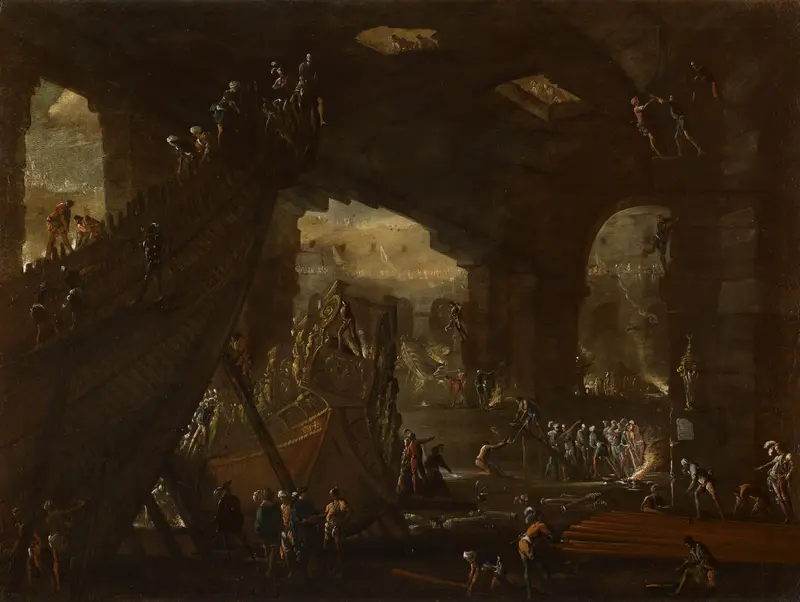
A city’s fate hangs in the balance under a smoky, turbulent sky, where the drama unfolds not in the clash of armies but in the uneasy stillness before disaster. The Capture of Troy by Agostino Tassi draws the viewer into a world of shadow and anticipation, where the golden light breaking through the arch of a bridge is both a promise and a warning. The artist leads your eye along the water’s edge, where small figures scurry in the gloom, their gestures urgent and secretive.
Above, silhouettes mass on the battlements, while a spectral chariot hovers in the clouds, signaling the intervention of fate or gods. The palette is somber, the architecture monumental, dwarfing the human presence and heightening the sense of impending catastrophe. Painted around 1639, this work belongs to a period when history painting was a stage for grand narratives and moral lessons, often commissioned by patrons eager to display both erudition and taste. Agostino Tassi was known for his mastery of perspective and atmospheric effects, and here he transforms the mythic fall of Troy into a meditation on power and vulnerability.
The precise date and journey of this particular painting remain obscure—history has kept few traces of its patrons or early admirers—but its presence in the canesso.art collection today invites us to linger in its half-lit world, searching for meaning in the shadows and the glimmering water.