
The Castalian Spring, Delphi — History & Facts
In capturing the essence of movement within stillness, the artwork invites viewers to immerse themselves in a moment suspended between time and memory. Look to the center of the canvas, where the delicate flow of water cascades from a spring, glistening under the gentle embrace of sunlight. Notice how the artist has captured the nuances of light reflecting off the rippling surface, creating a dance of shadows and highlights that breathe life into the scene. The lush greenery surrounding the spring frames this focal point, with hues of emerald and gold harmonizing with the soft blues of the water, drawing the eye deeper into the tranquil landscape. As your gaze wanders, consider the symbolism of the water's movement, representing both the passage of time and the continuity of ancient wisdom.
The juxtaposition of the flowing spring against the stillness of the surrounding rocks evokes a sense of balance between vitality and permanence. Small figures, perhaps pilgrims or seekers, hint at the historical significance of Delphi, where the mingling of nature and spirituality encourages introspection and renewal. In 1895, while residing in England, Fulleylove sought inspiration from the ancient ruins of Delphi during a period when European artists were increasingly drawn to classical themes. This painting not only reflects the artist’s fascination with the sublime but also resonates with a broader cultural shift towards nostalgia for myth and history, evoking a longing for the timeless beauty found in nature's embrace.
More Artworks by John Fulleylove
Browse all →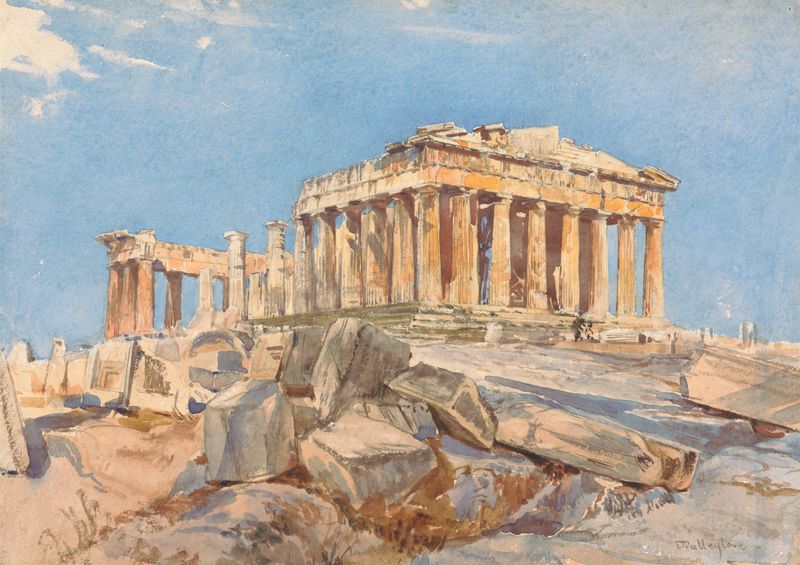
The Parthenon from the North End of the Eastern Portico of the Propylae, Evening Light
John Fulleylove
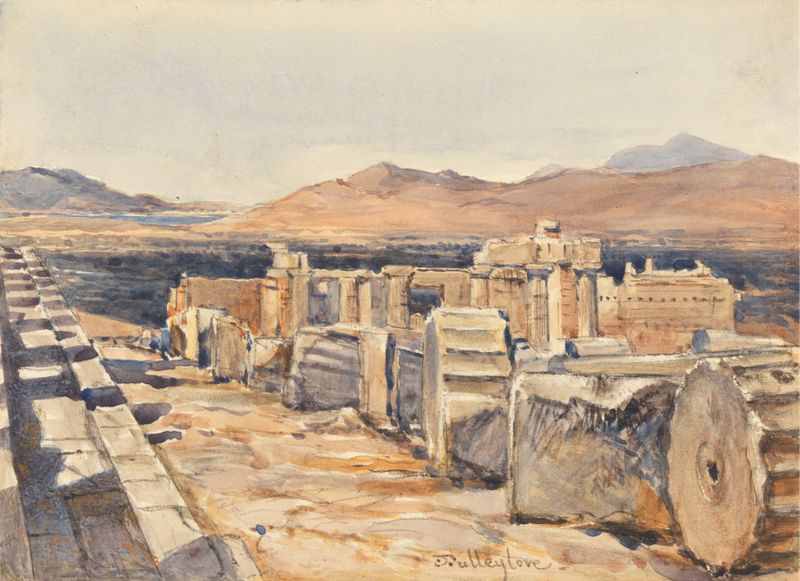
The Propylaea from the Northern Edge of the Stylobate of the Parthenon, Athens
John Fulleylove
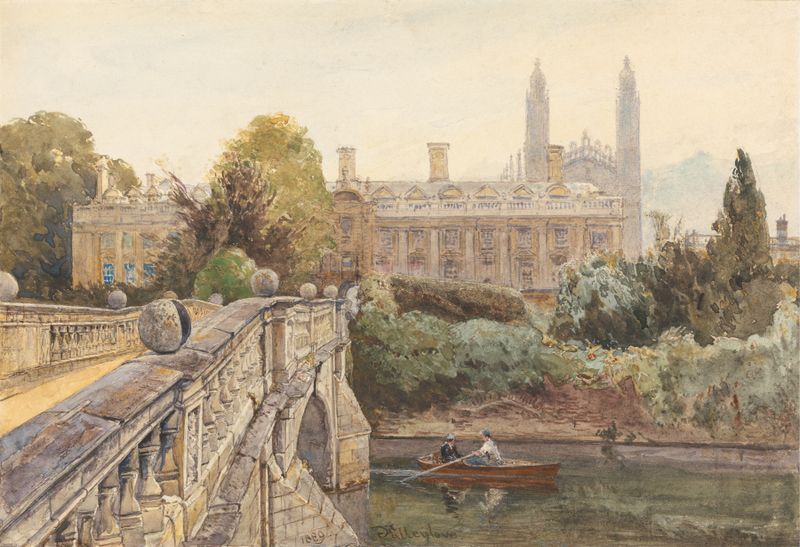
Clare College and Bridge over the Cam with King’s College in the background
John Fulleylove
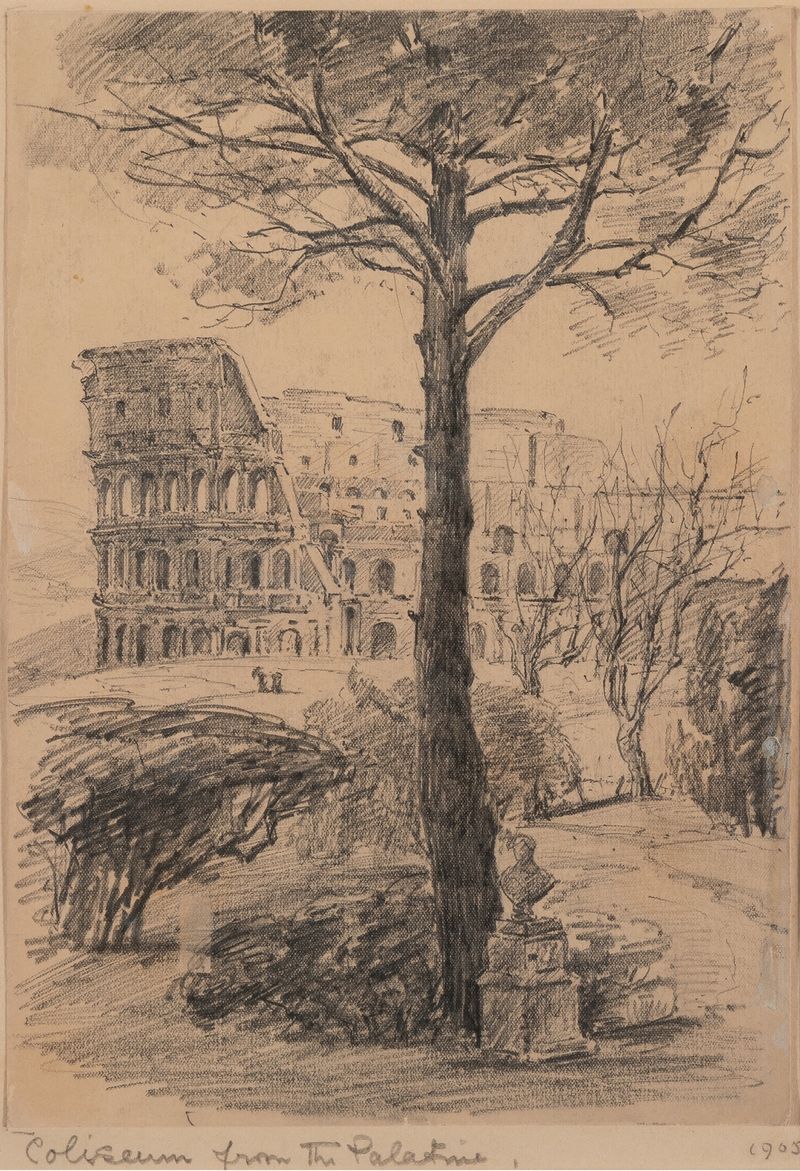
The Colosseum seen from the Palatine hill, Rome
John Fulleylove
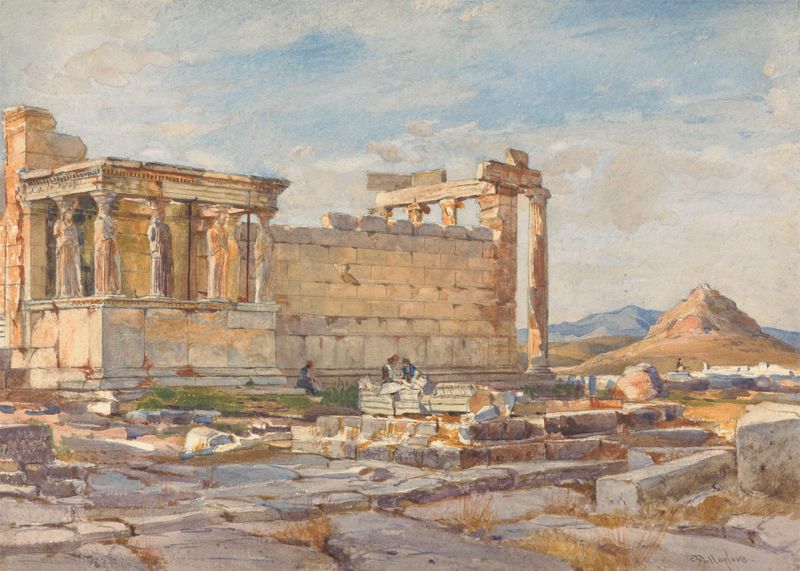
The Southern Side of the Erectheum, with the Foundation of the Earlier Temple of Athena Polias
John Fulleylove
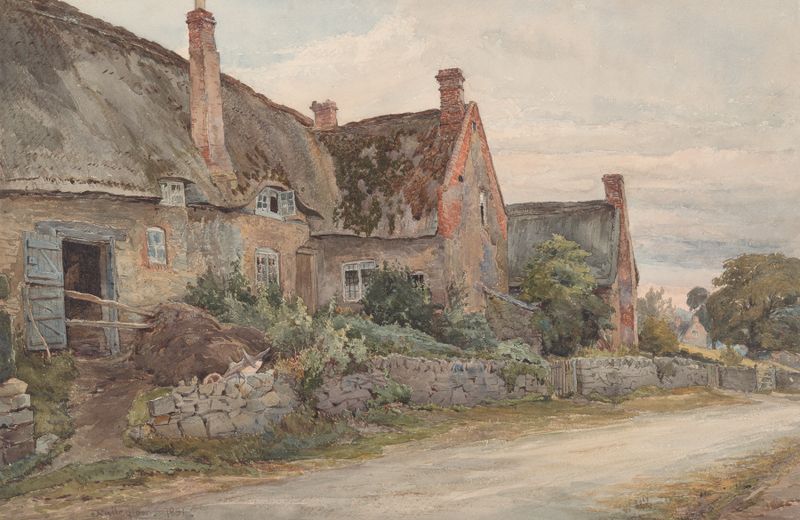
Thatched Cottage with Barn Adjoining
John Fulleylove
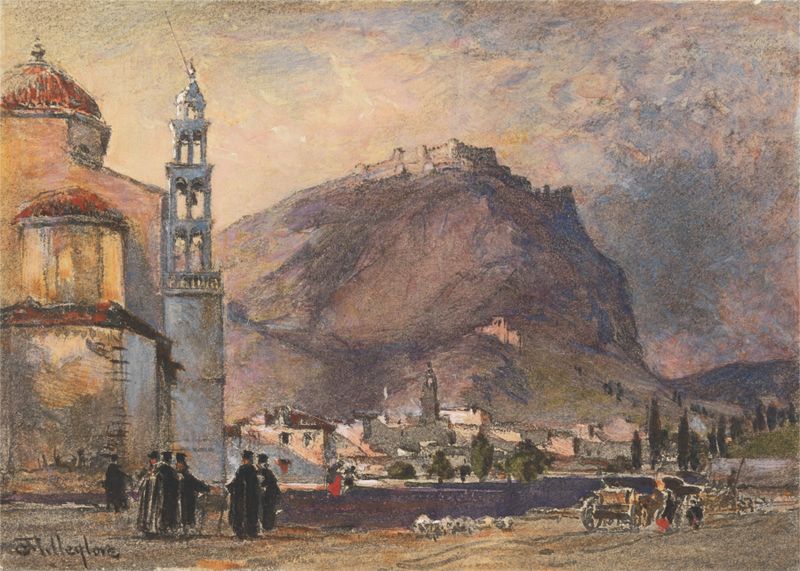
Argos and Larissa
John Fulleylove





