
The cathedral of Burgos — History & Facts
In The Cathedral of Burgos, the interplay of light and shadow invites the viewer to consider the transformative power of architecture on human experience. Look to the center where the towering spires reach heavenward, their intricate details crafted with reverence. Notice how the sun bathes the stone in a warm glow, illuminating the facade while deeper shadows create a sense of depth. The soft, muted tones of the surrounding landscape contrast with the cathedral's grandeur, drawing your gaze toward its ethereal presence.
Every brushstroke is intentional, revealing both skill and a deep understanding of light as a transformative element. Yet, beyond the physical beauty lies an emotional tension — the cathedral stands as a monument to both faith and the passage of time. The surrounding landscape, a blend of rolling hills and muted earth tones, emphasizes the isolation of this architectural marvel. It reflects the struggle between the divine aspirations of humanity and the inevitable erosion of earthly existence, suggesting a longing for permanence in a world defined by change. Friedrich Eibner painted this work in 1872 during a period of artistic reflection and modernization in Europe.
The emergence of new artistic movements was reshaping traditional landscapes and architectural depictions. Eibner, deeply influenced by the Romantic movement, sought to capture the sublime beauty of Gothic architecture, while simultaneously grounding it within the context of the natural environment. This painting stands as a testament to Eibner's exploration of transformation, both in the world around him and within the architectural creations that define it.
More Artworks by Friedrich Eibner
Browse all →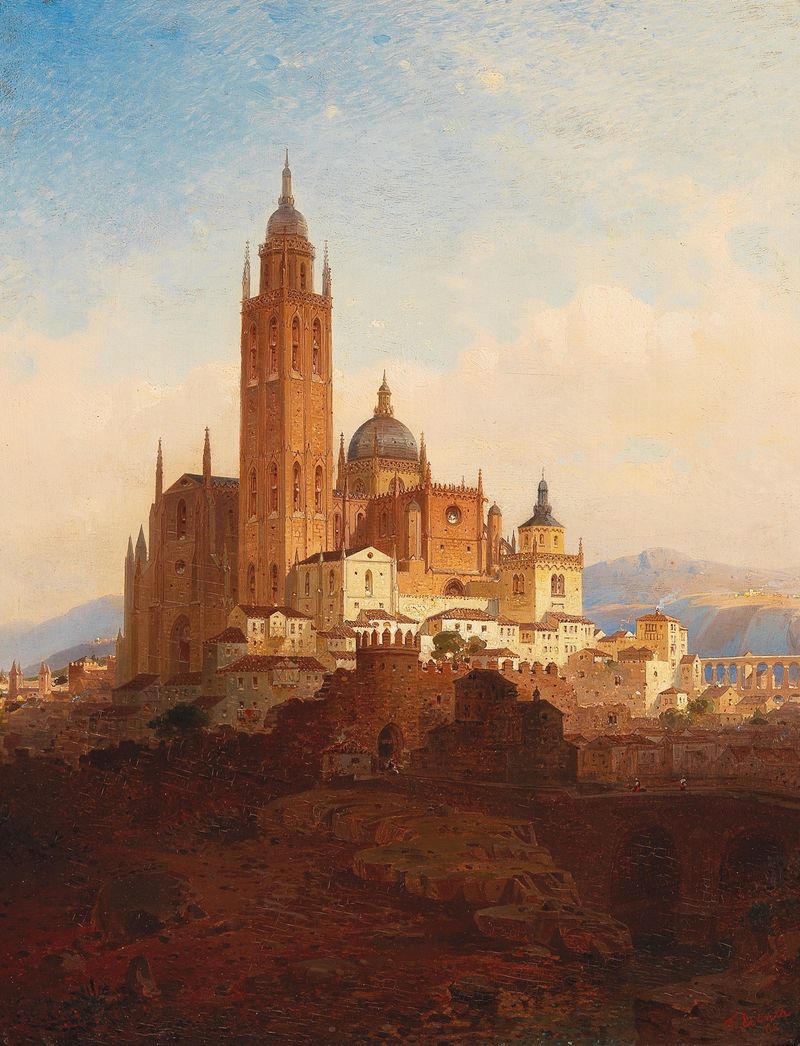
More Architecture Art
Browse all →
The statue of Liberty
Frédéric Auguste Bartholdi

View of Houses in Delft, Known as ‘The Little Street’
Johannes Vermeer

View of Houses in Delft, Known as ‘The Little Street’
Johannes Vermeer

The Cathedral in Rouen. The portal, Grey Weather
Claude Monet

The yellow house
Vincent van Gogh

The Church in Auvers-sur-Oise, View from the Chevet
Vincent van Gogh