
The Colosseum, Rome — History & Facts
What if beauty was never meant to be finished? In the ruins of the Colosseum, we find the essence of desire, that yearning for both grandeur and the passage of time. Look to the foreground, where the arches loom like sentinels against the sky. Giovanni Battista Busiri captures the textured stonework with delicate brush strokes, bringing forth a sense of history as light dances across the surfaces. Notice how the warm ochres and cool blues are harmoniously juxtaposed, imbuing the structure with life and inviting the viewer to wander through its ancient pathways. Beneath the crumbling façade lies a deeper narrative—a tension between the past's magnificence and its present decay.
The shadows carved by the setting sun evoke a poignant reminder of loss and the relentless march of time. Each broken column speaks of a story untold, the whisper of gladiators and spectators reverberating through the ages. The artist invites us to contemplate not only what has been lost but also the enduring beauty that remains, echoing the tension between desire and destruction. Busiri painted this piece during a time when the fascination with classical antiquity and ruins was resurging in art, reflecting a collective yearning for the sublime.
Working in Rome, he was surrounded by the echoes of history, where every glance at the Colosseum could incite both inspiration and melancholy. In this context, his depiction stands as a testament to the enduring allure of beauty, even in its fragmented forms.
More Artworks by Giovanni Battista Busiri
Browse all →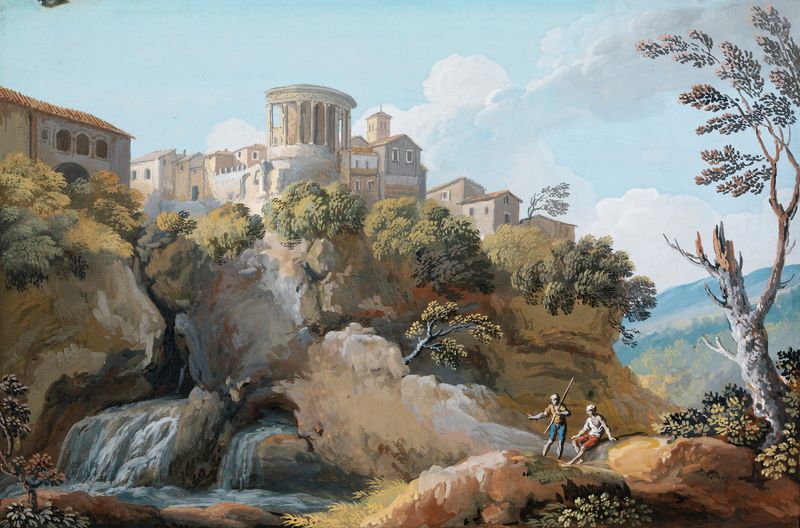
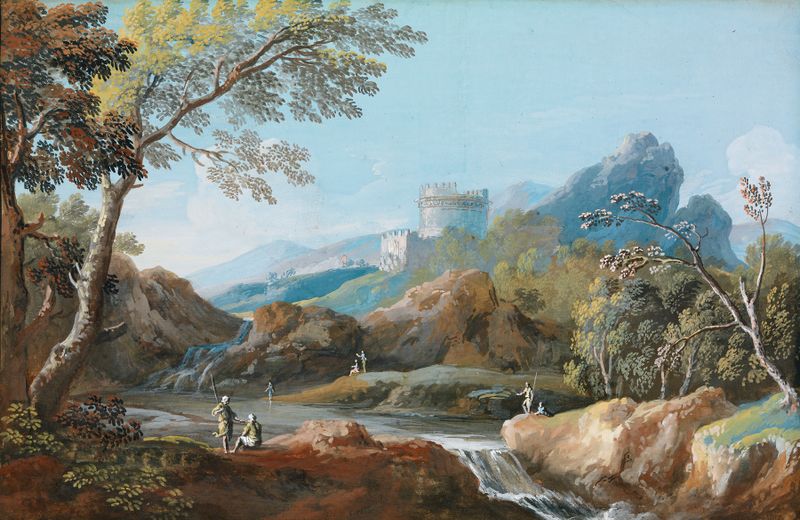
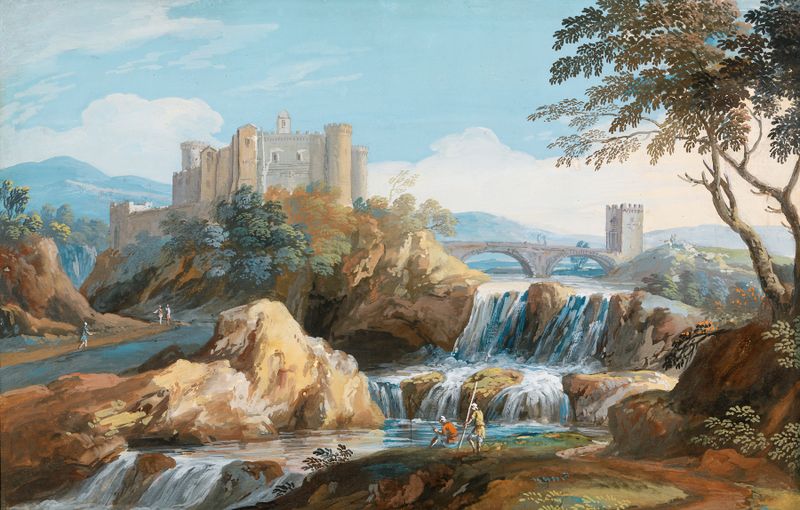
More Architecture Art
Browse all →
The statue of Liberty
Frédéric Auguste Bartholdi

View of Houses in Delft, Known as ‘The Little Street’
Johannes Vermeer

View of Houses in Delft, Known as ‘The Little Street’
Johannes Vermeer

The Cathedral in Rouen. The portal, Grey Weather
Claude Monet

The yellow house
Vincent van Gogh

The Church in Auvers-sur-Oise, View from the Chevet
Vincent van Gogh