
The Tomb of Cecilia Metella on the Appian Way, near Rome — History & Facts
In a realm where every stroke of color tells a story, the vibrant palette transforms mere landscapes into emotional landscapes, inviting reflection and wonder. As you explore the canvas, look toward the left at the imposing structure of the tomb, its weathered stones echoing centuries of history. Focus on the brilliant greens of the surrounding foliage, which contrast sharply with the muted earth tones of the mausoleum. Notice how the light dances upon the surface, creating an interplay of shadow and brightness that breathes life into the scene, pulling you into its timeless embrace. Delve deeper, and you’ll uncover the emotional tensions woven through the artwork.
The juxtaposition of the solemn tomb against the lush, vibrant nature hints at the cycle of life and death, suggesting that beauty persists even within decay. The atmospheric perspective expands the scene, evoking a sense of journey, both physical and metaphorical, along the storied Appian Way. Each brushstroke seems to whisper tales of those who traversed this ancient path, intertwining personal histories with the grandeur of the eternal city. Giovanni Battista Busiri painted this work around 1750, during a time when neoclassicism was gaining prominence in art.
Living in Rome, he was influenced by the rich historical context surrounding him, reflecting an era fascinated with antiquity and its narratives. The painting encapsulates both his artistic vision and the cultural currents of the time, presenting a moment where history and artistry converge.
More Artworks by Giovanni Battista Busiri
Browse all →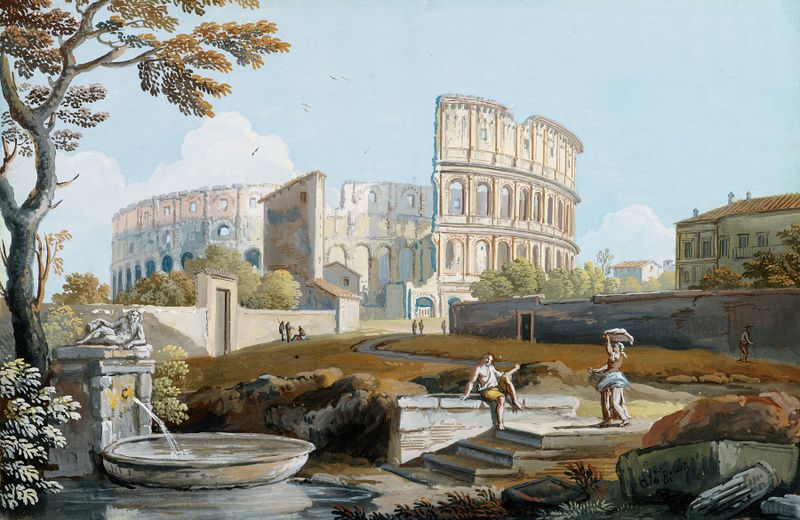
More Architecture Art
Browse all →
The statue of Liberty
Frédéric Auguste Bartholdi

View of Houses in Delft, Known as ‘The Little Street’
Johannes Vermeer

View of Houses in Delft, Known as ‘The Little Street’
Johannes Vermeer

The Cathedral in Rouen. The portal, Grey Weather
Claude Monet

The yellow house
Vincent van Gogh

The Church in Auvers-sur-Oise, View from the Chevet
Vincent van Gogh