The Day after the Battle of Trafalgar, Securing the Prize — History & Facts
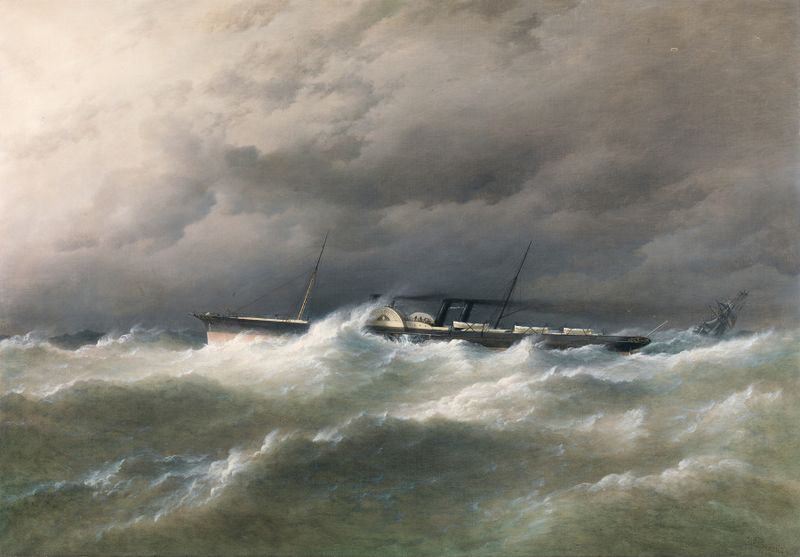
The aftermath of chaos hangs heavy in the air; a solitary ship drifts amidst the vastness of a tranquil sea. Crew members, their faces etched with the weariness of battle, methodically assess the remnants of conflict, surrounded by the haunting silence of victory. The soft glow of the sun breaks through the clouds, illuminating the water and casting long shadows that whisper of loss and solitude. Look to the left at the weathered hull of the ship, its textures subtly contrasting with the smooth, shimmering surface of the sea.
Observe how the artist employs a muted palette of blues and grays, suggesting both the serenity and melancholy of the moment. The delicate brushwork conveys a sense of stillness, drawing the viewer into the scene with a feeling of reflective fragility, as if capturing a breath held too long. Within this seemingly peaceful tableau lies a profound emotional tension; the quietude belies the turmoil of war just endured. The expressions of the sailors, a blend of relief and lingering grief, hint at a lingering loneliness that persists even in victory.
The distant horizon serves as a metaphor for the unknown future, where triumph carries the weight of loss, and the remnants of battle are inextricable from the dawn of a new day. Richard Brydges Beechey painted this work during a period in the early 19th century when maritime themes were gaining prominence. Living in England, amidst a post-Napoleonic Europe, he focused on naval battles and their aftermaths, reflecting the national sentiment of pride and sorrow intertwined. This piece, though undated, embodies the spirit of his exploration into the human experience against the backdrop of history’s relentless tide.