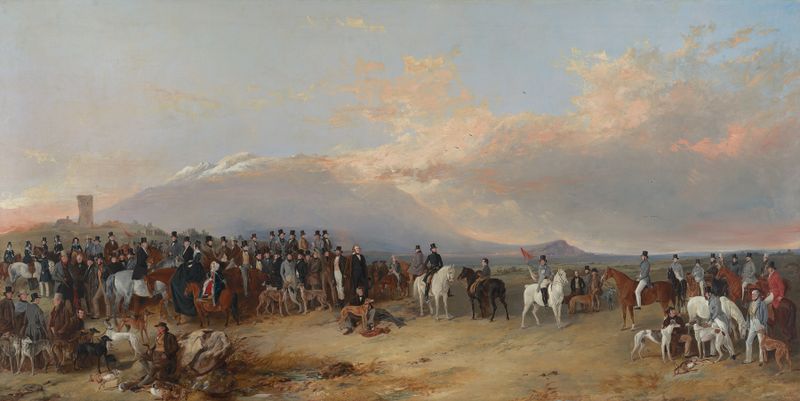
The Day’s Bag — History & Facts
Art reveals the soul when the world turns away. In the silent exchange between the observer and the canvas, we confront our own voids, our own unspoken narratives. Look to the left at the solitary figure, a hunter in muted tones, his expression a mixture of contemplation and resolve. Notice the soft, diffused light that bathes him, casting gentle shadows that suggest both warmth and solitude.
The rich earth tones contrast with the stark whiteness of his bag, hinting at the weight of expectation and the burdens we carry. The meticulous brushwork captures every detail, from the flecks of dirt on his clothing to the texture of the bag—each element enveloped in a quiet stillness. Beneath the surface, a deeper story unfolds. The positioning of the hunter suggests a pause between action and reflection, a tension between duty and desire.
The bag, void of any visible content, symbolizes not just emptiness but also potential, the unfulfilled promises of the day ahead. This contrast between the vibrancy of life and the starkness of the bag invites viewers to ponder their own aspirations and disappointments, emphasizing the fragility of human endeavor. Richard Ansdell created this poignant piece during a time of great change in Victorian England, a period marked by rapid industrialization and shifting societal values. Living in London, he became well-known for his depictions of animals and rural life, often imbuing his subjects with a sense of narrative depth.
In The Day’s Bag, he captures a moment that resonates with the complexities of existence, reflecting both the personal and collective experience of longing and purpose.