The Earl of Coventry's Horse — History & Facts
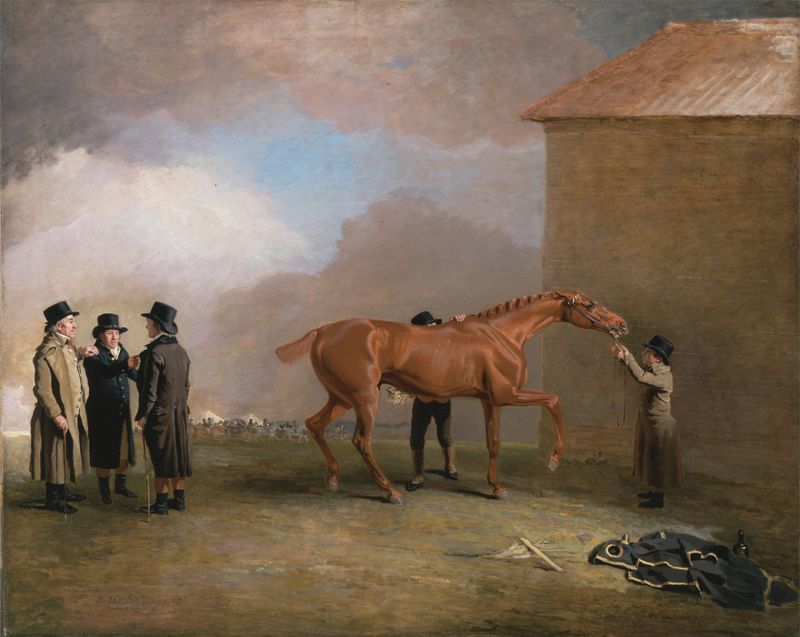
Can paint confess what words never could? In The Earl of Coventry's Horse, the brush reveals the unspoken fears that linger beneath a tranquil surface. Look to the left at the majestic stallion, its muscles taut and glistening under the soft yet dramatic light. The creature is poised, frozen within a moment of undeniable strength and grace, while the lush green background blurs gently, drawing your eye back to the powerful form at the forefront. The artist’s meticulous attention to texture and detail enhances the horse's natural beauty, while the warm earth tones juxtapose the serene greens, creating a palpable sense of tension and anticipation. The emotional undertow of this work lies in its stillness.
The horse's alert demeanor suggests a lurking unease, perhaps reflecting the internal struggles of its rider or the societal expectations placed upon the aristocracy. Notice how the positioning of the horse lends itself to dual interpretations of pride and vulnerability, hinting at the fears and responsibilities borne by those in positions of power. In this still moment, the artist captures not only a creature’s beauty but also the weight of its existence within a world of societal pressures. Benjamin Marshall painted this work in 1805, during a period when the art world was increasingly focused on portrayals of naturalism and realism.
Based in England, he was immersed in the transition from the grandiosity of neoclassicism to a more human and emotional representation of life. At the time, tensions were simmering in Europe, and the aristocracy felt the looming specter of change, mirroring the hidden fears expressed through the horse's watchful gaze.