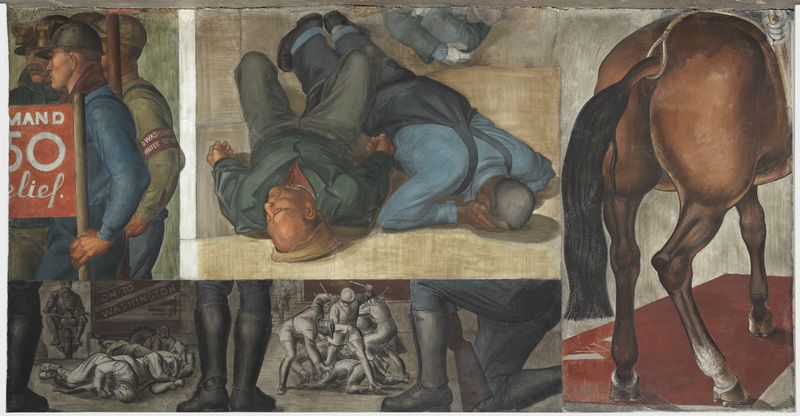
The End of the World — History & Facts
Is this a mirror — or a memory? The haunting confrontation between innocence and the weight of despair unfolds in a world teetering on the brink of oblivion. Focus on the central figure, a child whose face is filled with a mix of wonder and trepidation. Notice the way the soft pastels of the sky, swirling in hues of violet and gold, cradle the child’s expression, creating a stark contrast against the darkened horizon. The expansive composition draws the eye outward, inviting viewers to explore the encroaching chaos while remaining tethered to the innocence at the center. The juxtaposition of innocence and impending doom wears heavily on the canvas.
The tender gaze of the child seems to question the very fabric of existence, while the chaotic background hints at destruction. This tension serves as a poignant reminder of humanity's fragility; the child’s innocence clashes with the world’s harsh realities, evoking a sense of loss for what once was and what could soon be gone forever. Lewis W. Rubenstein created this work in 1932, a time when the world was grappling with the aftermath of the Great Depression.
Working in New York City, he was part of a generation that sought to articulate the anxieties of a society stumbling through uncertainty. This piece encapsulates both the innocence of youth and the broader existential concerns of an era marked by turmoil, revealing the depths of human emotion caught between hope and despair.