
The Hunger March — History & Facts
What secret hides in the quiet of the canvas? In The Hunger March, a poignant tableau unfolds that juxtaposes innocence with the shadows of desperation, evoking a striking emotional resonance. Look to the left at the haunting expressions of the marchers; their faces, drawn and weary, tell stories of longing and resilience. The muted earth tones dominate the palette, grounding the figures in a world steeped in hardship. Notice how the artist employs sharp contrasts; the play of light emphasizes the raw emotions etched on each face, drawing the viewer's gaze into their plight.
The composition leads us through the crowd, moving from despair to a glimmer of hope represented by a distant figure holding a banner aloft, a symbol of solidarity. Delve deeper into the emotional layers encapsulated within this artwork. The juxtaposition of the youth among the weary adults speaks to a lost innocence, a promise unfulfilled amidst societal strife. The outstretched hands reaching for something intangible reflect a collective yearning, while the somber background hints at a world indifferent to their suffering.
Here, Rubenstein captures not just a moment in time but the pulse of a movement yearning for dignity in the face of adversity. In 1933, Rubenstein created this work during a period marked by the Great Depression, a time of unprecedented economic turmoil in America. Residing in New York, he was influenced by the rising social consciousness among artists who sought to document the struggles of the working class. This piece stands as a testament to the urgent need for change, encapsulating both the despair of hunger and the unwavering spirit of those who marched for a better future.
More Artworks by Lewis W. Rubenstein
Browse all →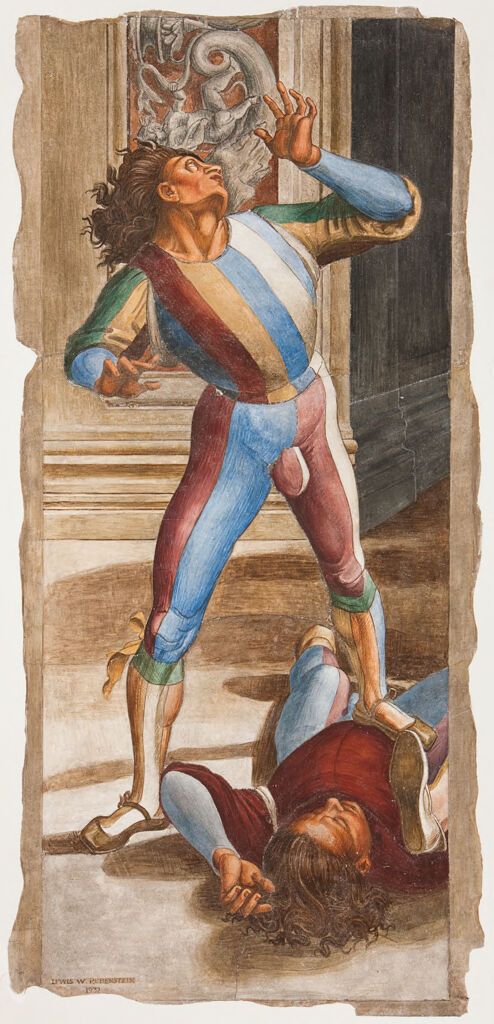
More Historical Art
Browse all →
The Night Watch Militia Company of District II under the Command of Captain Frans Banninck Cocq
Rembrandt van Rijn
Lincoln Memorial
Henry Bacon
The Third of May 1808
Francisco de Goya

Isaac and Rebecca, Known as ‘The Jewish Bride’
Rembrandt van Rijn
The Charge of the Mamelukes (1814)
Francisco de Goya

De vier ruiters van de apocalyps
Albrecht Dürer