The Entrance to the Park of Saint-Cloud, Paris — History & Facts
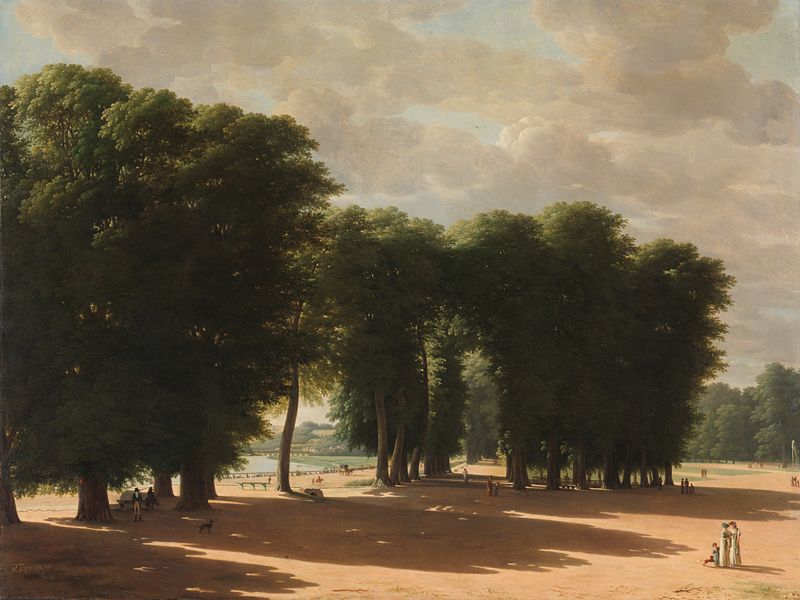
What secret hides in the quiet of the canvas? A world of grief lingers in the serene landscape, waiting for the attentive eye to uncover its depths. Begin by looking to the left, where the delicate trees arch gracefully, their lush canopies creating a soothing embrace. Notice how the muted greens blend with soft browns, evoking a sense of nostalgia, while the distant figures stroll leisurely along the winding path. The interplay of light and shadow invites you deeper into the scene, allowing the softness of the sky to hover gently above—a melancholic reminder of fleeting moments. Upon closer inspection, the contrast between the lively park-goers and the stillness of the natural world speaks volumes.
Each brushstroke captures a momentary joy that feels bittersweet, as if time itself mourns the happy gatherings of the past. The absence of any overt turmoil highlights the unspoken grief woven into the landscape; the park, once a refuge, now doubles as a silent witness to lost joys and memories. In 1809, Kleijn created this work during a time when art was transitioning towards Romanticism, reflecting deep emotional and personal themes. Living in Paris, he was influenced by the evolving artistic landscape, marked by a shift from the grandeur of Neoclassicism to more personal, expressive styles.
The world was stirring with changes, both politically and culturally, yet within this canvas, it is the intimate sorrow of a tranquil moment that remains, reminding viewers of all that can be felt but never fully articulated.