
The exterior of the house in which Shakespeare was born — History & Facts
In that stillness, we find reflections of melancholy, the kind that resonates long after the brushstrokes have dried. A mere depiction of a house can stir the soul, for within its walls lies a history teeming with dreams and sorrows, mischief and wisdom. Look to the left at the muted tones of the brickwork, each stroke telling a story of age and endurance. The gentle shadows cast by the setting sun embrace the façade, emphasizing the texture of the weathered stones.
Notice how the delicate foliage flanks the entrance, symbolizing both growth and decay— a reminder of time's inexorable passage. The composition invites the viewer in, as if the very walls yearn to share the tales of the playwright who once walked its halls. Beneath the surface, the work breathes with contrasts. The external serenity of the house juxtaposes with the internal chaos of artistic creation.
This is not merely a building; it represents the weight of legacy and the quiet despair of unmet potential. The melancholic undertones linger in the air, suggesting that the birthplace of such genius also bears the burden of expectation and loss. In 1834, the artist captured this visage of Shakespeare’s birth during a time when Romanticism was flourishing, infusing a deep emotional resonance into landscapes and historical subjects. Dighton, known for her keen ability to evoke sentiment through architecture, painted this piece amidst an era where the appreciation of literary giants was on the rise.
Reflecting on the past, she sought to immortalize the birthplace of one of history's greatest playwrights, emphasizing the enigma that surrounds brilliance.
More Artworks by Phoebe Dighton
Browse all →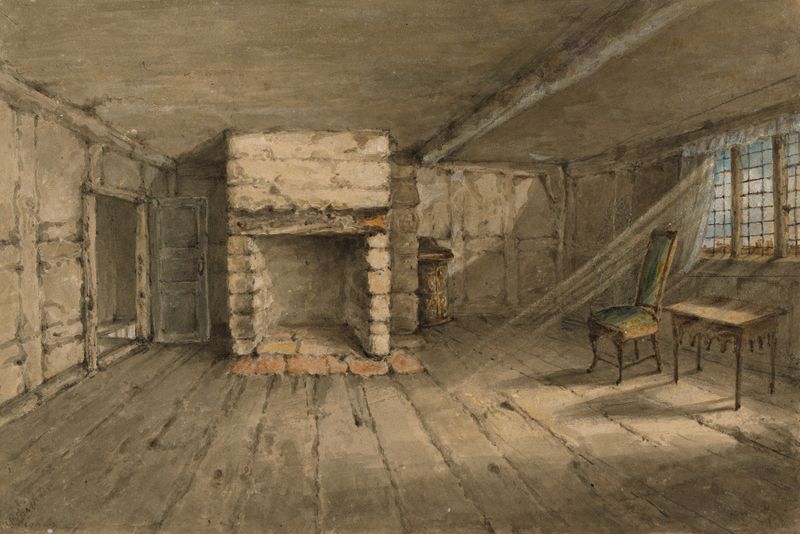
More Architecture Art
Browse all →
The statue of Liberty
Frédéric Auguste Bartholdi

View of Houses in Delft, Known as ‘The Little Street’
Johannes Vermeer

View of Houses in Delft, Known as ‘The Little Street’
Johannes Vermeer

The Cathedral in Rouen. The portal, Grey Weather
Claude Monet

The yellow house
Vincent van Gogh

The Church in Auvers-sur-Oise, View from the Chevet
Vincent van Gogh