The interior of the room in which Shakespeare was born — History & Facts
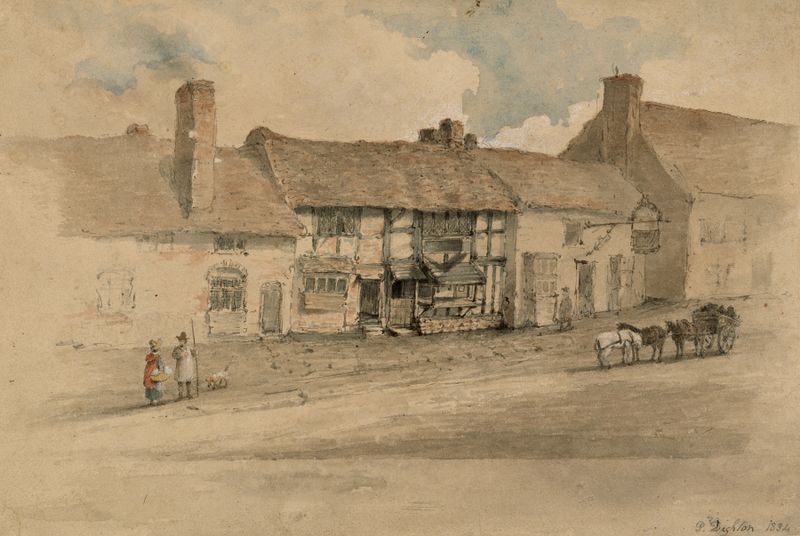
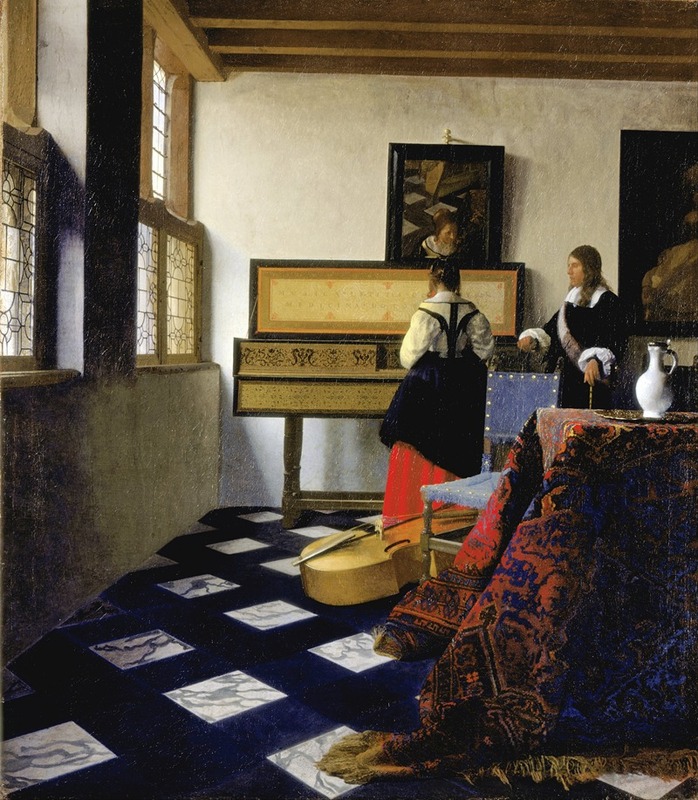
Who listens when art speaks of silence? In the quietude of decay, the essence of a forgotten space breathes through the canvas, inviting contemplation. Focus on the dim corner of the room, where the light gently spills in from a solitary window, illuminating the dust particles that dance through the air. Notice the faded wallpaper, peeling in places, and the simple wooden furniture that cradles the weight of time. Each detail, meticulously rendered, whispers tales of the past, instilling a sense of nostalgia and loss that envelops the viewer like a shroud. Beneath the surface, the painting speaks of contrasts: the vibrancy of life once lived within these four walls now succumbing to the relentless grasp of time.
The interplay of light and shadow evokes a melancholic beauty, suggesting not only the physical decay of the room but also the ephemeral nature of creativity itself. The presence of Shakespeare—though only an echo—lingers in the air, hinting at the tension between the great works he produced and the mundane reality of existence. In 1834, Phoebe Dighton painted this evocative scene during a period when the Romantic movement was flourishing, reflecting a growing interest in the personal and introspective. Situated in the midst of a world that was rapidly industrializing, she sought to capture the intimate and often overlooked spaces of history.
Her work stands as a testament to the delicate balance between memory and decay, inviting viewers to ponder the stories held within the walls of time.