The Garden and Coach House of 524 Keizersgracht in Amsterdam — History & Facts
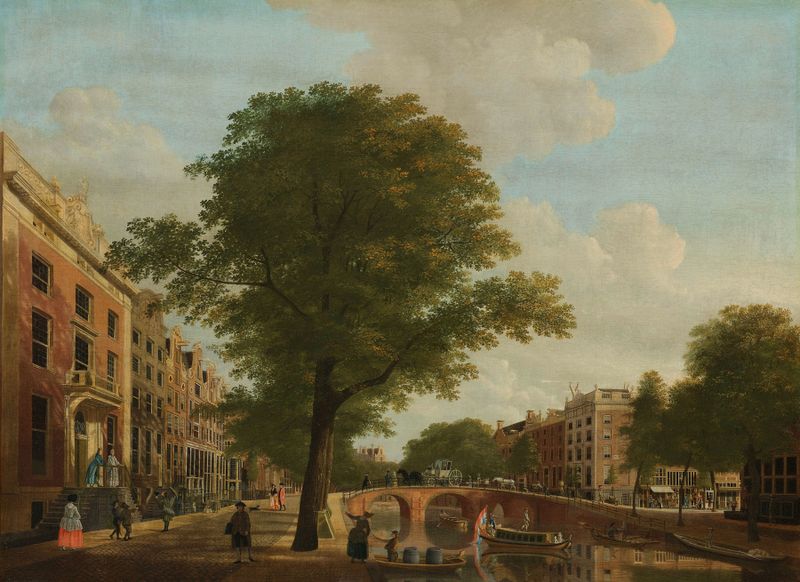
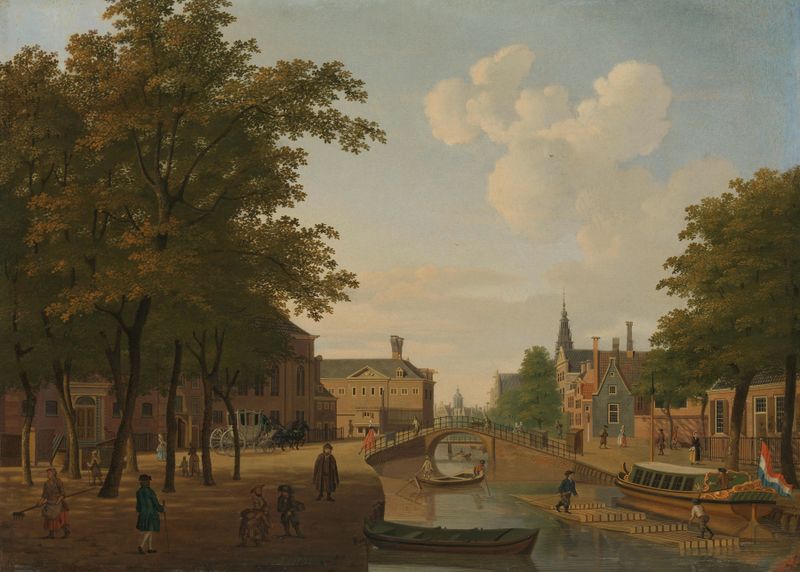
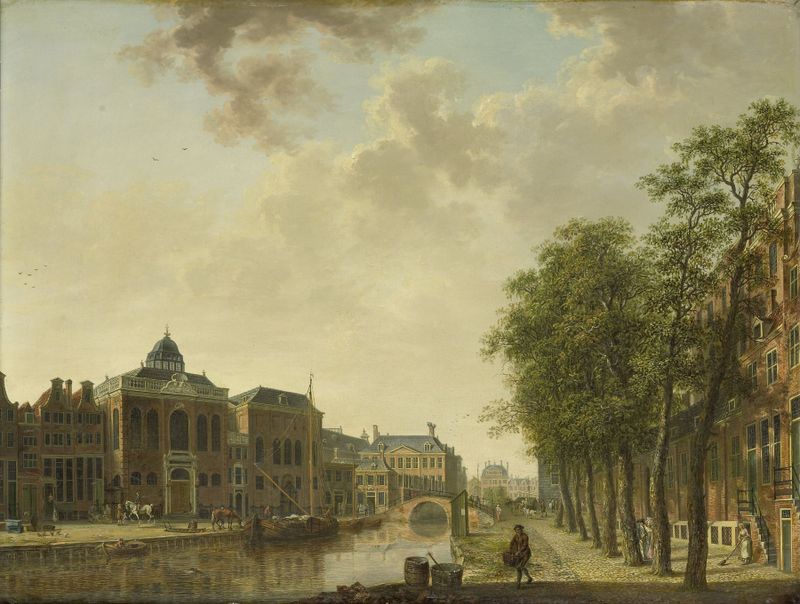
The sun spills softly over the lush greenery of the garden, casting dappled shadows that dance across cobblestone pathways. A horse lazily shifts in its harness by the coach house, while the scent of blooming flowers fills the air. In the distance, the serene architecture of the canal house stands sentinel, its reflections shimmering in the water—a moment frozen in time, where nature and civilization exist in harmonious juxtaposition. Look to the left at the vibrant foliage that frames the scene, each leaf rendered with meticulous detail and varying shades of green.
Notice how the artist employs light to create a sense of depth, the shadows under the trees contrasting with the golden sunlight breaking through the branches. The coach house, with its rustic charm, draws the eye with its elegant lines, guiding us further into this tranquil tableau where every element breathes life. Beneath the surface, the painting embodies a deeper dialogue between nature and man’s artistry. The garden symbolizes the illusion of paradise, a cultivated beauty set against the backdrop of urban life, suggesting a delicate balance between the two.
The meticulous detail in the coach house reflects human ingenuity, yet its rusticity speaks of nature's inevitable reclamation, highlighting the tension between construction and decay. In 1772, during the height of the Dutch Golden Age, Hendrik Keun captured this idyllic scene in Amsterdam. At this time, the art world was experiencing a shift, with an increasing interest in landscapes and everyday life rather than merely grandeur. Keun, navigating this changing artistic landscape, infused his work with both precision and warmth, inviting viewers to appreciate the beauty found in the ordinary.