
View of the Houtmarkt, Amsterdam — History & Facts
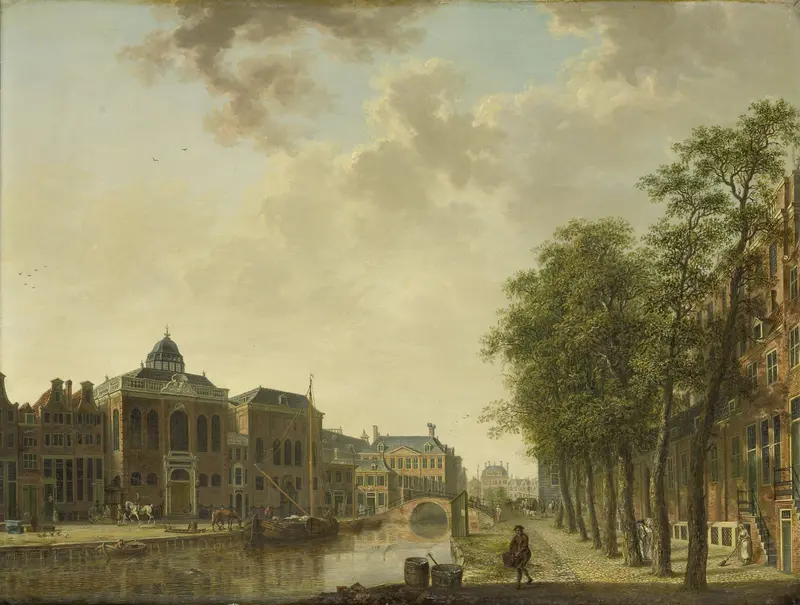
Can paint confess what words never could? In the delicate strokes of View of the Houtmarkt, Amsterdam, an unspoken longing permeates the canvas, inviting viewers to explore the depths of desire woven into the very fabric of its scene. Focus on the bustling market square, where figures are clustered in animated conversation, their gestures animated yet ultimately fleeting against the backdrop of sturdy architecture. Notice how the warm, golden hues of the sun break through the cool shadows, casting a soft light that dances on the cobblestones, illuminating both the mundane and the profound. The careful placement of each element—vendors, passersby, and the distant waterways—creates a harmonious balance, drawing your gaze naturally toward the vibrant life that spills across the scene. Yet, beneath the surface charm lies a contrast between the lively exchange and the underlying solitude within the figures.
The choice of muted tones juxtaposes the vibrancy of the market, hinting at desires unfulfilled and stories untold. Small details, like a woman’s longing gaze toward the distant horizon or the way a child clutches a trinket, reveal personal aspirations that resonate with the broader human experience, transforming the lively market into a realm of unarticulated yearnings. Painted during the late 18th century, this work encapsulates a period of flourishing trade and cultural exchange in Amsterdam. Hendrik Keun, navigating the artistic currents of his time, sought to capture both the vibrancy of everyday life and the subtleties of human emotion—a reflection of a city in transition, grappling with the complexities of desire amidst the bustling marketplace.
More Artworks by Hendrik Keun
More Genre Scene Art

Banquet of the Officers of the St George Civic Guard
Frans Hals

Rembrandt and Saskia in the Scene of the Prodigal Son
Rembrandt van Rijn

Bal du moulin de la Galette
Pierre-Auguste Renoir

Quadrille at the Moulin Rouge
Henri de Toulouse-Lautrec

A Burial at Ornans
Gustave Courbet

When Will You Marry?
Paul Gauguin