The Garden Façade of Bagatelle — History & Facts
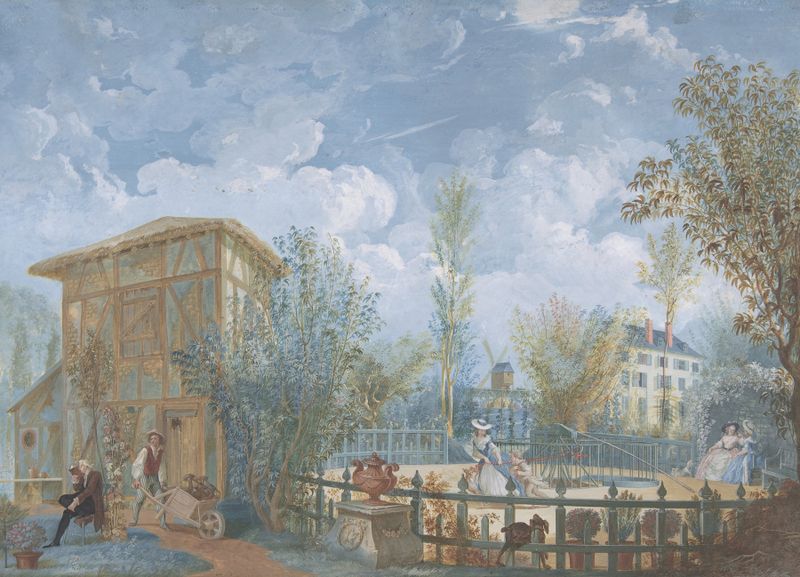
Sunlight spills through the lush foliage, casting intricate patterns on the cobblestone path. A group of elegantly dressed figures meanders through the garden, laughter mingling with the whisper of leaves in the breeze. Each step unfolds a new delight: a glimpse of a captivating sculpture, a distant chatter of guests, and the intoxicating scents of blooming flowers. Look to the left at the intricate stonework that frames the garden's entrance, drawing the viewer's eye into a world of timeless elegance.
The warm hues of the façade contrast beautifully with the verdant greens surrounding it, establishing a harmonious balance between nature and architecture. Notice how the carefully arranged flowers spill over their beds, their vibrant colors echoing the joyous atmosphere, while the meticulously rendered shadows breathe life into the scene. Within this idyllic setting, the painting subtly explores the theme of transformation. The garden represents a realm of beauty and renewal, where nature's cycles intertwine with human celebration.
The figures, poised in their finery, embody a transient elegance, suggesting the fleeting nature of such moments. Observe the interplay of light and shadow as it parallels the duality of permanence and ephemerality, emphasizing the continuous evolution inherent in both landscape and life. In 1779, Dugourc created this artwork in France, a period of great change and burgeoning artistic expression. The Rococo style, with its focus on whimsy and opulence, was beginning to cede ground to neoclassical ideals, yet this piece embodies the last whispers of that playful elegance.
As the Age of Enlightenment unfolded, Dugourc's work reflects the vibrant social gatherings and intellectual fervor that characterized the time, capturing a moment that is both celebratory and contemplative.