Figures in a Garden — History & Facts
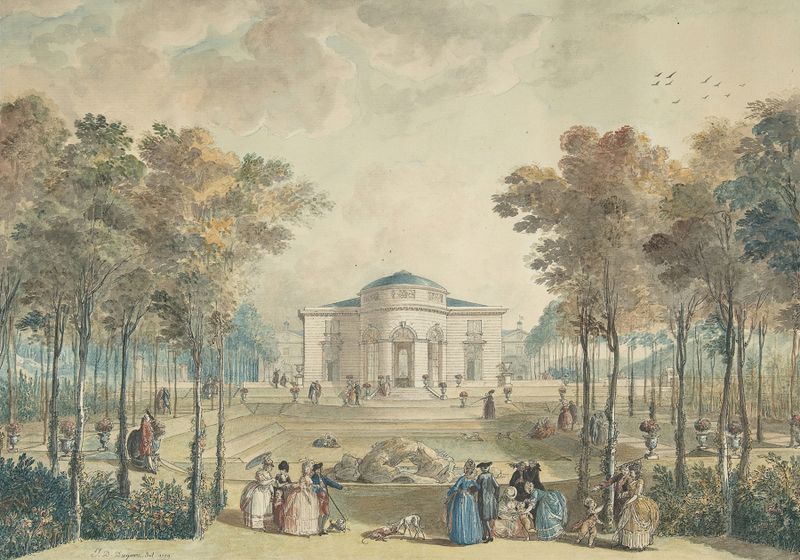
A gentle breeze rustles through the leaves, creating a soft whisper in the air. Figures meander through a lush garden, their laughter mingling with the distant sound of flowing water. Sunlight dances through scattered branches, casting dappled shadows that play across the vibrant hues of blooming flowers, where reality teeters on the edge of illusion. Look to the left at the elegantly dressed couple, their poses animated yet composed, embodying the grace of the late 18th century.
Notice how the light falls upon their silken garments, illuminating their intricate details with a warm glow. The garden itself is a riot of colors—emerald greens juxtaposed with bursts of red, yellow, and violet—creating a vivid tapestry that entices the viewer. Each figure seems alive, yet somehow, the lush background blurs slightly, suggesting a dreamlike quality that invites deeper contemplation. The contrast between the figures and the verdant surroundings evokes a tension between nature and humanity, as if the garden holds secrets just beyond their reach.
The vibrant flowers symbolize beauty and fleeting time, while the gentle gestures of the figures hint at love and connection, yet a subtle distance lingers, suggesting the fragility of such moments. This interplay of presence and absence creates a haunting allure, as if the viewer stands on the threshold of a fleeting illusion. In 1784, Dugourc painted this work in France, during a period marked by artistic exploration and social change. The Enlightenment was shifting societal norms, and artists like him began to challenge traditional subjects, embracing scenes from everyday life infused with emotion.
Dugourc’s choice to depict such a serene moment reflects both the tranquility sought in art and the emerging complexity of human relationships in an evolving world.