
The Giants’ Staircase In The Courtyard Of The Doge’s Palace — History & Facts
Did the painter know this moment would outlive them? The essence of creation often lies not just in the act, but in the legacy that unfolds thereafter. Look closely at the vibrant strokes that lead your gaze through the composition, where intricate architectural details intertwine with figures in animated discussion. The light filters softly through an unseen source, casting shadows that dance along the marble surfaces. Notice how the delicate interplay of color—warm ochres and cool blues—invites a sense of depth and history, breathing life into the stone.
The careful arrangement of figures at varying distances gives a three-dimensional quality that captivates the viewer, drawing you deeper into the courtyard's embrace. Among the many layers, the figures convey an emotional tension, their gestures and expressions hinting at stories untold. The juxtaposition of the grandeur of the Doge’s Palace against the intimate gathering illustrates a contrast between public grandeur and private contemplation. Each character, seemingly engaged in dialogue, evokes a sense of communal creativity, as if they collaboratively act as the architects of their own narratives—captured eternally on the canvas. In the period when this artwork was created, Giovanni Grubacs was navigating a thriving Venetian art scene marked by a blend of tradition and innovation.
While the exact date remains unknown, the artist’s style reflects the influences of the late 19th century, a time when artists were increasingly exploring realism and scene genre. Amidst a backdrop of changing social dynamics, his work not only mirrors the architectural splendor of Venice but also engages with the vibrancy of its cultural dialogues.
More Artworks by Giovanni Grubacs
Browse all →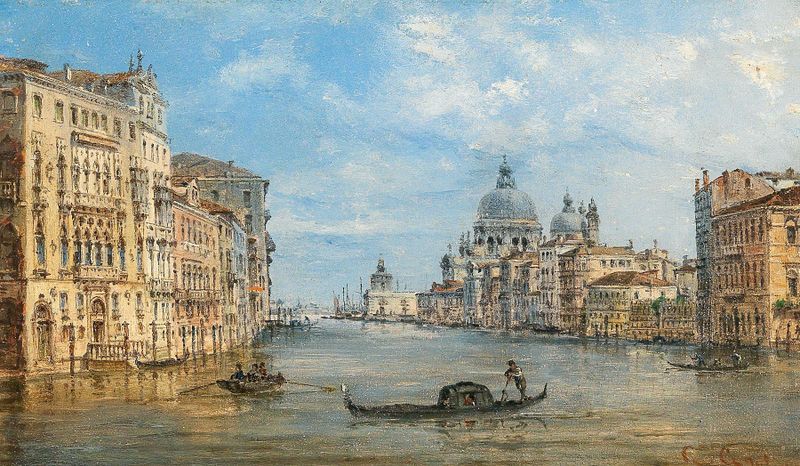
Venice, a view of the Grand Canal
Giovanni Grubacs
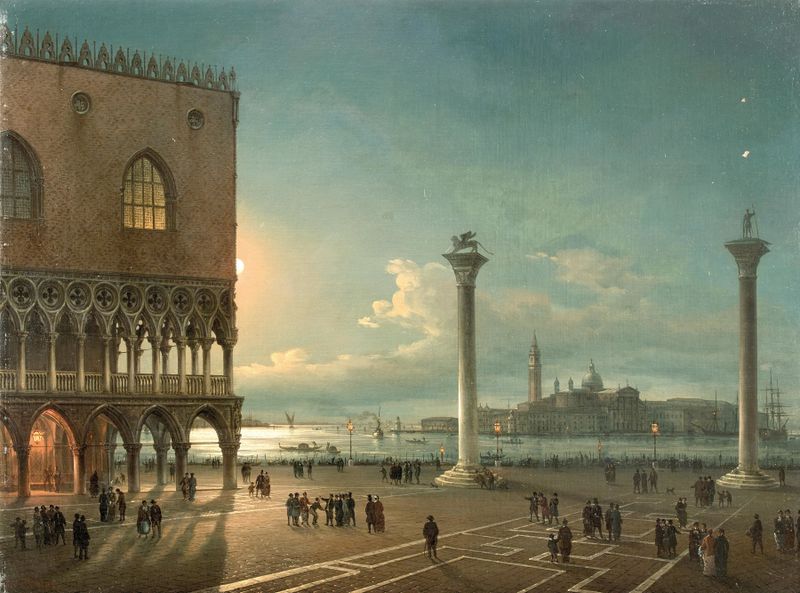
The Piazzetta di San Marco in moonlight, Venice
Giovanni Grubacs
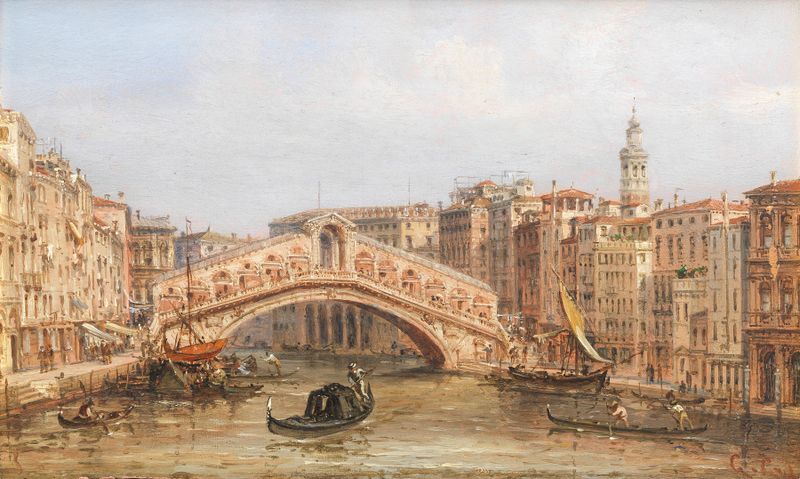
The Rialto Bridge
Giovanni Grubacs
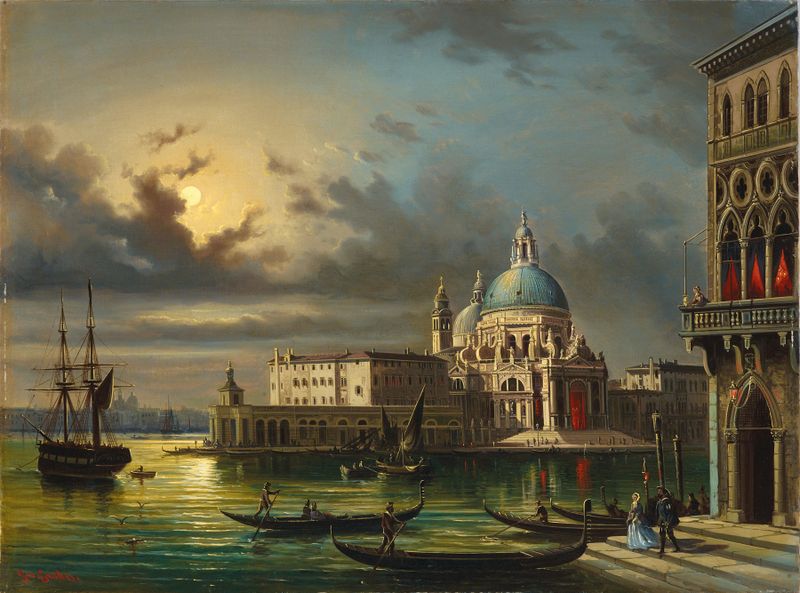
The Punta della Dogana and Santa Maria della Salute, Venice in moonlight
Giovanni Grubacs
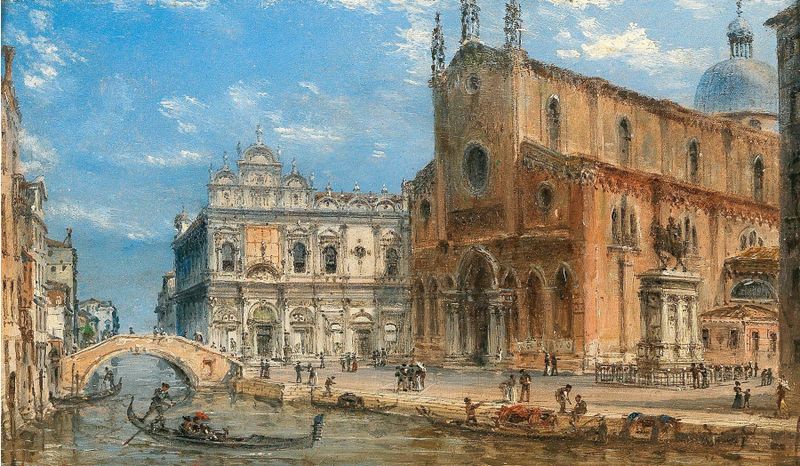
Venice, a view of San Zanipolo with the Colleoni equestrian monument
Giovanni Grubacs
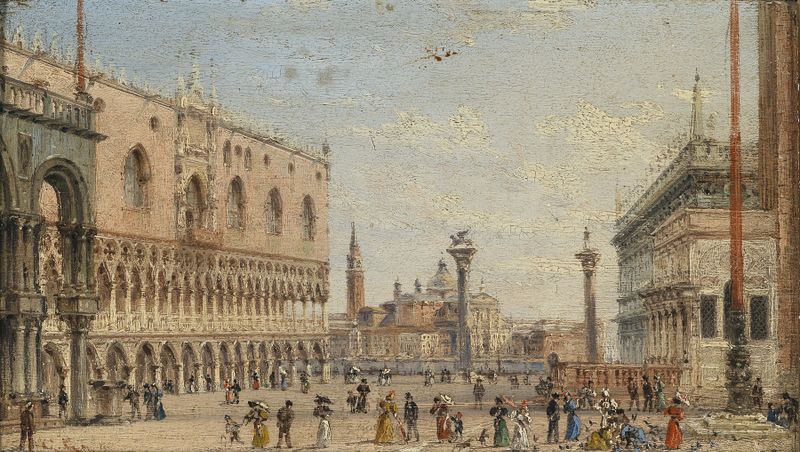
Venedig Piazza San Marco
Giovanni Grubacs
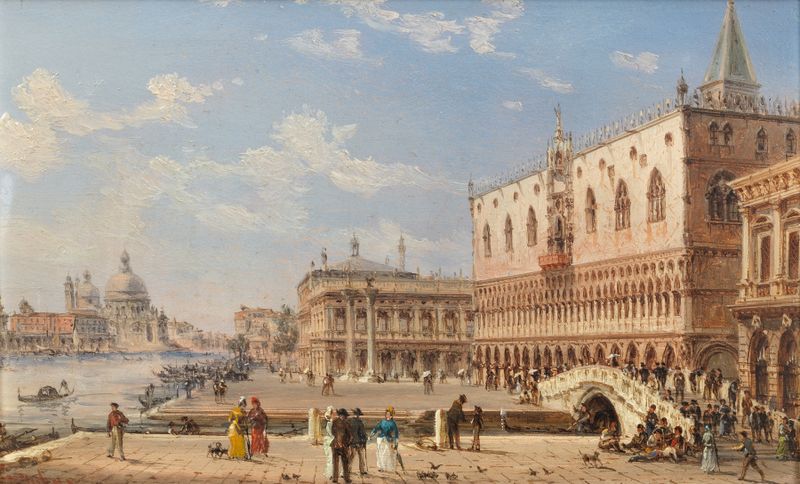
Doge’s Palace with the Ponte della Paglia
Giovanni Grubacs
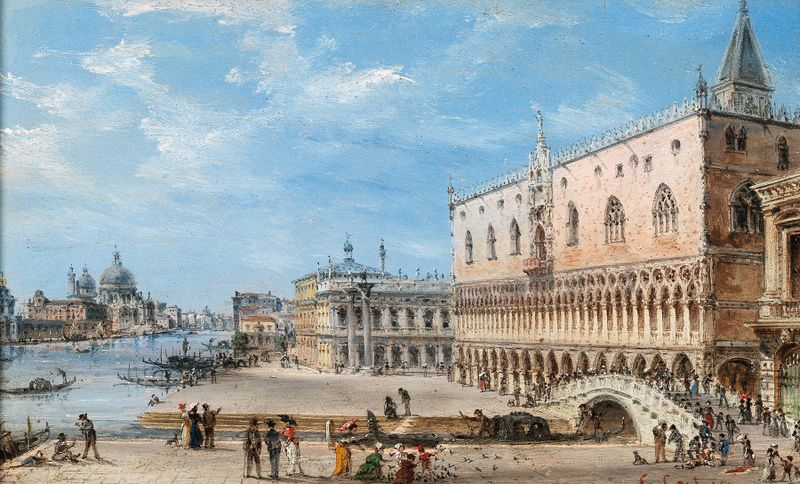
Riva degli Schiavoni
Giovanni Grubacs
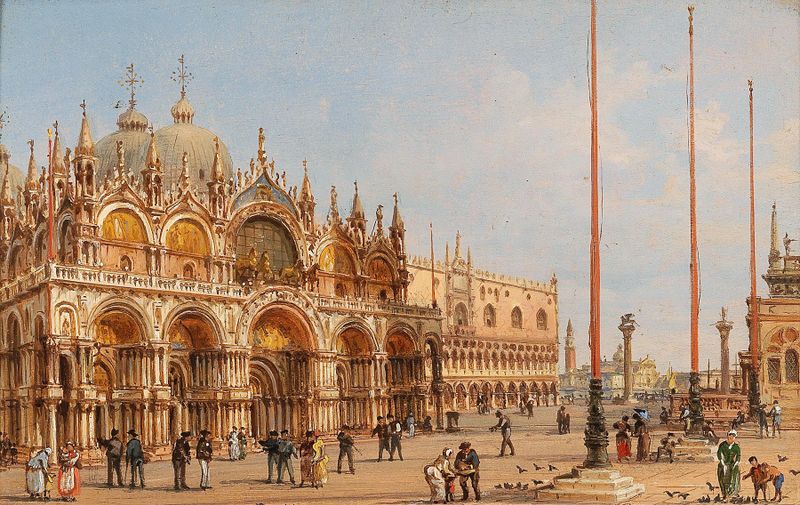
A View Of St Mark’s Basilica And A View Of St Mark’s Square
Giovanni Grubacs
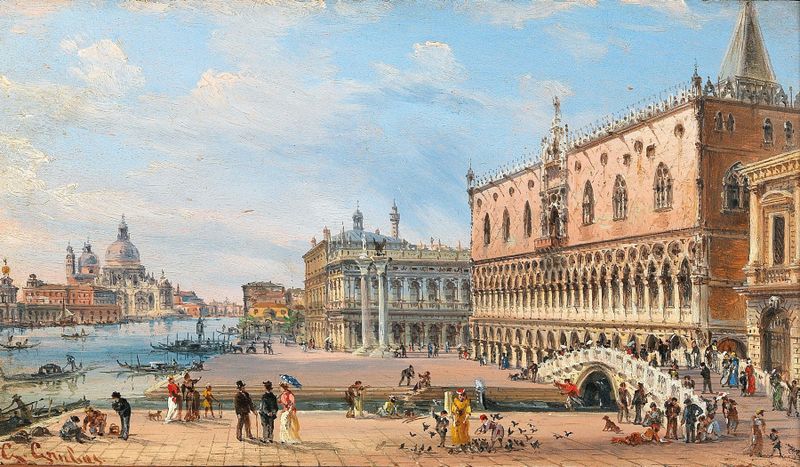
Venice, a view of Palazzo Ducale, and Santa Maria della Salute
Giovanni Grubacs
More Architecture Art
Browse all →
The statue of Liberty
Frédéric Auguste Bartholdi

View of Houses in Delft, Known as ‘The Little Street’
Johannes Vermeer

View of Houses in Delft, Known as ‘The Little Street’
Johannes Vermeer

The Cathedral in Rouen. The portal, Grey Weather
Claude Monet

The yellow house
Vincent van Gogh

The Church in Auvers-sur-Oise, View from the Chevet
Vincent van Gogh