
The Goatherdess — History & Facts
In the quietude of nature, rebirth whispers through the stillness, inviting contemplation and renewal, much like the essence captured in this remarkable work. Look to the left at the gentle curves of the goatherdess as she cradles a young goat, her posture embodying both strength and tenderness. The soft earth tones envelop her figure, contrasting beautifully with the vibrant greenery that envelops her, suggesting an intimate bond between humanity and nature. Notice how the light filters through the leaves, casting delicate shadows that dance upon the ground, enhancing the serene atmosphere and drawing the viewer into this moment of connection. Yet, there is more than meets the eye.
The goats, symbols of vitality and resilience, surround her, embodying the cyclical nature of life and the promise of rebirth. The goatherdess herself appears almost ethereal, hinting at an ancient lineage of nurturing that is both personal and universal. In her gaze rests a quiet wisdom, as if she understands the delicate balance of existence — life flourishes, yet is transient, underscoring the emotional tension within this seemingly peaceful scene. In 1864, Gerard Bilders painted this work during a period of personal reflection, grappling with themes of nature and humanity's place within it.
At that time, the Dutch artist was deeply influenced by the Romantic movement, which celebrated the sublime aspects of the natural world. This piece emerged from a dedication to capturing the intimate relationships between people and their environment, showcasing a pivotal moment in both his artistic journey and the broader art world.
More Artworks by Gerard Bilders
Browse all →
The Goatherdess
Gerard Bilders
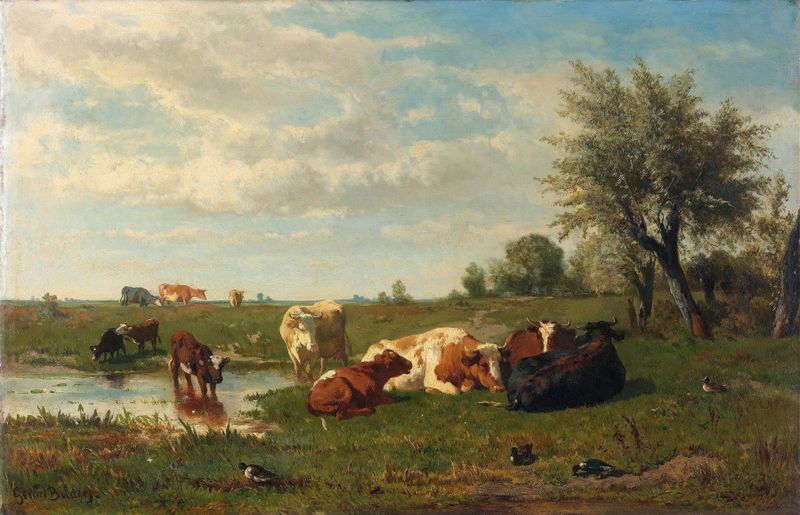
Cows in the Meadow
Gerard Bilders
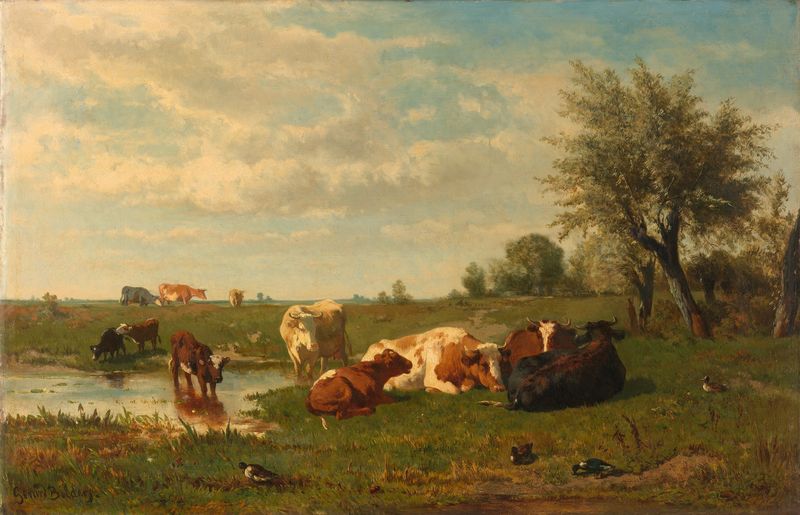
Cows in the Meadow
Gerard Bilders
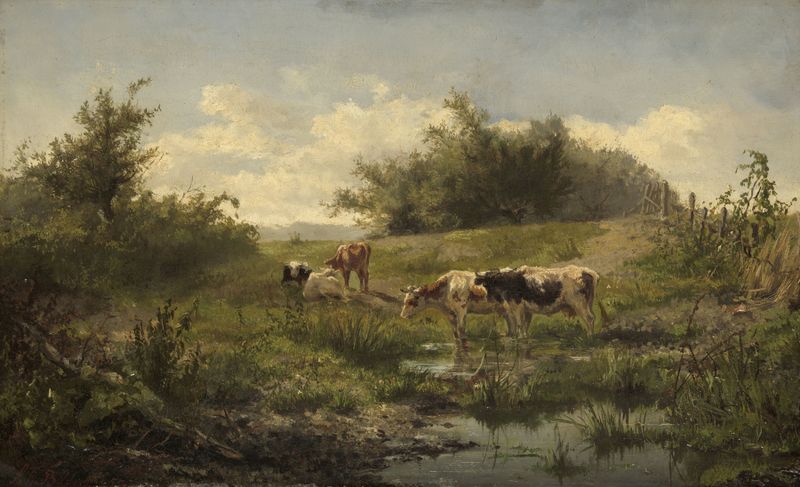
Cows at a Pond
Gerard Bilders
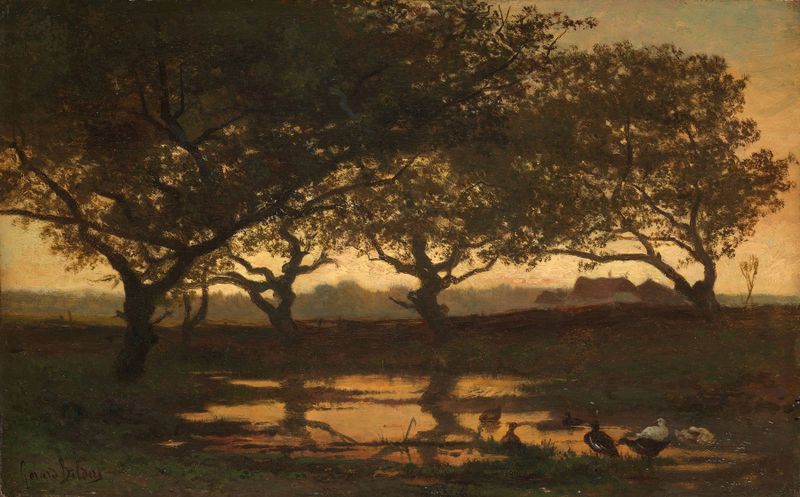
Woodland Pond at Sunset
Gerard Bilders

Cows at a pond
Gerard Bilders

Jacob van Ruisdael Sketching a Watermill
Gerard Bilders
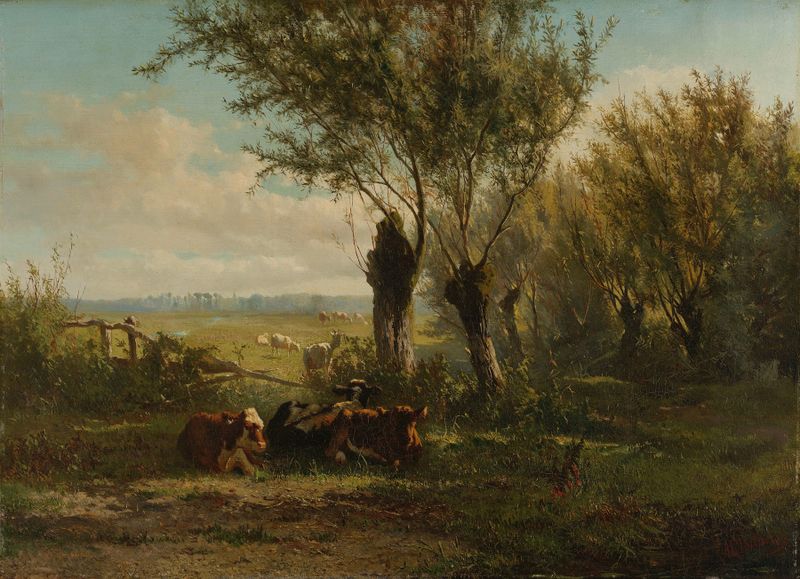
Meadow near Oosterbeek
Gerard Bilders

Woodland Pond at Sunset
Gerard Bilders
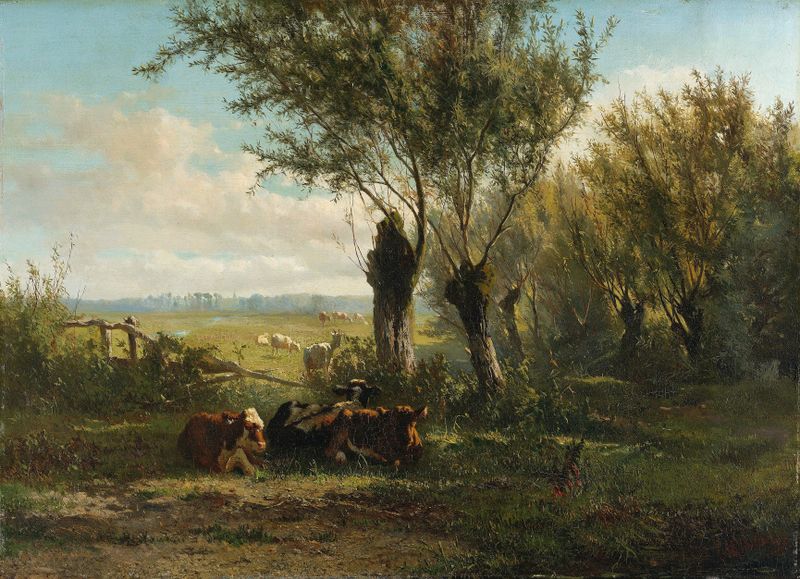
Meadow near Oosterbeek
Gerard Bilders





