
The Great Siberian Road through the Ural Mountains. — History & Facts
Can paint confess what words never could? In The Great Siberian Road through the Ural Mountains, obsession manifests itself in a landscape where resilience battles desolation, each brushstroke a testament to human ambition against nature’s formidable majesty. Look to the horizon, where the jagged peaks of the Ural Mountains cut sharply against the sky, their stony faces rendered in shades of grey and blue. The winding road snakes through the composition, drawing your eye into the heart of a vast, rugged expanse that feels both inviting and foreboding. Notice how the light bathes the mountains, highlighting the texture of their surfaces, while deep shadows hint at the struggles that lie ahead.
The colors evoke a sense of coldness, yet there’s an undeniable warmth in the human endeavor laid out along the path. As you engage with the landscape, consider the tension between the vastness of nature and the narrow road that symbolizes possibility and pursuit. Each element exudes an unspoken narrative—the towering mountains presenting obstacles, while the road signifies determination and hope. The contrast of the earthy tones with the cool blues speaks to the duality of existence in this harsh environment—beauty intertwined with brutality.
It's a reminder of the obsession that drives humanity to carve its way through the seemingly insurmountable. In 1904, Boris Vasilievich Smirnov created this work during a period marked by rapid industrialization in Russia, where railroads and roads were heralded as symbols of progress. As the nation grappled with its identity amidst modernization, the artist sought to capture both the promise and the peril represented by the Ural Mountains, reflecting the broader struggles of his contemporaries as they forged paths through the untamed wilderness.
More Artworks by Boris Vasilievich Smirnov
Browse all →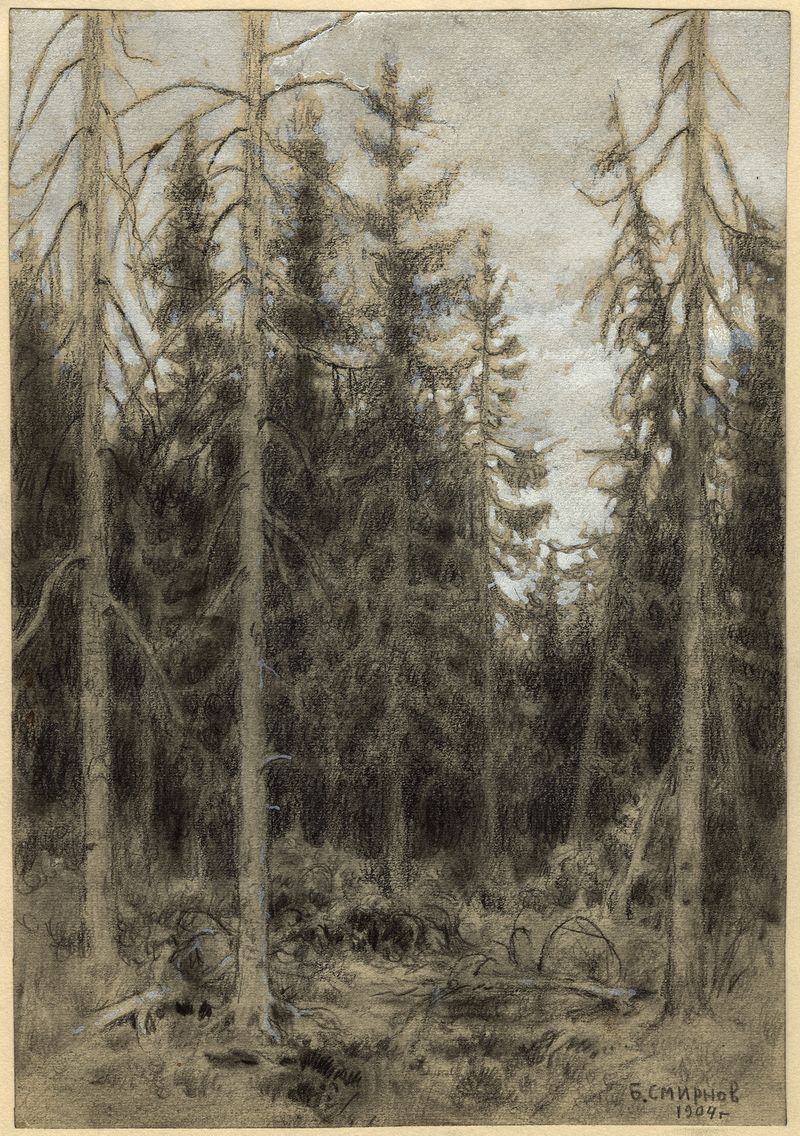
Spruce Taiga near Irkutsk.
Boris Vasilievich Smirnov
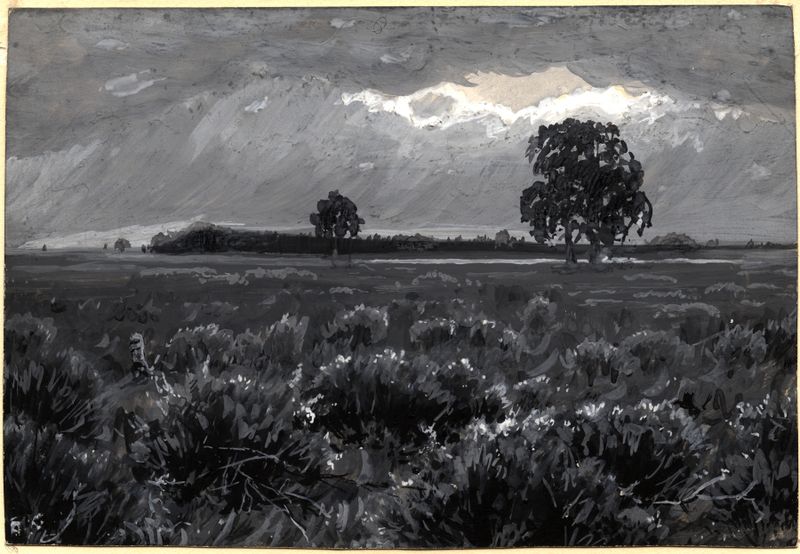
Copses of Trees on the Baraba Steppe.
Boris Vasilievich Smirnov
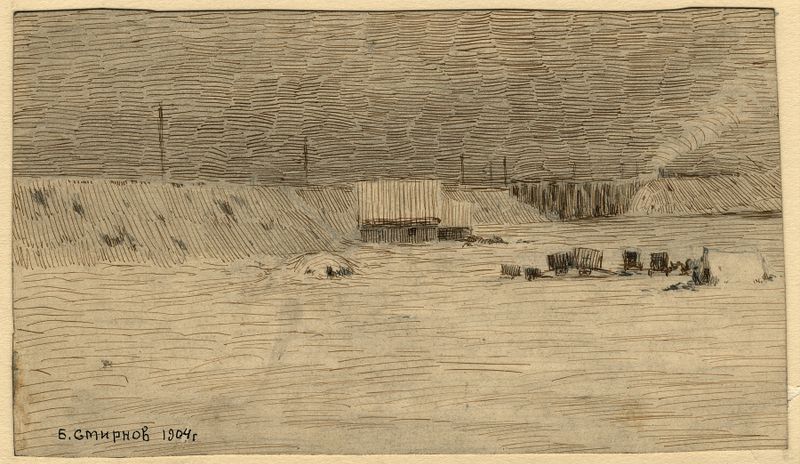
A Bridge over the Irkut River.
Boris Vasilievich Smirnov
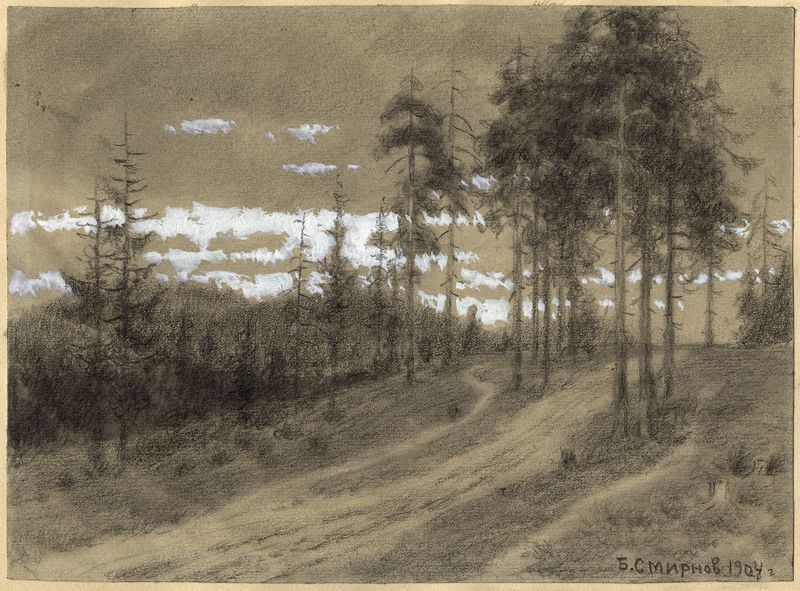
The Great Road in the Baikal Mountains.
Boris Vasilievich Smirnov
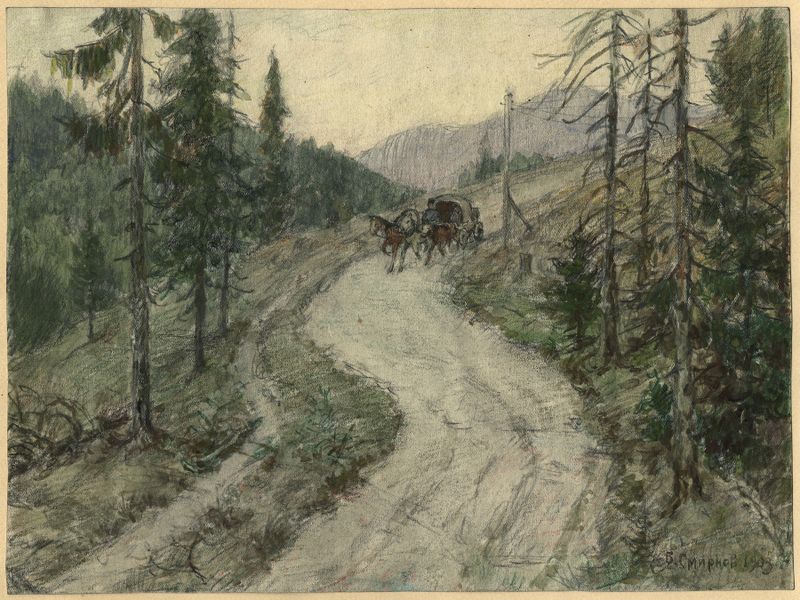
Great Siberian Road in the Krugobaikal Mountains.
Boris Vasilievich Smirnov
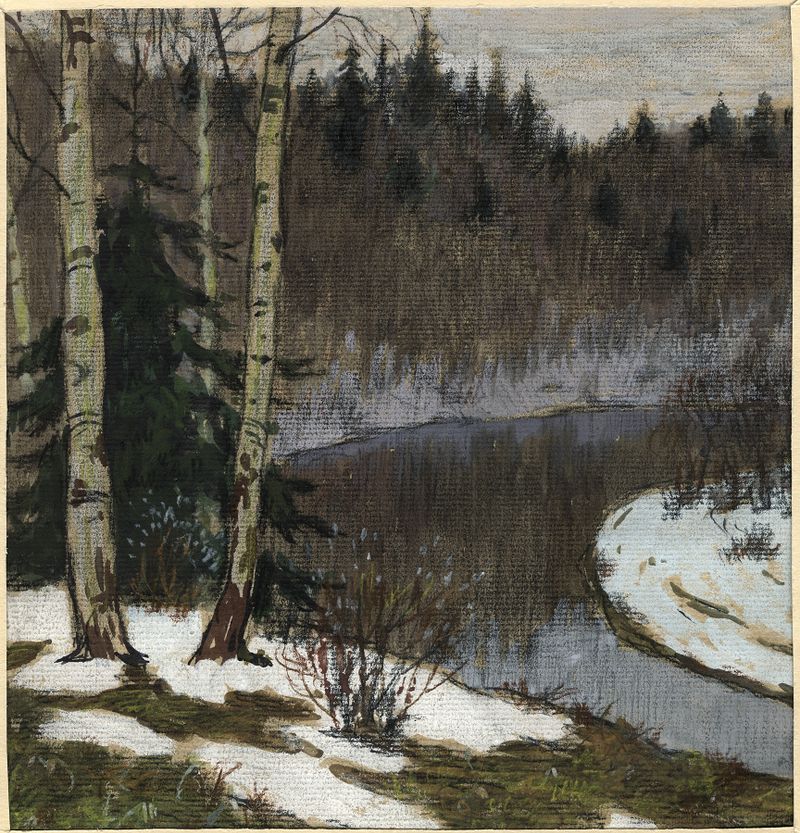
Thawed Patches in the Taiga near Krasnoyarsk. Early Spring.
Boris Vasilievich Smirnov
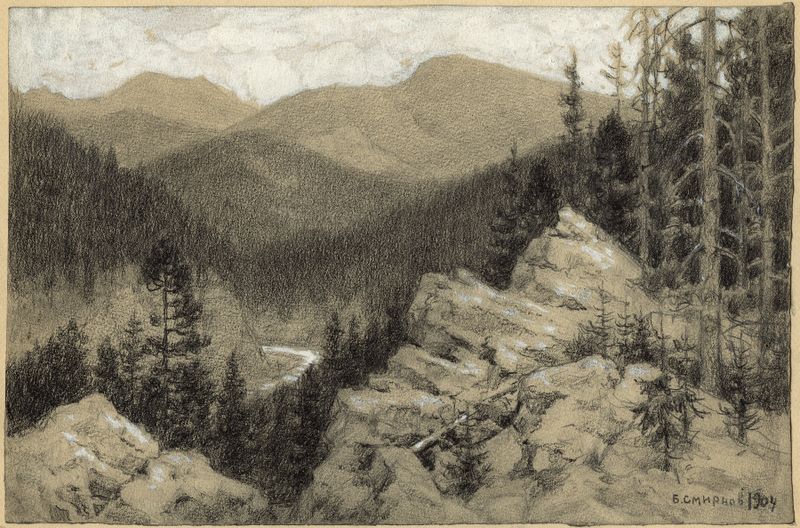
Ural Mountains. Taiga in the Zlatoust Region.
Boris Vasilievich Smirnov
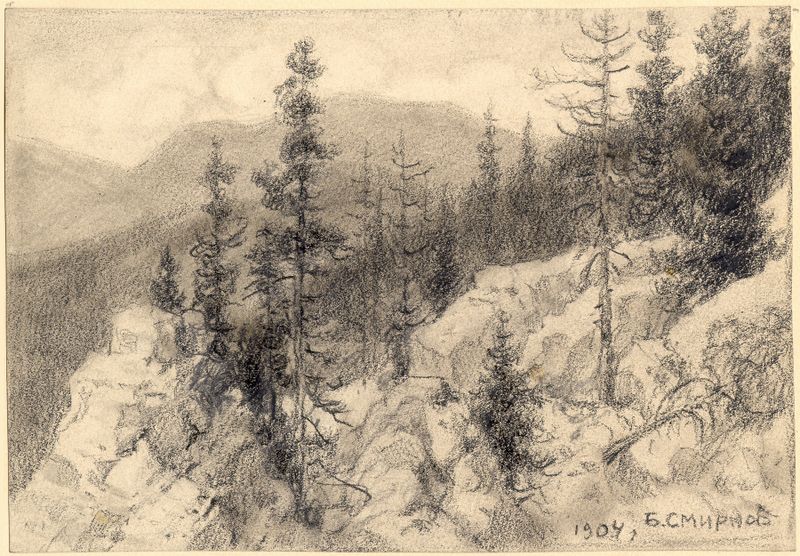
Taiga of the Ural Mountains near Zlatoust.
Boris Vasilievich Smirnov
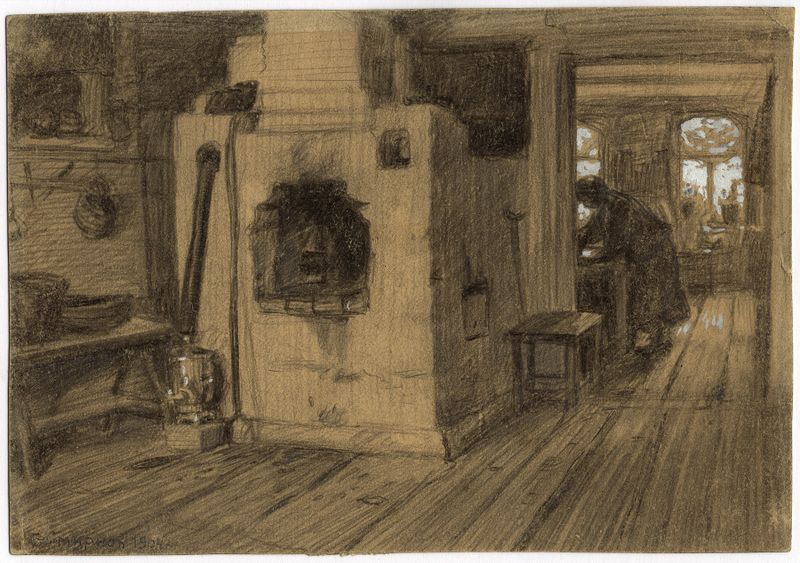
In a Hut on the Outskirts of Irkutsk.
Boris Vasilievich Smirnov
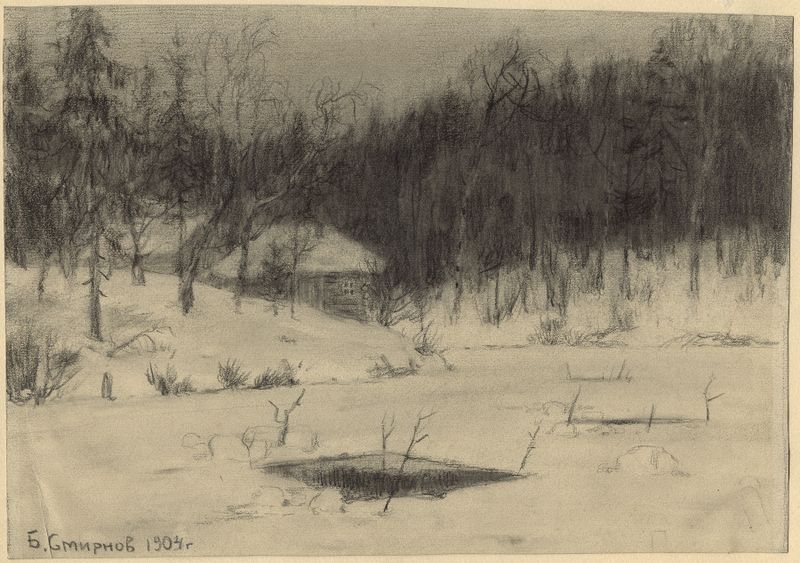
Ice Holes on the Irkut River.
Boris Vasilievich Smirnov





