The Harvest — History & Facts
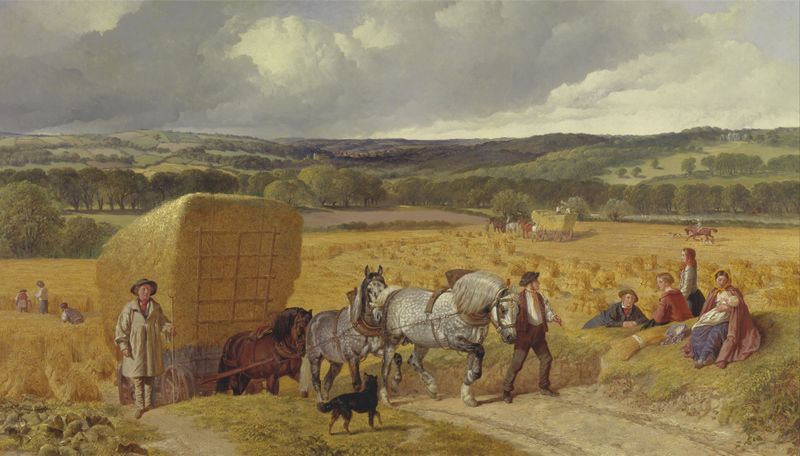
Could a single brushstroke hold eternity? In John Frederick Herring Snr.'s The Harvest, the ethereal quality of the landscape resonates with the dreams and aspirations of rural life, where labor intertwines with the rhythm of nature. Look to the foreground, where the golden wheat fields stretch towards the horizon, each blade of grass meticulously rendered as if caught in a gentle breeze. The warm, sunlit hues of amber and gold dominate the palette, evoking the abundance of the harvest season. Notice how the light dances across the scene, casting playful shadows that hint at the time of day—perhaps dusk, when the laborers’ toil begins to yield fruit.
The composition draws the eye from the laborers at work, their strong forms slightly stooped, to the distant hills, where the sky blazes with the colors of an approaching evening. Beneath the surface, themes of hope and nostalgia unfurl in the painting's details. The contrasting figures of the weary workers and the lush, ripe fields speak to a deeper dichotomy: the struggle against time and the rewards of perseverance. Each expression and gesture holds a story—a fleeting moment captured, yet rich with meaning.
The harmony of nature and human effort suggests a collective dream, where aspirations intertwine with the tangible world. Herring created this piece during a period marked by the flowering of rural subjects within the British art scene. Active in the early to mid-19th century, he was known for his detailed animal studies and pastoral scenes, reflecting the societal shift towards appreciating agrarian life amidst urban industrialization. The work embodies the era’s romantic view of nature and labor, immortalizing the relationship between man and the land during a turbulent yet transformative time.