Harvest — History & Facts
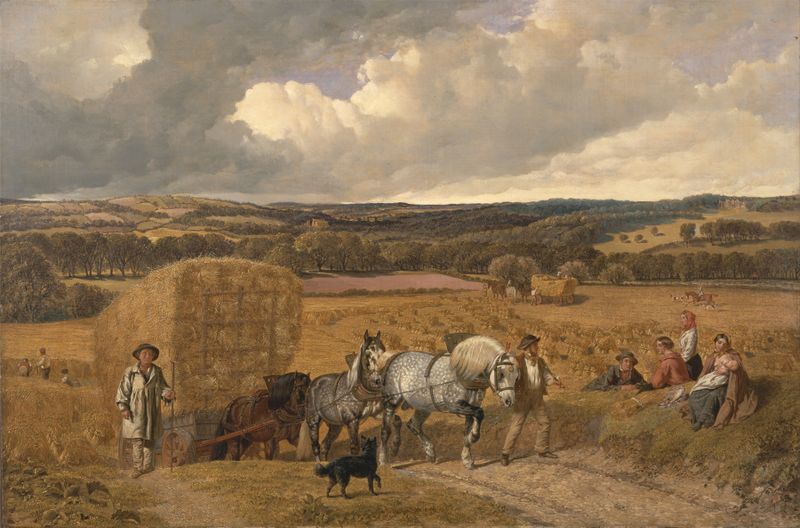
Could beauty survive in a century of chaos? In a world often overshadowed by turmoil, Harvest embodies a poignant yearning for simplicity and connection to nature. Look to the left at the heartwarming scene of laborers, their hands encrusted with earth as they gather golden sheaves of wheat under a vast, open sky. The tender hues of gold and green harmonize, evoking the warmth of late afternoon sunlight that bathes the field in a soothing glow. Notice how the brushstrokes create a sense of movement, capturing the gentle sway of the crops as if whispering secrets of the earth to those who toil upon it. The contrasts in this work are striking.
The vibrancy of life in the foreground, with figures engaged in their humble endeavor, stands in stark opposition to the distant, ominous clouds gathering on the horizon, suggesting that even abundance can be shadowed by uncertainty. Each laborer’s focus reflects a shared purpose, yet their individual expressions whisper stories of personal ambition and collective hope, merging the universal with the intimate. Painted during a time when societal shifts were in full swing, Herring created Harvest in the 19th century, a period marked by industrialization and agricultural change. As rural life grappled with modern advances, the artist sought to capture the timeless beauty of labor and nature, striving to document a way of life that was increasingly at risk of disappearing amidst the chaos of progress.