
The Harvest — History & Facts
In the stillness of The Harvest, a paradox unfolds where the golden hues of abundance dance with an undercurrent of toil. Look to the foreground, where the vibrant fields stretch endlessly, shimmering under a warm sun. The rhythmic movements of laborers, barely discernible in the distance, guide your gaze towards their labor—each figure encapsulated in a moment of purpose and struggle. The artist's careful attention to the interplay of light and shadow lends a sense of depth, accentuating the rich greens and the radiant yellows that define this pastoral scene. Beneath the surface, the painting whispers of human toil and the fleeting nature of bounty.
Notice how the golden wheat, a symbol of prosperity, contrasts sharply with the workers' bent forms—each curve and arch a testament to their labor. The composition hints at a cycle of life and death, beauty intertwined with exhaustion, suggesting that every harvest carries the weight of sacrifice, echoing the harsh realities of rural existence. Painted during a time when the artist was entrenched in the Romantic movement, The Harvest reflects Robert Zünd’s fascination with nature and human interaction. Somewhere in the late 19th century, amid a growing industrial landscape, he captured the delicate balance between serenity and struggle, echoing the sentiments of a society grappling with the rapid transformations of the modern world.
More Artworks by Robert Zünd
Browse all →
Blick Von Schönbühl Auf Den Vitznauerstock
Robert Zünd
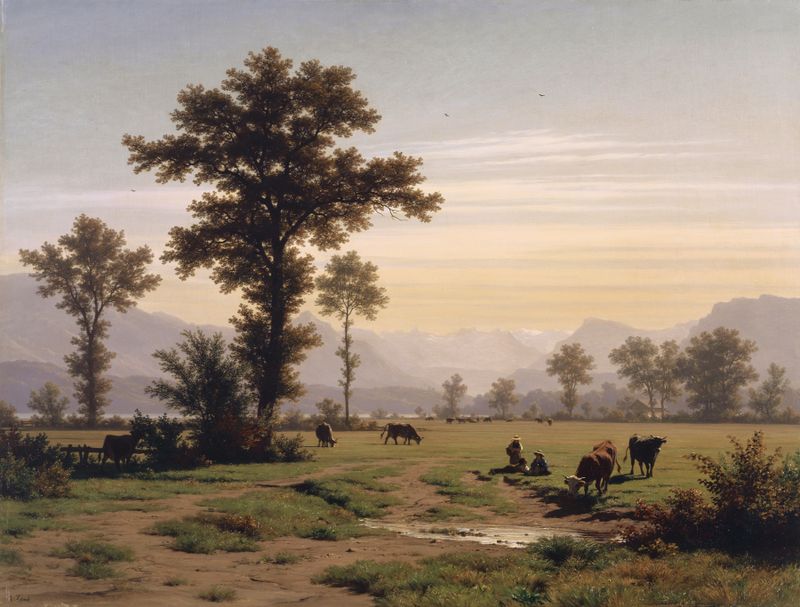
Landscape near Lucerne
Robert Zünd
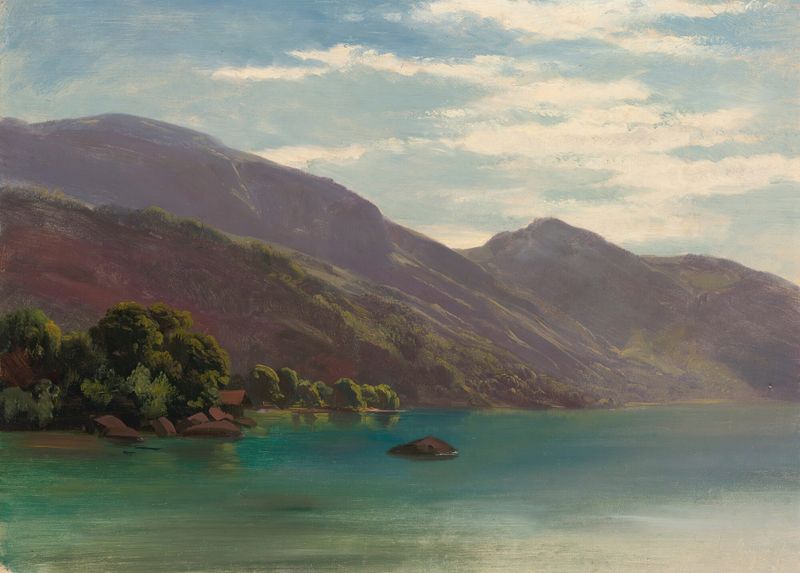
Vierwaldstättersee
Robert Zünd

Sonnige Au
Robert Zünd
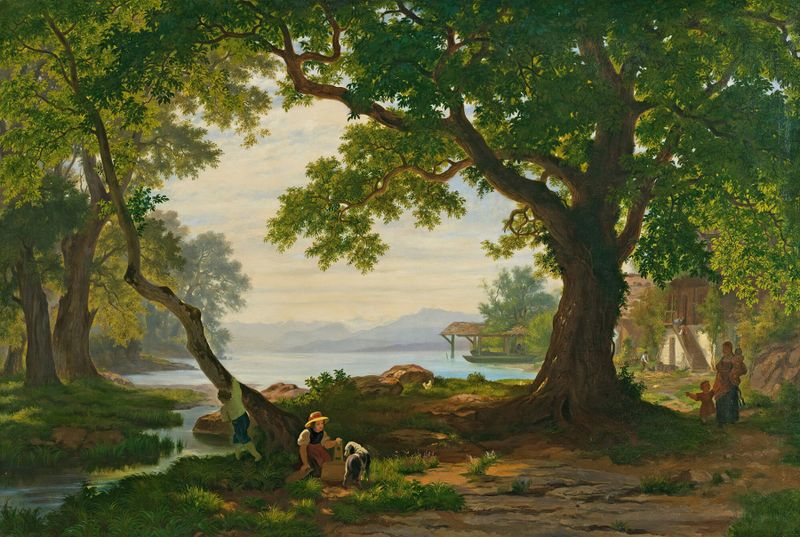
At Lake Sempach
Robert Zünd

Rest of the Holy Family on the Flight into Egypt
Robert Zünd

Waldweg Forest Track
Robert Zünd

Three Crosses Along A Country Lane
Robert Zünd
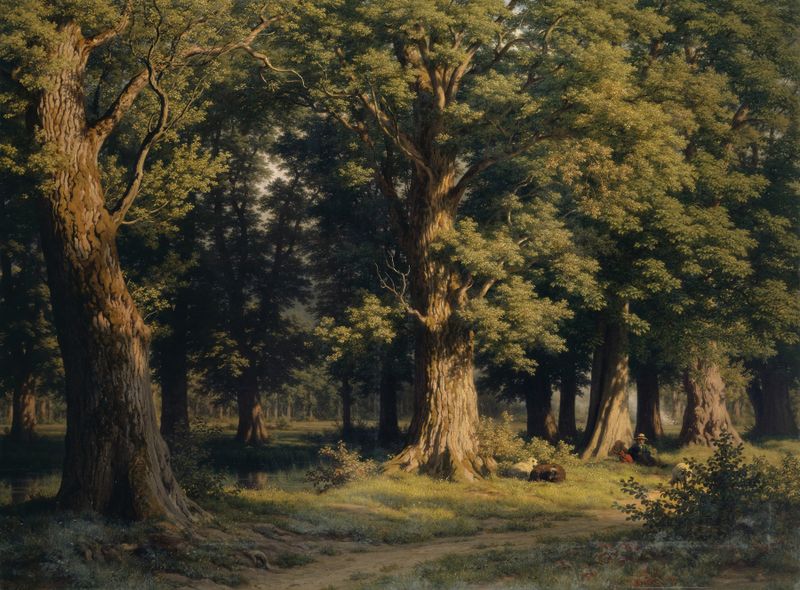
Grove near Lucerne
Robert Zünd
Eichwald (Oak Forest)
Robert Zünd





