
The Heiligewegs Gate, Amsterdam — History & Facts
Within the confines of an urban setting, isolation resonates amidst the bustle of daily life. As shadows lengthen along the cobblestone streets, a solitary figure navigates the melancholic remnants of a once vibrant community, where echoes of laughter fade into the chill of solitude. Look to the left at the striking arch of the Heiligewegs Gate, its weathered stones capturing both the warmth of the setting sun and the coolness of the encroaching evening. The gate stands as a sentinel, framing the scene while allowing the viewer to peer into the contrasting vibrancy of the warm-hued sky and the muted colors of the buildings.
Notice how Beerstraaten’s deft brushwork creates a textured fabric of light and shadow, giving life to the scene while simultaneously underscoring a pervasive sense of loneliness. Beneath the surface, small details emerge, revealing deeper emotional currents. The figure, seemingly lost in thought, hints at personal turmoil, juxtaposed with the sturdy gate that suggests both protection and imprisonment. The distant figures meander on the street, yet their faces remain obscured, amplifying the tension between connection and isolation.
Amidst the architectural beauty, the painting evokes a longing for companionship, while simultaneously underscoring life's inherent transience. In 1665, Beerstraaten created this work during a period of artistic flourishing in the Dutch Golden Age. Living in Amsterdam, he was influenced by the prevailing Baroque style, dominating the art world at the time. As the city thrived economically and culturally, many artists turned their attention towards capturing urban life, trends, and landscapes, and Beerstraaten found his niche within this vibrant milieu, skillfully blending realism with emotional depth.
More Artworks by Jan Abrahamsz Beerstraaten
Browse all →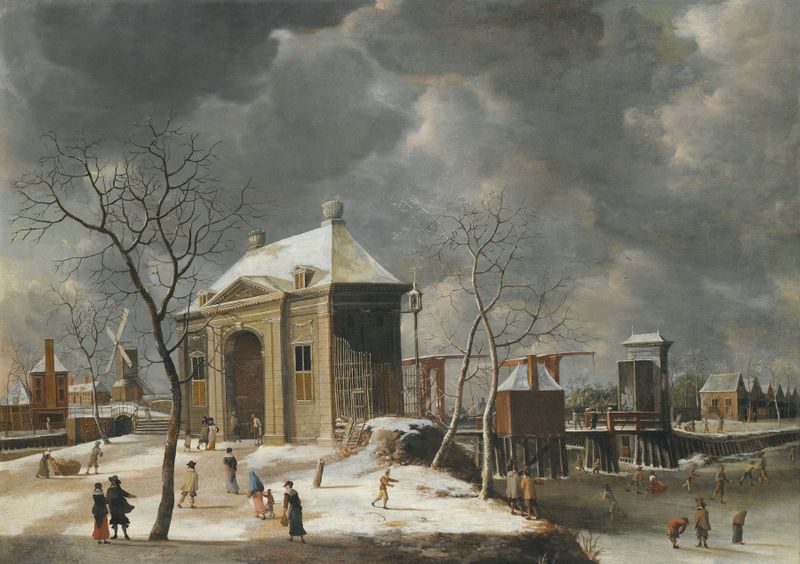
Amsterdam, A View Of The Heiligewegspoort From The North-West, With Skaters On A Frozen Canal
Jan Abrahamsz Beerstraaten
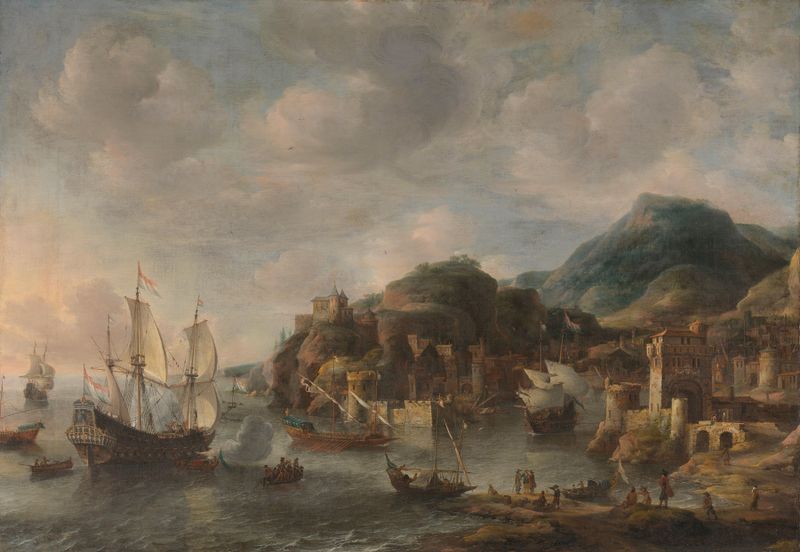
Dutch Ships in a Foreign Port
Jan Abrahamsz Beerstraaten
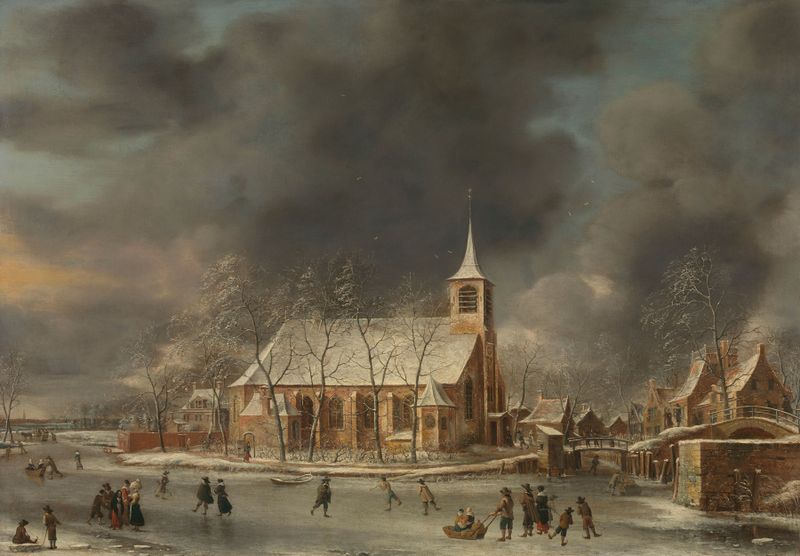
View of the Church of Sloten in the Winter
Jan Abrahamsz Beerstraaten

A Harbour Scene With A Man-Of-War And Other Shipping, Figures Conversing On The Shore
Jan Abrahamsz Beerstraaten
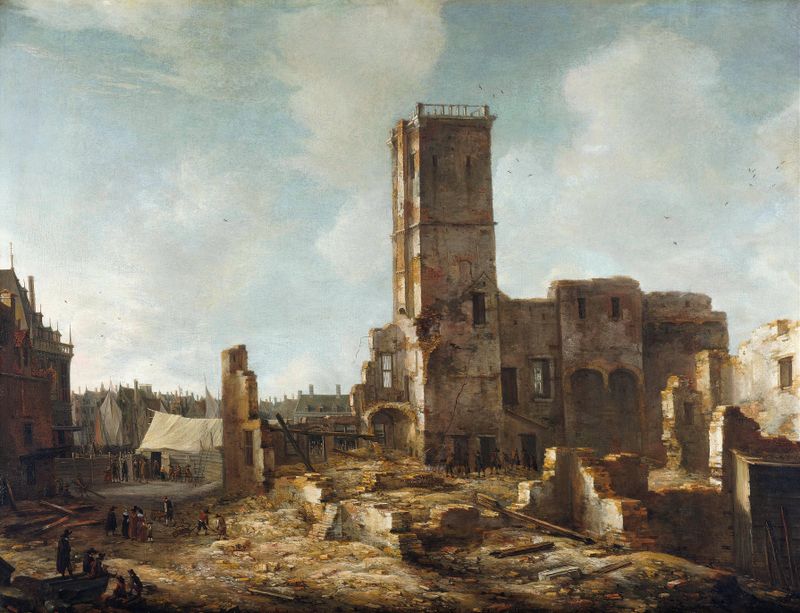
The Ruins of the Old Town Hall of Amsterdam after the Fire of 7 July 1652
Jan Abrahamsz Beerstraaten

The Paalhuis and the Nieuwe Brug, Amsterdam, in the Winter
Jan Abrahamsz Beerstraaten
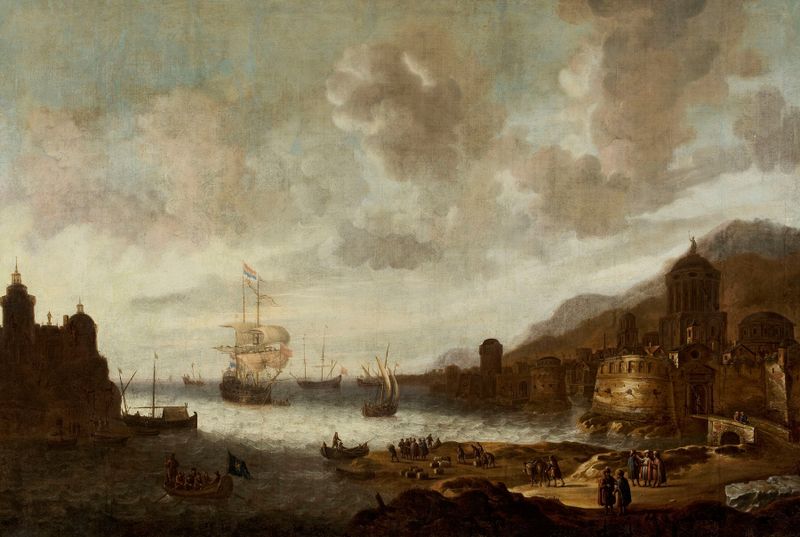
Dutch ship in an exotic port
Jan Abrahamsz Beerstraaten

Skating at Sloten, near Amsterdam
Jan Abrahamsz Beerstraaten

Winter landscape with skaters on a frozen river
Jan Abrahamsz Beerstraaten
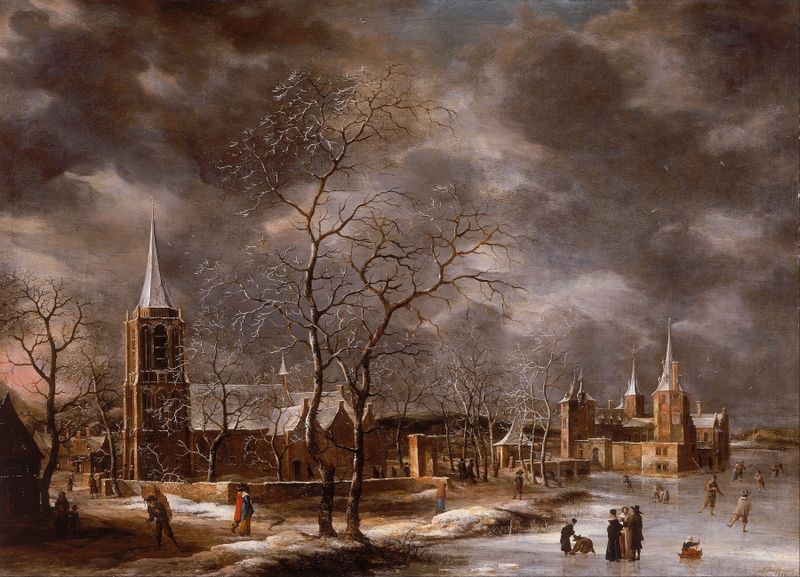
Warmond Castle in a Winter Landscape
Jan Abrahamsz Beerstraaten
More Architecture Art
Browse all →
The statue of Liberty
Frédéric Auguste Bartholdi

View of Houses in Delft, Known as ‘The Little Street’
Johannes Vermeer

View of Houses in Delft, Known as ‘The Little Street’
Johannes Vermeer

The Cathedral in Rouen. The portal, Grey Weather
Claude Monet

The yellow house
Vincent van Gogh

The Church in Auvers-sur-Oise, View from the Chevet
Vincent van Gogh