
The Holy Grail — History & Facts
Did the painter know this moment would outlive them? In The Holy Grail, the profound sense of loss permeates the scene, echoing through the ages as humanity grapples with its eternal quest for meaning. Focus on the central figure, a solemn knight clad in armor, gazing intently at the revered grail. The contrast between the warm, earthy tones of the surrounding landscape and the ethereal light illuminating the chalice draws the eye, creating a visual focal point that signifies hope amidst adversity. The delicate brushwork captures the texture of his armor and the folds of his cloak, while hints of green and gold suggest a world infused with both decay and potential. This work encapsulates the tension between aspiration and despair.
The knight’s gaze reflects a yearning for something lost — not just the physical grail, but the ideals it represents: faith, purity, and the unyielding pursuit of truth. The muted background serves as a reminder of the fleeting nature of glory, contrasting with the bright, almost heavenly light that envelops the grail, inviting contemplation of what lies beyond mere existence. In 1877, Oertel painted this piece during a time when the quest for identity in art was gaining momentum in America. He was navigating the complexities of a rapidly evolving cultural landscape, where traditional narratives began to merge with new ideas.
The painter was keenly aware of the significance of mythological themes, aiming to inspire viewers to reckon with both their personal and collective longings.
More Artworks by Johannes Adam Simon Oertel
Browse all →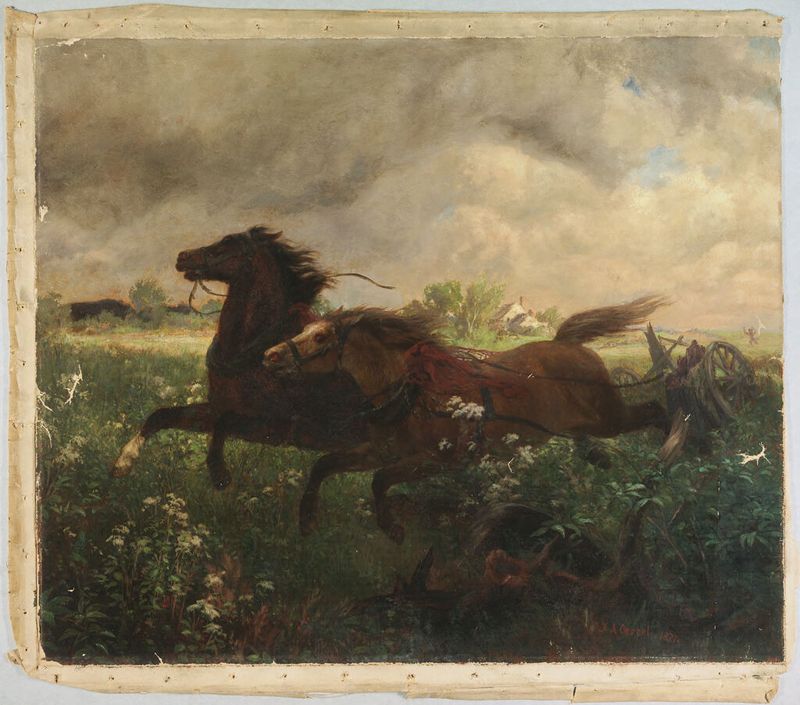
More Religious Art
Browse all →
The Return of the Prodigal Son
Rembrandt van Rijn

The Garden of Earthly Delights
El Bosco

Count Orgaz’ funeral
El Greco

The Hundred Guilder Print: the central piece with Christ preaching, the plate arched
Rembrandt van Rijn

The Descent from the Cross
Rogier van der Weyden

The return of the prodigal son
Rembrandt van Rijn