The Horses of St. Marks, Venice — History & Facts
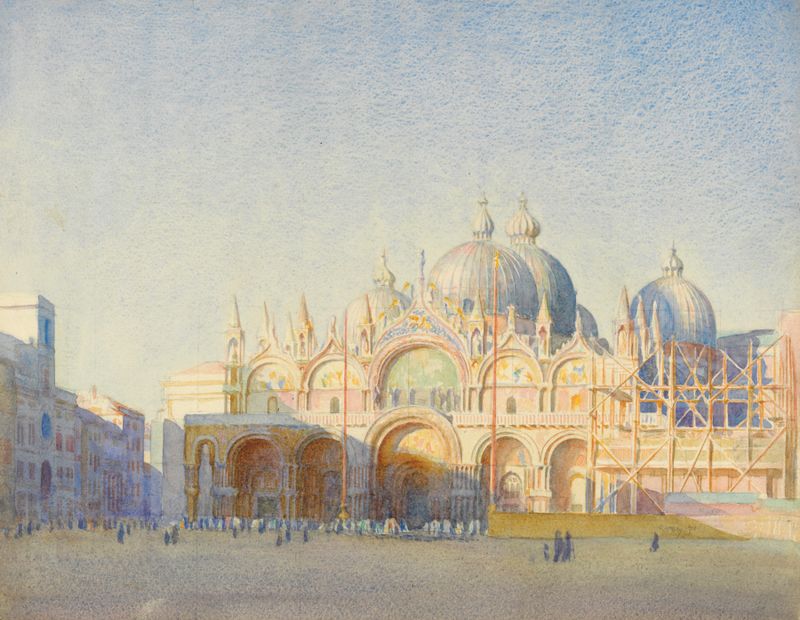
Where does light end, and longing begin? In the delicate interplay of shadow and illumination, Reginald Barratt captures a moment that transcends mere representation, inviting viewers to ponder the depths of their own desires. Look closely at the intricate details of the magnificent horses, their forms powerful yet ethereal, set against the luminous backdrop of Venice. The glimmering sunlight reflects off their polished surfaces, creating a dance of highlights that accentuates their sinewy grace. Notice how the artist employs soft, warm hues to evoke a sense of nostalgia, while the cool blues in the background suggest the serene yet melancholic waters of the lagoon. The emotional tension of the piece lies not only in the majestic horses but also in the contrast between their strength and the vulnerability inherent in their stillness.
The juxtaposition of grandeur and fragility is palpable; as the viewer’s gaze traverses the canvas, one feels the weight of history and displacement, a longing for a time when beauty could roam freely. Each brushstroke conveys a sense of yearning, capturing the essence of both the subjects and the city that cradles them. In 1896, Barratt painted this work during a time of artistic exploration in Europe, as Impressionism was gaining momentum and the allure of the exotic was captivating many artists. Living in a rapidly changing world, he sought to marry realism with a sense of the transcendental, channeling his experiences in Venice into a remarkable piece that echoes through time, inviting personal reflection.