The Judgment of Paris — History & Facts
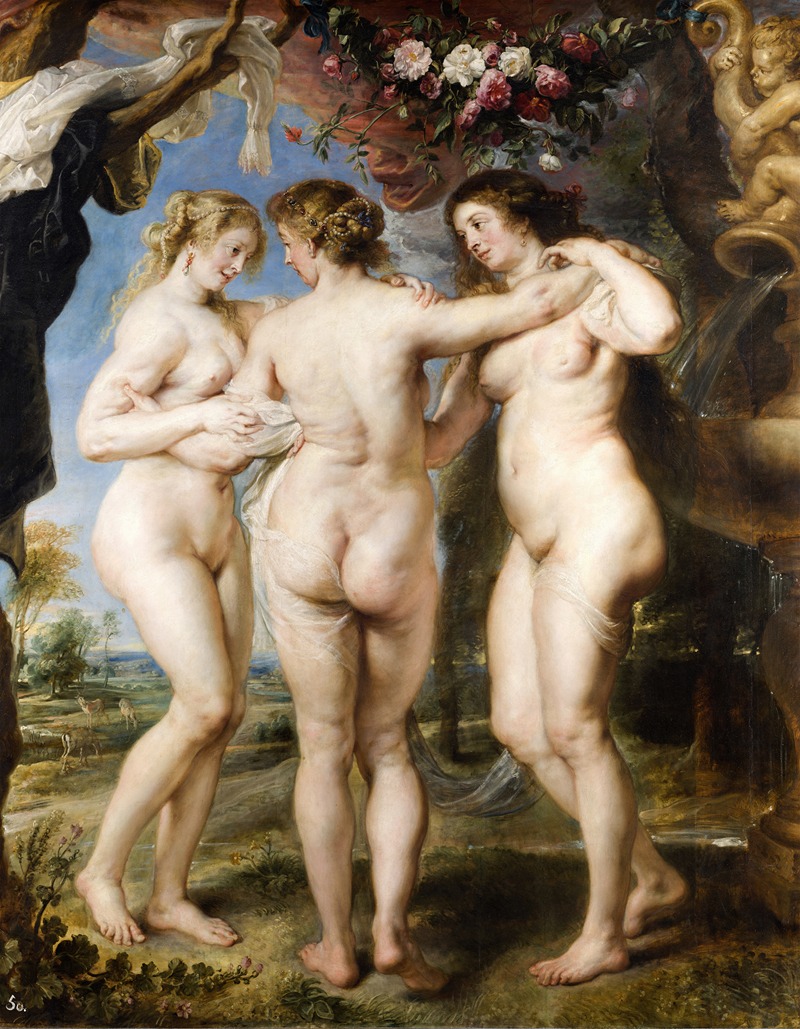
Who listens when art speaks of silence? In the shimmering stillness of The Judgment of Paris, chaos pulses beneath the surface, waiting for the spark of conflict to ignite. Look to the left at the lush landscape that cradles the three goddesses, their forms draped in vibrant, flowing gowns that mirror the rich hues of a Mediterranean sunset. Notice how the artist employs delicate brush strokes to capture the golden light illuminating their flawless features, creating a palpable tension between divine beauty and earthly desire. The placement of Paris at the center, flanked by these radiant figures, draws your eye while evoking the pivotal moment of choice and consequence. Each goddess embodies contrasting ideals—Hera, with her regal poise, offers power; Athena, tactical and wise, presents strategy; and Aphrodite, radiating sensuality, promises love.
This triad of promises collides, each vying for Paris’s favor, representing the chaos of human desire and the weight of decision. The delicate interplay of shadows adds depth, suggesting the unseen forces at work, while the serene expressions hint at the impending turmoil of their rivalry. Created around 1480, this piece emerged during a time of burgeoning humanism and artistic innovation in Europe. The Master of the Argonaut Panels was part of a movement that sought to blend classical themes with contemporary life, reflecting both the era's artistic aspirations and its turbulent socio-political landscape.
This work captures not just a mythological battle but also the shifting tides of thought that characterized the Renaissance.