
The Lamentation over the Dead Christ — History & Facts
When did color learn to lie? In a world where vibrancy often masks the truth, the palette of decay whispers the somber realities of life and death. Look to the center of the canvas, where the figure of Christ lies reclined, draped in deep, rich colors that juxtapose the starkness of his lifeless form. The warm reds and browns evoke a visceral intimacy, while the cold, muted tones forming the surrounding figures highlight the profound sorrow that envelops this moment of mourning. Notice how the soft light illuminates Christ's face, accentuating the weariness etched into his features, a testament to suffering rather than the glorification of divinity. Beneath the surface lies an emotional tension between despair and reverence.
The anguished expressions of those gathered around him reveal not just grief, but an unsettling acceptance of mortality. Small details, such as the hand of a figure tenderly cradling Christ's arm, underscore the fragility of human connection in the face of death. This moment, while deeply personal, echoes the universal sorrow of loss, making it a poignant reflection on the human condition. In the late 17th century, during a time of shifting artistic styles and turbulence across Europe, The Lamentation over the Dead Christ emerged from the brush of Luca Giordano in Naples.
As the Baroque movement sought to convey emotion and drama, Giordano, influenced by both Caravaggio and his contemporaries, embraced vivid color and dynamic compositions to explore profound themes of faith and mortality, capturing the essence of a world grappling with its own fragility.
More Artworks by Luca Giordano
Browse all →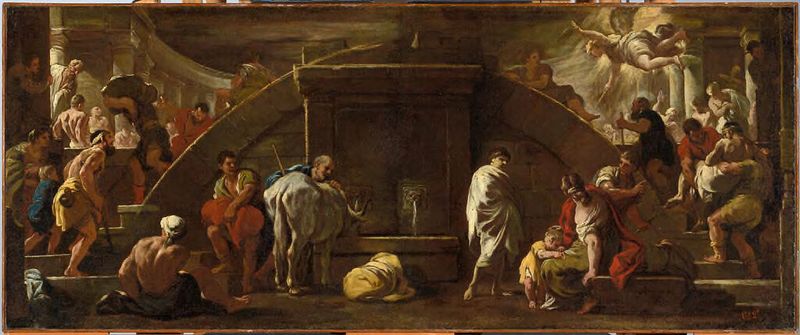

More Religious Art
Browse all →
The Return of the Prodigal Son
Rembrandt van Rijn

The Garden of Earthly Delights
El Bosco

Count Orgaz’ funeral
El Greco

The Hundred Guilder Print: the central piece with Christ preaching, the plate arched
Rembrandt van Rijn

The Descent from the Cross
Rogier van der Weyden

The return of the prodigal son
Rembrandt van Rijn