
The Well of Bethesda — History & Facts
In The Well of Bethesda, shadow dances on the edge of light, revealing the delicate interplay between suffering and healing. Look to the center of the canvas, where the well itself beckons with an inviting depth yet casts an ominous aura around its edges. The figures, draped in flowing robes, hover on the cusp of despair and hope, their postures conveying a mixture of yearning and resignation. Notice how the muted earth tones of the surfaces contrast with the ethereal glow emitted from the water's surface, capturing both the allure and the trepidation inherent to the act of seeking solace. Delve deeper into the expressions of the figures—each face tells a story of longing and desperation.
In their eyes lies a flicker of hope, while their hands reaching towards the well hint at desperation's grip. The juxtaposition of light illuminating the figures against the shadowy background intensifies this emotional tension, suggesting that healing often lurks within darkness, echoing the pain that precedes it. In 1687, during a period marked by both Baroque exuberance and the impending shifts of the Enlightenment, Luca Giordano painted this work in Naples. At that time, the artist was gaining recognition for his dynamic compositions and vibrant colors amidst a saturated art scene, reflecting a collective search for both beauty and meaning in human suffering.
More Artworks by Luca Giordano
Browse all →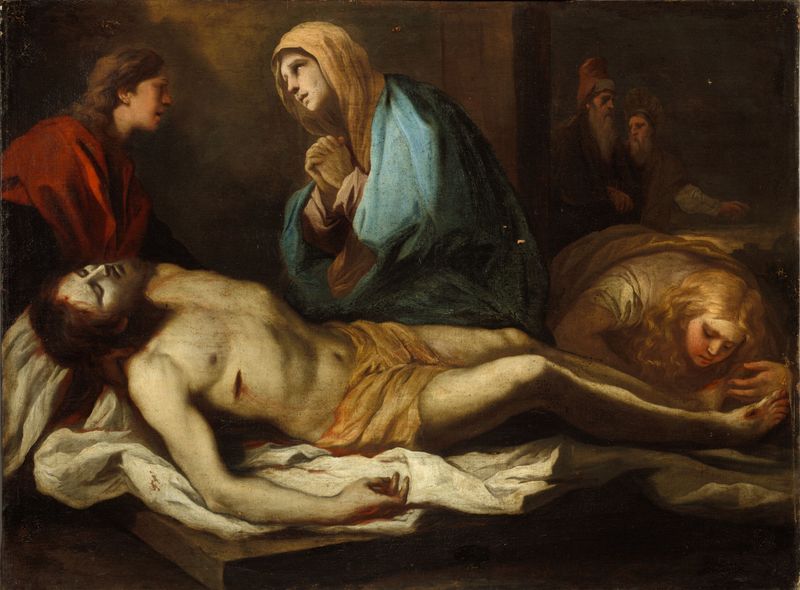

More Religious Art
Browse all →
The Return of the Prodigal Son
Rembrandt van Rijn

The Garden of Earthly Delights
El Bosco

Count Orgaz’ funeral
El Greco

The Hundred Guilder Print: the central piece with Christ preaching, the plate arched
Rembrandt van Rijn

The Descent from the Cross
Rogier van der Weyden

The return of the prodigal son
Rembrandt van Rijn