
The Main Gate to Egmond Castle — History & Facts
In the world of art, yearning often emerges as a silent yet powerful force, bringing to life the stories and landscapes we cannot forget. Look to the center of the canvas, where the imposing gate stands resolute, its weathered stones framing an otherworldly past. The meticulous detailing of the bricks contrasts with the soft, green foliage that spills around the entrance, inviting yet teasingly remote. Notice how the light spills gently across the scene, illuminating the gate’s archway while leaving the edges in a tranquil shadow, evoking a sense of nostalgia and longing for what lies beyond. The interplay of light and shadow creates a complex emotional tapestry.
The gate symbolizes both an invitation and a barrier, hinting at the stories hidden within the castle walls. As you explore the lower right corner, the subtle presence of a figure near the entrance reinforces this tension between desire and the unknown. This mingling of natural beauty with human architecture reflects the universal yearning for connection, safety, and discovery. Created between 1670 and 1698, the artist found inspiration in the landscapes around Egmond, painting during a time when the Netherlands was thriving in trade and artistic expression.
This period witnessed a flourishing of Dutch realism, where artists like Berckheyde meticulously captured the world around them, channeling their personal experiences and societal changes into their works. The painting stands not only as an architectural portrayal but as a testament to an era steeped in history and longing.
More Artworks by Gerrit Adriaensz. Berckheyde
Browse all →
View of the Golden Bend in the Herengracht
Gerrit Adriaensz. Berckheyde
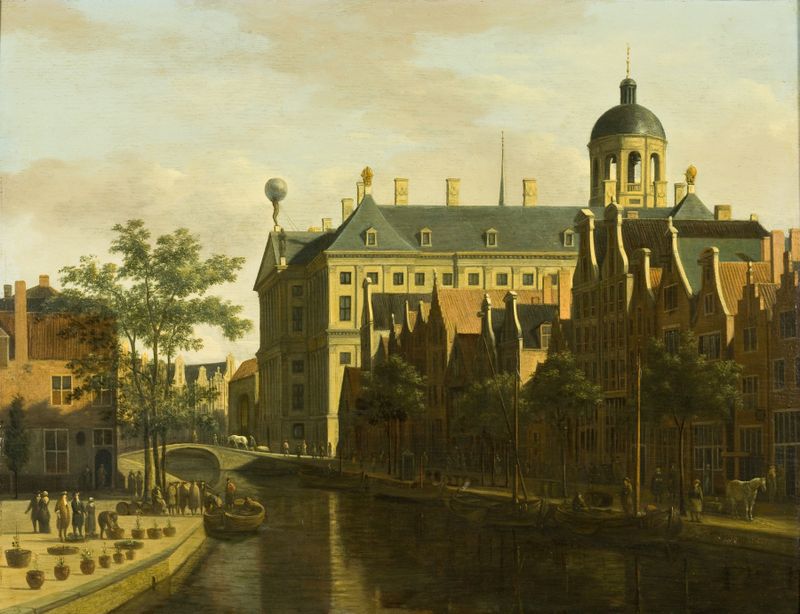
The Nieuwezijds Voorburgwal with the Flower and Tree Market in Amsterdam
Gerrit Adriaensz. Berckheyde
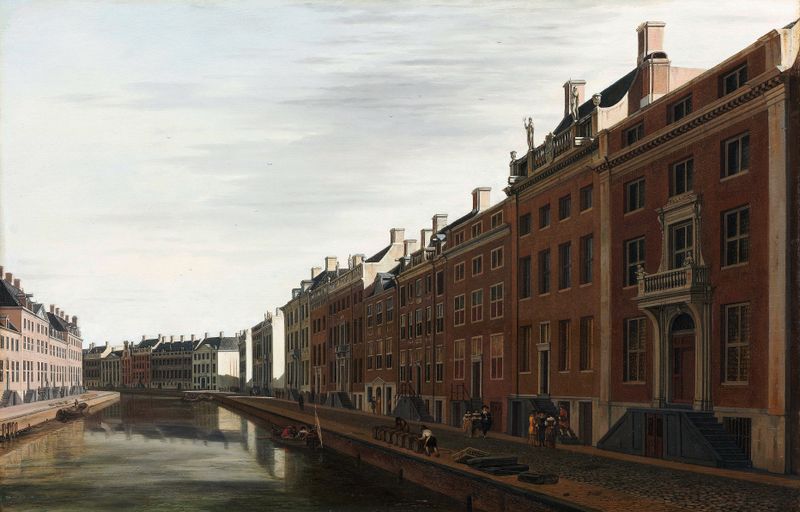
De Gouden Bocht in de Herengracht in Amsterdam vanuit het westen
Gerrit Adriaensz. Berckheyde
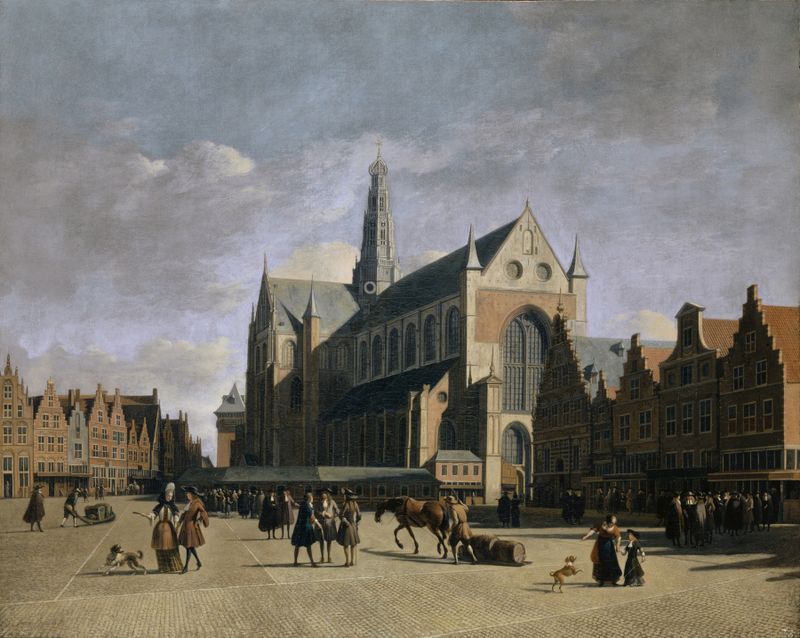
The Market Place in Haarlem
Gerrit Adriaensz. Berckheyde
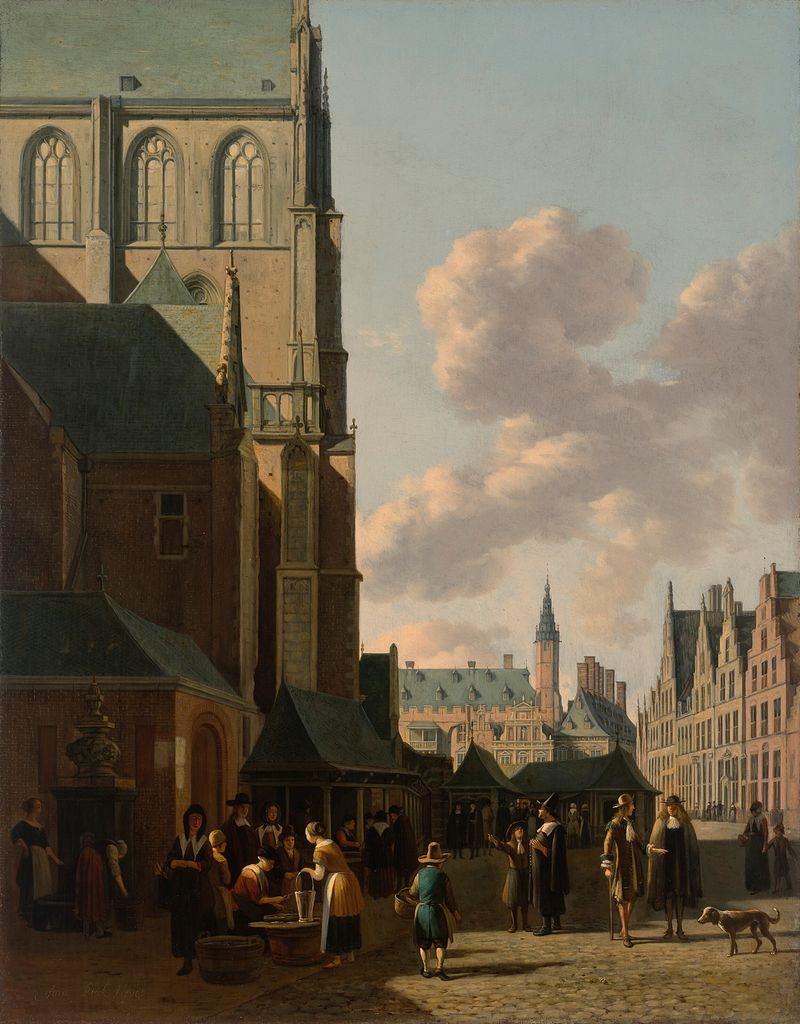
The Grote Markt, Haarlem, looking west, with the Grote Kerk (St Bavo’s) and the fish-market, the Town Hall beyond
Gerrit Adriaensz. Berckheyde
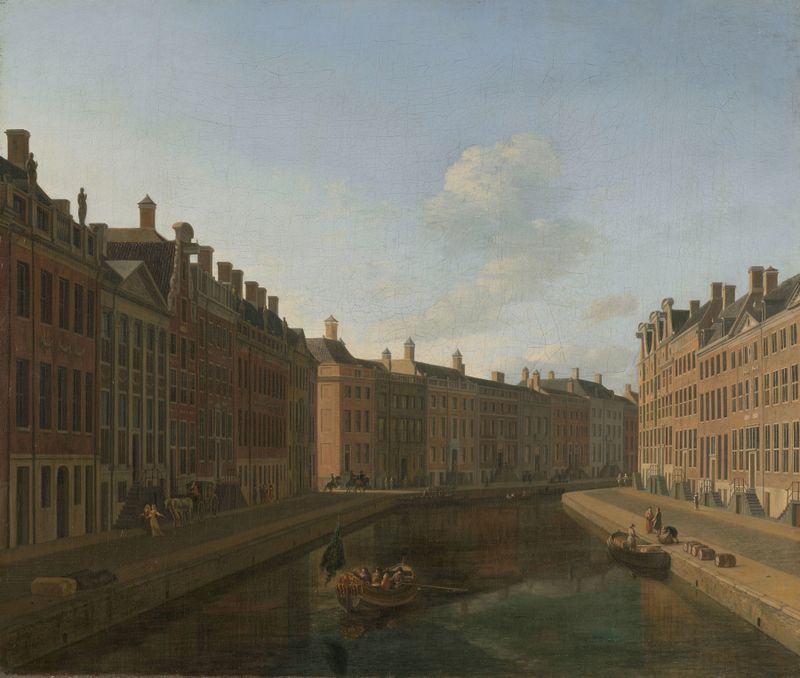
Gezicht op de Gouden Bocht in de Herengracht vanuit het oosten
Gerrit Adriaensz. Berckheyde

The Town Hall on Dam Square, Amsterdam
Gerrit Adriaensz. Berckheyde

The Town Hall in Amsterdam
Gerrit Adriaensz. Berckheyde
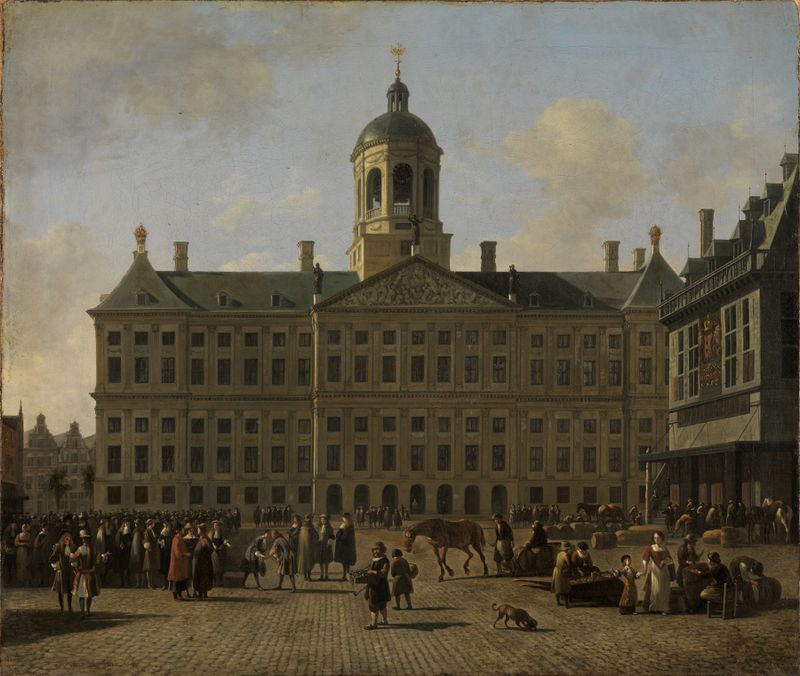
Der Damplatz zu Amsterdam mit dem Rathaus und der Waage
Gerrit Adriaensz. Berckheyde
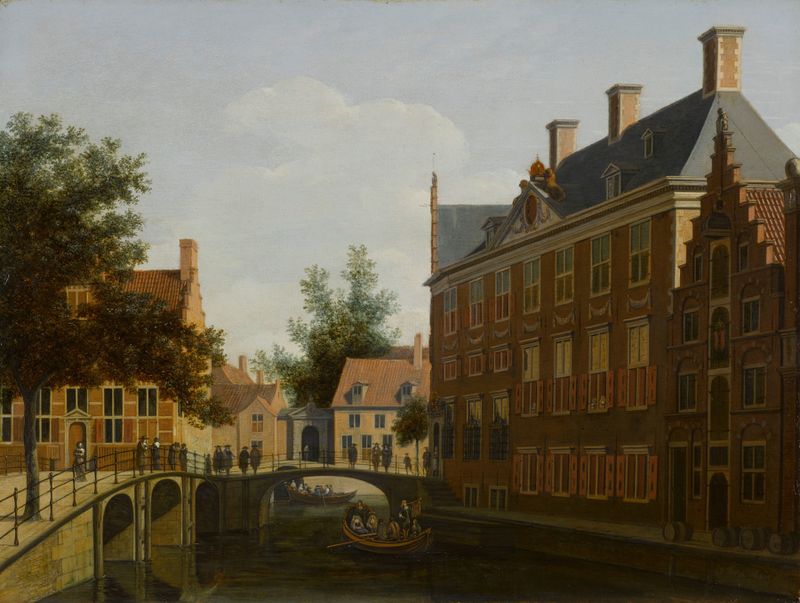
The Oude Zijds Herenlogement (Gentlemen’s Hotel) in Amsterdam
Gerrit Adriaensz. Berckheyde
More Architecture Art
Browse all →
The statue of Liberty
Frédéric Auguste Bartholdi

View of Houses in Delft, Known as ‘The Little Street’
Johannes Vermeer

View of Houses in Delft, Known as ‘The Little Street’
Johannes Vermeer

The Cathedral in Rouen. The portal, Grey Weather
Claude Monet

The yellow house
Vincent van Gogh

The Church in Auvers-sur-Oise, View from the Chevet
Vincent van Gogh