The Meuse at Poilvache — History & Facts
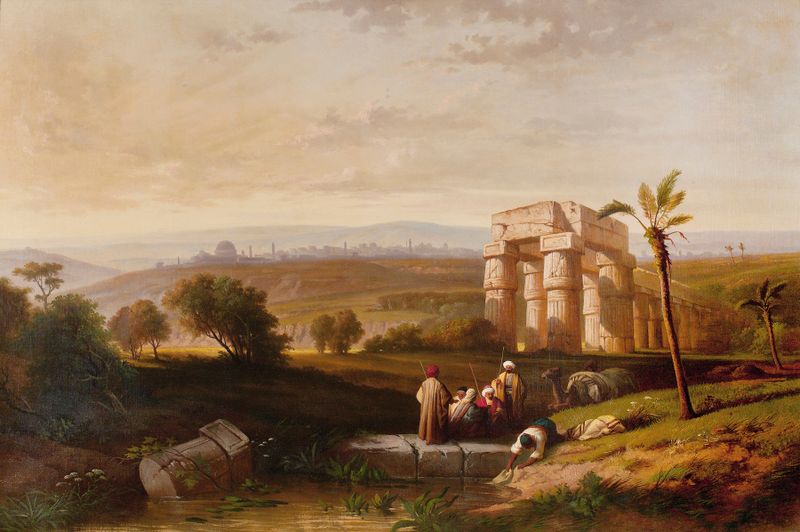
Could beauty survive in a century of chaos? Amidst the tumult of a rapidly changing world, The Meuse at Poilvache offers a delicate glimpse of serenity, where innocence seems to flourish against the odds. Look to the foreground, where the gentle curving banks of the Meuse cradle the scene. The lapping waters shimmer like liquid glass, reflecting the soft hues of the sky that meld oranges and blues in a tranquil embrace. Notice how the artist employs a palette of muted colors, evoking a sense of calm, while the detailed brushwork draws the viewer’s gaze to the rich textures of the surrounding foliage.
Each stroke adds depth to the landscape, inviting a contemplative exploration of nature's quiet beauty. This painting encapsulates the tension between stillness and the undercurrents of change. The soft light spilling over the water speaks to fleeting moments of peace, while the towering cliffs in the background stand as silent witnesses to the passage of time. The interplay of shadow and illumination reveals not just the landscape, but the innocence inherent in moments that can so easily slip away.
It is a quiet reminder of what is at stake when beauty is overshadowed by chaos. In 1873, Ferdinand Joseph Bernard Marinus created this work while navigating the complexities of post-industrial Europe, where traditional landscapes were increasingly threatened by urban encroachment and societal upheaval. At this time, art movements were shifting, with realism and impressionism gaining momentum, yet he chose to capture the comforting familiarity of the past, reflecting a yearning for harmony in an era of discord.