Memories Of Egypt — History & Facts
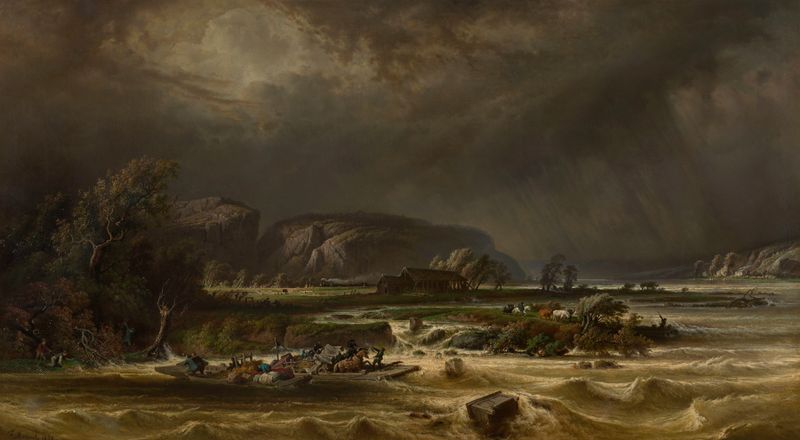
Here, it captures fragments of a forgotten land, beckoning the viewer to immerse themselves in the awe of distant memories. What stories linger between the strokes, whispering secrets of ancient time and place? Look to the vibrant hues of ochre and cerulean that dominate the landscape, drawing your eyes toward the pyramids standing majestically against the horizon. Notice how the brushstrokes pulse with a rhythmic energy, conveying the undulating sands and the vastness of the Nile.
The interplay of light and shadow dances across the scene, evoking an ethereal quality that seems to suspend time itself, inviting contemplation of the civilizations that once thrived. As you delve deeper, consider the contrast between the barren desert and the life-giving river, symbolizing the duality of existence — desolation and fertility, loss and abundance. The figures in the foreground, almost ghostly in their presence, suggest a connection to the past, their expressions echoing the introspection that arises from the remnants of a once-great culture. Each element of the composition serves to bridge the gap between memory and reality, prompting reflections on the transient nature of life. In 1864, the artist painted this evocative piece while residing in France, a time when European fascination with Egypt was surging, sparked by archaeological discoveries and the romantic allure of the East.
Amidst a backdrop of cultural exchange and burgeoning artistic movements, he sought to capture the essence of an ancient world, merging the classical with the emerging modern sensibilities of his time.