The Mill Pond, Evelyn Woods — History & Facts
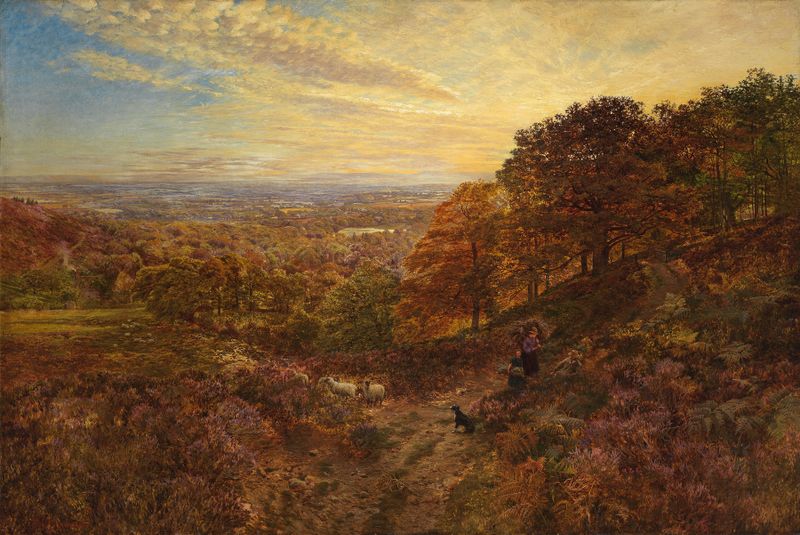
Could a single brushstroke hold eternity? In The Mill Pond, George Vicat Cole transforms the fleeting beauty of nature into a timeless tableau, inviting the viewer to linger in a world where tranquility reigns supreme. Look to the left at the gentle ripples of the pond, their surface glistening under the dappled sunlight. The soft blues and greens meld seamlessly, capturing the essence of a serene summer’s day. The mill, perched on the bank, stands as a guardian of this peaceful moment, with its weathered façade reflecting the passage of time.
Notice how the artist’s deft brushwork breathes life into the trees, their leaves fluttering lightly in the breeze, instilling a sense of movement that belies the stillness of the water. Yet, amidst this idyllic scene, contrasts reveal deeper narratives. The harmonious interplay of light and shadow evokes a sense of fleeting time, as the soft warmth of the sun meets the coolness of the shaded areas. The presence of the solitary figure near the water hints at solitude, prompting contemplation on humanity's place in nature.
This delicate balance between tranquility and introspection underscores the transformative power of the landscape, suggesting that even serene moments are imbued with complexity. George Vicat Cole painted The Mill Pond in 1860 during a period of burgeoning interest in the natural world within the art community. Based in England, Cole was part of the Pre-Raphaelite movement, which sought to capture realism and detail in their works. His focus on light, atmosphere, and the emotional resonance of landscape painting reflects a time when artists were increasingly drawn to the beauty of the world around them, transcending mere representation to evoke profound emotional connections.