The Music Lesson — History & Facts
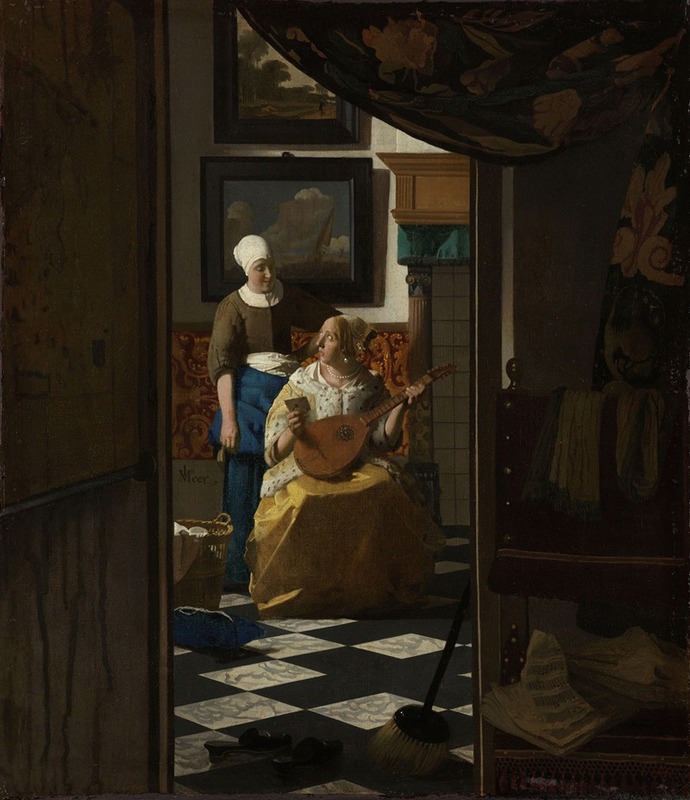
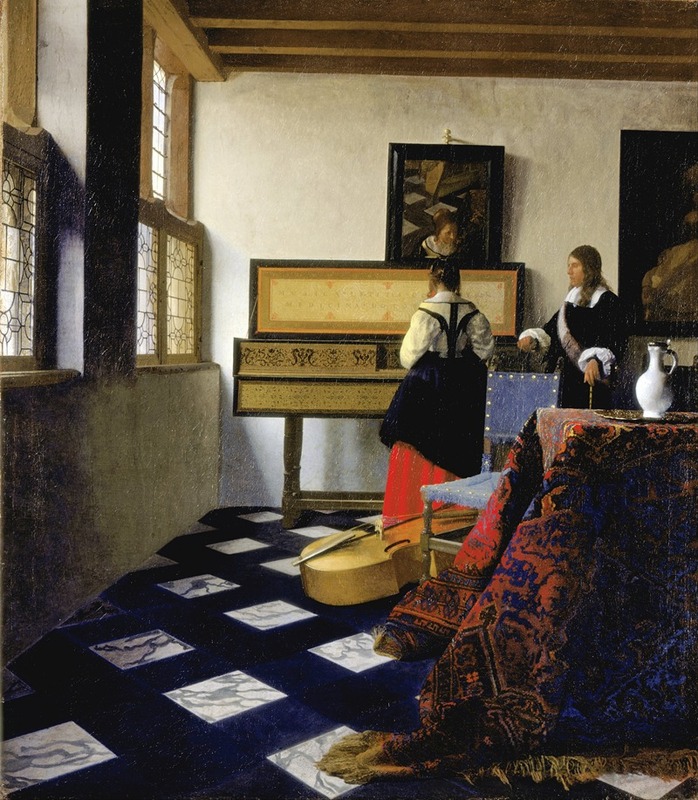
What secret hides in the quiet of the canvas? In the soft embrace of muted tones and delicate brush strokes, The Music Lesson invites us to ponder the unspoken legacies shared through art and music. Focus your gaze on the young woman seated at the table, her posture poised yet relaxed as she leans intently towards the musician. The light cascades through an unseen window, illuminating the golden hues of her dress and casting tender shadows that cradle the figures in warmth. Notice how the gleam of the instruments reflects a moment suspended in time, and how the musician's hand gracefully hovers, preparing to impart knowledge.
This intimate exchange, rendered with meticulous detail, encourages an almost tactile connection with the scene. Within the painting lies a contrast between the vibrancy of youth and the wisdom of experience. The musician, slightly older, embodies a bridge between generations, conveying not just musical skill but cultural heritage. The subtle expressions on their faces suggest a deeper dialogue, hinting at the emotional weight that music carries, echoing lessons that transcend the mere notes being played.
The surrounding stillness amplifies the tension, inviting viewers to contemplate the transformative power of art as a means of connection and legacy. Created in 1671 during a time of flourishing artistic development in the Dutch Golden Age, this work reflects Jacob Ochtervelt’s mastery in portraying everyday moments with depth and intimacy. Living in Amsterdam, Ochtervelt was influenced by the burgeoning interest in genre painting, capturing the intricate interplay of light, texture, and human emotion. The world around him was bustling with commerce and cultural exchange, yet it is the quietude of personal connection that he chose to immortalize on the canvas.